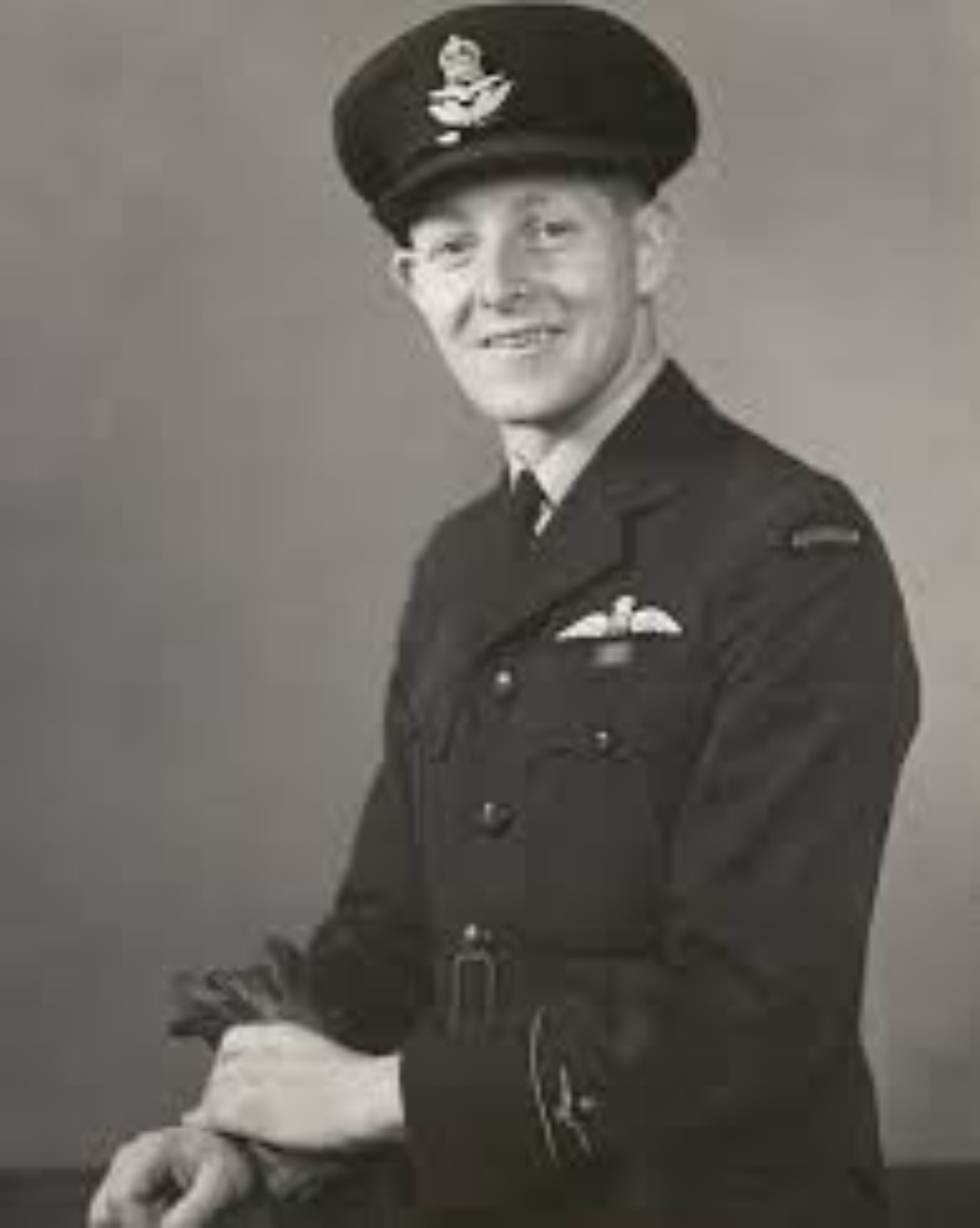
In the annals of World War II, there are names that echo through history not just for acts of courage, but for moments where humanity, duty, and sacrifice intersected in ways that changed lives forever.
Flight Lieutenant Leslie Gordon Knight of the Royal Australian Air Force is one such hero. Born in Camberwell, Victoria, Australia, Knight’s brief life was marked by extraordinary bravery, skill, and selflessness — a legacy that still resonates, more than seven decades after his final flight.

Early Life and Enlistment
Leslie Gordon Knight grew up in Melbourne during a time when the world was still recovering from the Great Depression, and young men were expected to contribute to their families and communities. Gifted with both intelligence and determination, Knight developed an early interest in aviation, inspired by the possibilities of flight and the growing importance of air power in global conflict.
In 1941, at the age of 20, Knight applied to join the Royal Australian Air Force (RAAF). This decision would set him on a path of extraordinary danger and honor. From the outset, he demonstrated remarkable skill as a pilot and a natural aptitude for leadership — qualities that would soon place him among the most daring airmen of the war.

Operation Chastise: The Dams Raid
By 1943, Knight was flying with the legendary No. 617 Squadron RAF, a unit specially formed for Operation Chastise — the infamous “Dambusters Raid” against Germany’s industrial heartland. The mission was unprecedented in its complexity and risk: low-level night attacks using newly developed “bouncing bombs” to breach the Moehne, Eder, and Sorpe dams, thereby crippling German industry and supply lines.
Knight’s skill and courage were pivotal in the success of the mission. Flying in N-Nan, he targeted the Eder Dam, the second dam to be attacked. His aircraft struck true,
breaching the dam after his comrades had scored one hit and one miss, demonstrating both precision and extraordinary nerve under fire.
For his role in Operation Chastise, Knight was awarded the
Distinguished Service Order (DSO) in 1943. The London Gazette lauded his actions:
“The operation was of great difficulty and hazard, demanding a high degree of skill and courage and close co-operation between the crews of the aircraft engaged. Nevertheless, a telling blow was struck at the enemy by the successful breaching of the Moehne and Eder dams. This outstanding success reflects the greatest credit on the efforts of the following personnel who participated in the operation in various capacities as members of aircraft crew.”
At just 22 years old, Knight had already cemented his place among the RAF’s elite — not merely as a pilot, but as a man willing to risk everything in service of a mission far greater than himself.
The Final Mission: Sacrifice at Den Ham
On 16 September 1943, Knight embarked on another perilous mission, targeting the Dortmund-Ems Canal. During this flight, tragedy struck. While maneuvering his
Lancaster bomber JB144, Knight’s plane struck a tree, damaging the aircraft. Recognizing the danger to both his crew and the unsuspecting Dutch villagers below, he made a fateful decision.
Despite his aircraft being severely damaged, Knight managed to stabilize the plane long enough for his seven-man crew to bail out safely. The townspeople of Den Ham would later recount how two of the crew were immediately captured by German forces, while five were protected by villagers who risked their lives to hide them until they could be safely returned to England.
Knight, however, was unable to save himself. He remained at the controls, sacrificing his own life to prevent the plane from crashing into the village below. His bravery ensured that no civilians were harmed — a selfless act of heroism that exemplified the highest ideals of duty and compassion.
According to accounts in Paul Brickhill’s 1951 book The Dam Busters, Knight remained calm under unimaginable pressure, communicating with his flight commander:
“‘Two port engines gone. May I have permission to jettison bomb, sir?’ … For God’s sake, Les, yes,” came the reply. With the bomb jettisoned, the aircraft began to climb slowly, but it wasn’t enough. Knight ensured his crew escaped, and the bomber ultimately crashed, claiming his life.

Legacy and Remembrance
Knight’s sacrifice did not go unnoticed. Initially buried in Den Ham General Cemetery, his grave was later marked with a Commonwealth War Graves Commission headstone, replacing the simple timber cross that first marked his resting place. In 2018, the citizens of Den Ham organized a special event to commemorate the
75th anniversary of Knight’s heroic decision, demonstrating the enduring gratitude of the community he saved. A memorial stone now marks the site where his Lancaster bomber went down, standing as a testament to both his courage and the bond between nations forged in war.
Beyond the immediate acts of heroism, Knight’s story represents the ethos of the Royal Australian Air Force and the No. 617 Squadron: skill, bravery, and selflessness in the face of overwhelming danger. He was part of a generation of airmen who undertook missions so perilous that survival was never guaranteed, yet did so with the determination to protect not only their comrades but also civilians caught in the crossfire.

A Life Cut Short, a Hero Remembered
Flight Lieutenant Leslie Gordon Knight was just 22 years old at the time of his passing — yet his impact resonates far beyond his years. He exemplified courage under pressure, self-sacrifice, and an unwavering commitment to the safety of others. His story reminds us that heroism is not always about the medals awarded, but about the lives saved and the courage shown in moments that define history.
Today, Leslie Gordon Knight is remembered not only in Australia and the United Kingdom but also in the hearts of the people of Den Ham, whose village he saved at the cost of his own life. Generations later, they continue to honor his memory — a vivid illustration of how a single act of bravery can echo across decades and continents.
Knight’s life and service encapsulate the spirit of the “Dambusters”, a testament to human bravery and the profound sacrifices made by young men in a time of global conflict. His legacy is eternal, a reminder of the courage and selflessness that define the finest moments of human history.
Flight Lieutenant Leslie Gordon Knight (1921–1943)
Dambuster. Airman. Hero.
Lest We Forget.
Marine Captain Jesse Melton III: A Life of Service and Sacrifice in Operation Enduring Freedom.1065

The story of Marine Captain Jesse Melton III is a solemn reminder of the courage, dedication, and sacrifice embodied by those who serve in the United States Marine Corps. Capt. Melton, a young officer of remarkable character and commitment, gave his life in service to his country on September 9, 2008, during combat operations in Afghanistan’s Afghanya Valley. His life, though tragically brief, represents the unwavering spirit of the Marines and the profound cost of freedom.