Military vehicles, especially rare or obscure ones, have long fascinated historians and enthusiasts alike. While many such vehicles are well documented, from time to time, information or photographs of completely unknown examples surface, often through the internet or published books. In many cases, these are legitimate vehicles that were either produced as one-off prototypes or imported foreign models that were never officially recorded. However, with the rise of the internet, verifying the authenticity of such vehicles and the information surrounding them has become increasingly difficult. Many armored vehicles have been invented or fabricated for various reasons. Sometimes this stems from simple misidentification or a misunderstanding of existing sources, while in other instances, it is done intentionally. One such vehicle was the Yugoslavian Light Tank M3 with 15 cm sIG 33.
The use of armored vehicles by the Yugoslav Partisans during the Second World War is a particularly murky subject. Documentation is generally poor, and the topic is plagued by misinformation and frequent misidentification of various armored vehicles. One such vehicle that allegedly existed, but without proof, was a hybrid design combining a British-supplied American-made M3 Light Tank chassis with a German 15 cm infantry gun.
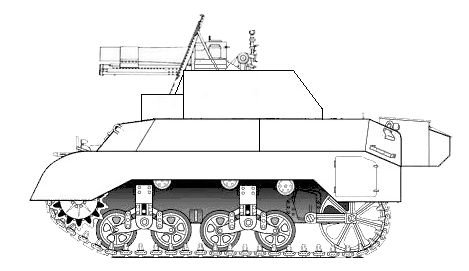
One of the drawings depicts this conversion and shows what it may have hypothetically looked like. As with other Partisan modifications based on the M3 Light Tank, these vehicles were never officially designated with any specific name. Source: Unknown
History
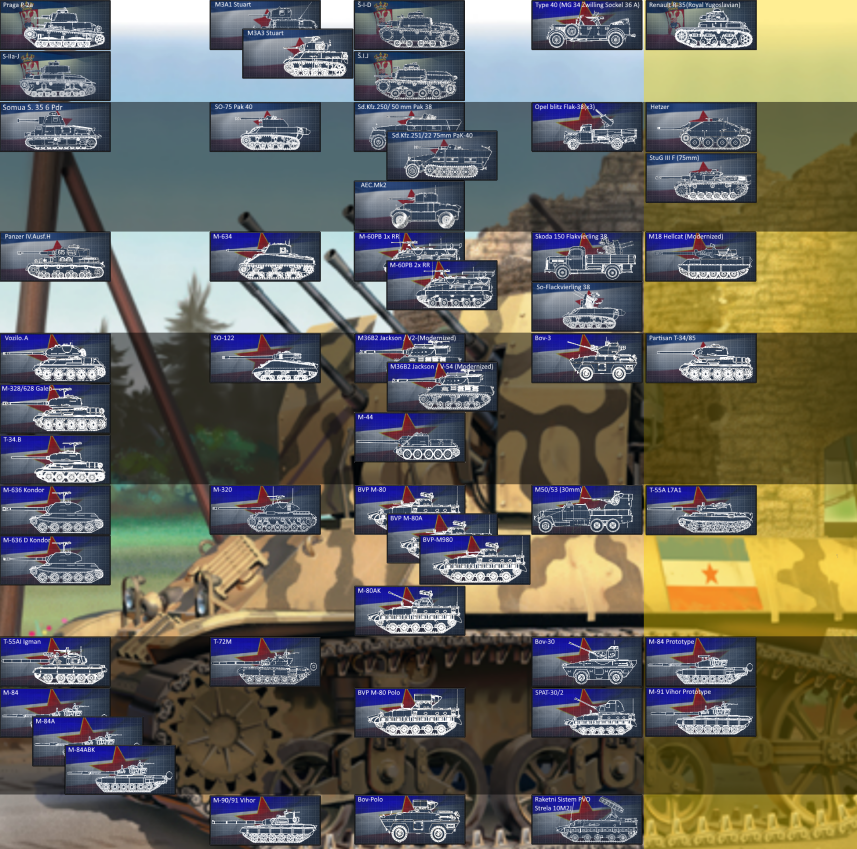
During the early 2010s, various online multiplayer games, such as War Thunder and World of Tanks, were released, quickly gaining popularity. Over time, these games expanded their initially small rosters of armored vehicles by adding new ones from different nations. Naturally, this sparked interest among players, many of whom began collecting information to create proposed ‘tech trees’ for countries not originally featured in the games.
One such effort focused on Yugoslavian armored vehicles. Over the course of its existence, the Yugoslav military operated a wide variety of armored vehicles, many of them imported from abroad, though a few were domestically developed. However, these were still insufficient to form a complete and balanced tech tree for a nation. One of the main gaps was in the category of self-propelled artillery, an area where the Yugoslav People’s Army was notably lacking, even at the height of its power. Finding suitable low-tier vehicles was particularly difficult.
Despite this, some allegedly proposed or field-modified vehicles have appeared on various websites over the years. Among the more unusual entries is a combination of the German 15 cm sIG 33 infantry support gun mounted on a turretless M3 Stuart Light Tank chassis. According to some sources, this vehicle was supposedly built by Communist Partisans sometime in late 1944 or early 1945 and was lost in its first combat action. An analysis of the available sources provides important insight into whether this vehicle existed or not.
Name
The Partisans never bothered to assign specific names to their M3 Light Tank field conversions. These vehicles were simply referred to as M3, combined with the weapon they were equipped with. For example, ‘M3 with the 15 cm sIG gun’. However, neither this name, nor any similar name for this vehicle is known to exist in documentary sources.
The Known Facts
The two components of this alleged construct did in fact exist and were used in Yugoslavia. One of them was the German heavy infantry support gun, the 15 cm sIG 33. Developed by Rheinmetall, this gun entered service in 1933. It was designed to serve as a standard heavy infantry support weapon, providing significantly more firepower than the smaller 7.5 cm leIG 18. The 15 cm gun typically followed German infantry units wherever they were deployed and remained in use until the end of the war.
While German occupation forces were usually equipped with older or captured weapons, some examples of the 15 cm sIG 33 did find their way to Yugoslavia. While not very common, the 15 cm sIG 33 was occasionally used as part of the occupation forces. This made sense, as the gun was simple, robust, and easy to operate. One such gun is currently on display at the Military Museum in Kalemegdan, located in Serbia’s capital, Belgrade.
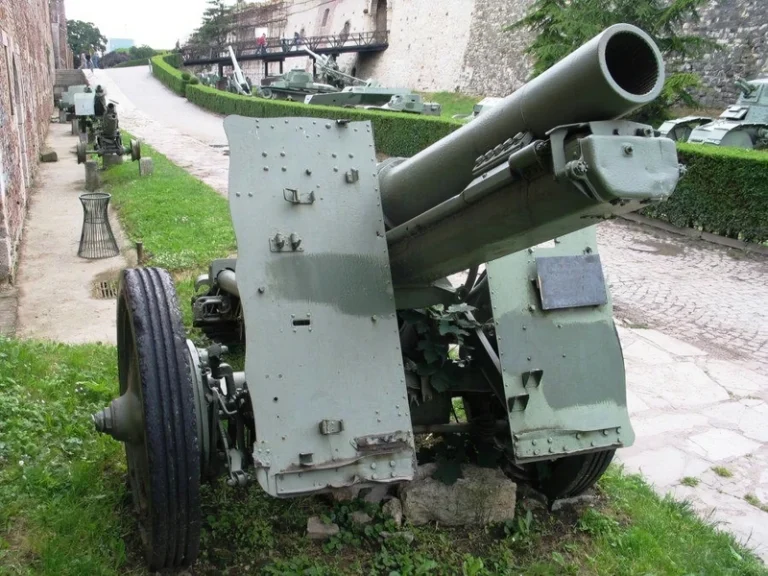
A surviving sIG 33 at the Belgrade Military Museum, located at Kalemegdan Fortress.
The second component in this vehicle was the American M3 Light Tank. These tanks were used in Yugoslavia by the Communist Partisan movement during the Second World War. Following the rapid conquest of the Kingdom of Yugoslavia during the April War (6th to 18th April 1941), the country was partitioned among the victorious Axis powers. Due to the harsh and often brutal occupation by Axis forces, two major resistance groups emerged by the second half of 1941: the Royalist Chetniks and the Communist Partisans.
By late 1943 and early 1944, the Communist Partisans had become increasingly active, launching attacks on vital Axis supply lines, communication routes, military bases, airfields, and other strategic targets. Their growing effectiveness in combat led to increased Allied support. As a result, the Allied High Command reached an agreement with the Partisan leader, Josip Broz Tito, to form a tank brigade equipped with Allied armor.
This unit, known as the First Tank Brigade, was officially established on 16th July 1944. The British provided approximately 56 M3A1/A3 Stuart Light Tanks, 24 AEC Mk. II armored cars, and two M3A1 Scout Cars to equip the brigade. It is important to note that although a turretless version of the Stuart did exist and was used by the Allies for reconnaissance, there is no evidence such a vehicle was provided to First Tank Brigade or to other forces in Yugoslavia.
The first vehicles for this new unit arrived in Yugoslavia in September 1944. Both Allied naval vessels and improvised Partisan-operated transport ships were used to ferry the vehicles across the Adriatic Sea from Italy to the Yugoslav coast. The First Tank Brigade went on to see extensive combat against German forces and their collaborators until the end of the war in May 1945.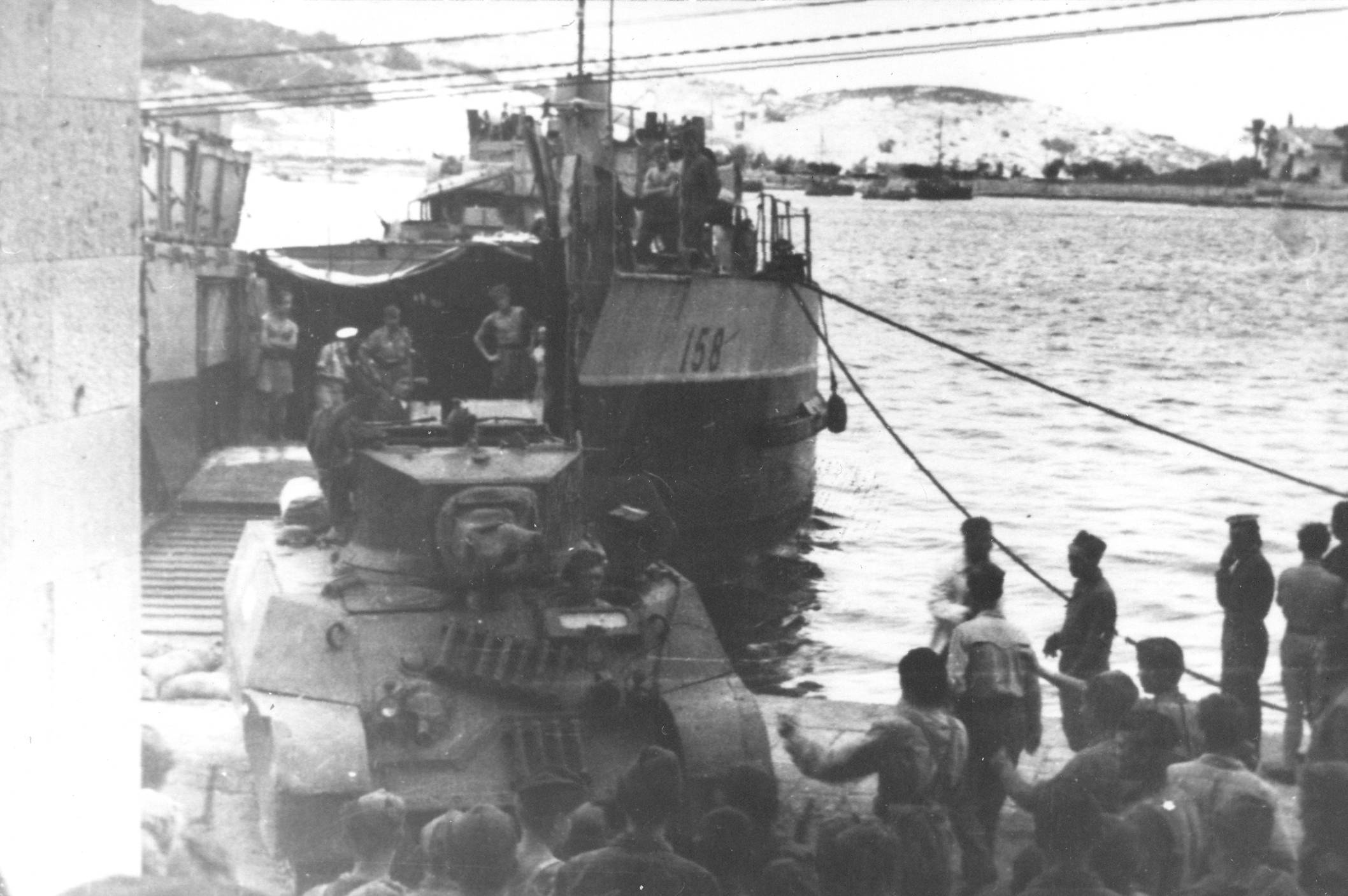
Many tanks from the First Tank Brigade were transported from Italy to Yugoslavia by Allied transport ships in September 1944.
Due to high attrition rates, many M3A1 and M3A3 tanks were either lost in combat or heavily damaged. With a chronic shortage of replacement vehicles, damaged tanks had to be repaired and kept in service to maintain the unit’s operational strength. In some cases, severely damaged tanks had their turrets removed and were rearmed with captured weapons.
Luckily for the Partisans, in early November 1944, they managed to liberate the city of Šibenik. Before the war, Šibenik had been home to a large naval shipyard and numerous repair workshops. Although the retreating Germans evacuated much of the machinery and tooling equipment and sabotaged what they could not take, enough functional equipment and materials remained to be of significant use to the Partisan mechanics, who were in urgent need of repair facilities.
Partisan Field Modifications
It was this workshop that reportedly served as the central facility where the improvised armored vehicle was created. Since the Partisans could not easily replace their tanks, they were forced to make do with whatever parts were available in order to return damaged vehicles to service. In some cases, the turrets were so severely damaged that they could not be repaired. These vehicles were instead repurposed as platforms for mounting captured German weapons.
At least one (possibly as many as five) vehicles were fitted with the German 7.5 cm PaK 40 anti-tank gun. The gun was mounted directly onto the hull of the M3 Light Tank, without its wheels and trailing legs, and protected with improvised armored shielding. The result was a rather crude, yet functional, tank destroyer reminiscent of the German Marder series.
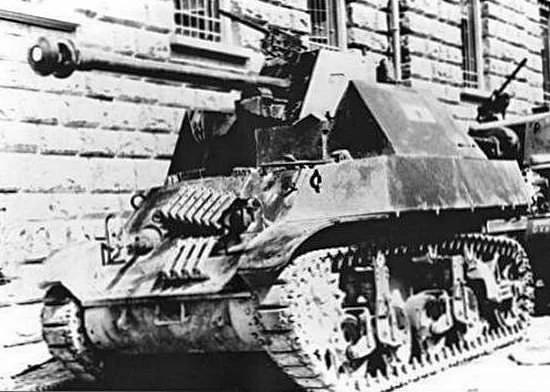
Up to five M3 Light Tanks were reportedly modified by arming them with the German 7.5 cm PaK 40 anti-tank gun. To provide a basic level of protection, improvised armor plates were added to the sides of the vehicles. According to available sources, firing the main armament caused the entire chassis to recoil backward by nearly a meter, highlighting how unstable the platform was. Despite this drawback, these vehicles managed to survive the war. Remarkably, they were even credited with the destruction of a German-operated T-34 tank.
In addition, two M3 Light Tanks were reportedly rearmed with 2 cm Flakvierling anti-aircraft guns. However, information about these vehicles is extremely limited, as the Partisans kept poor records during this period. It is believed that these conversions were carried out either in late 1944 or early 1945. Surprisingly, some of these improvised vehicles survived the war and continued in use for several years afterward. Unfortunately, their ultimate fate remains unknown.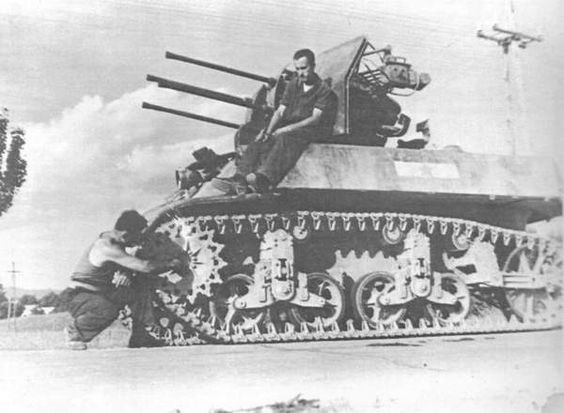
Another field modification involved installing an armored German quadruple 2 cm anti-aircraft gun, with the original gun shield, offering any kind of protection for its crew.
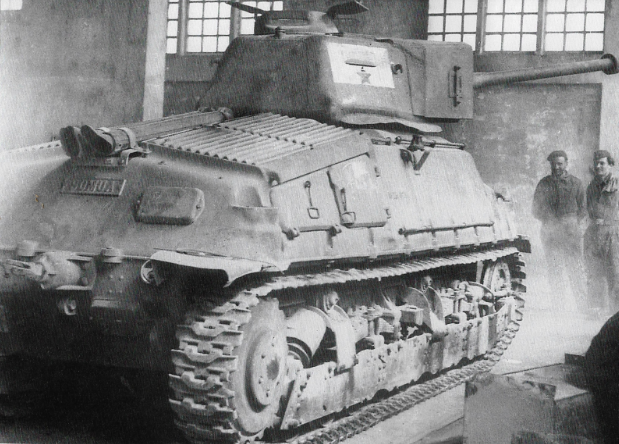
In addition to these efforts, they also created a hybrid vehicle by modifying a captured Somua S35 and replacing its gun with a weapon salvaged from a destroyed AEC armored car. Since the gun was too large for the vehicle’s original turret, it was mounted externally at the front. The new vehicle featured an enlarged turret and was even put into active service. However, it sustained some damage during its first combat action and subsequently disappeared from partisan records.


The M3 Light Tank 15 cm Armed Self-Propelled Variant
Finally, there was the M3 Light Tank variant, which was reportedly armed with a 15 cm gun mounted in a semi-enclosed superstructure. The precise purpose of this vehicle remains unclear, but it was most likely intended to provide close support fire or to serve as a mobile self-propelled artillery vehicle, delivering supporting fire from a distance.
As of the time of writing, the author has been unable to find any written sources that confirm the existence of such a version. In fact, even the Od Tenka do Brigade 1941–1945 (the oldest publication on this topic available to the author) does not refer to it at all.
More recent authors who have written extensively about the use of armored vehicles in Yugoslavia during the Second World War, such as B. B. Dimitrijević and D. Savić (Oklopne jedinice na Jugoslovenskom ratištu 1941–1945), as well as D. Predoević (Oklopna vozila i oklopne postrojbe u drugom svjetskom ratu u Hrvatskoj), also do not mention any modification of the M3 to mount a 15 cm gun.
Even foreign authors, such as B. Perrett (The Stuart Light Tank Series) and S. J. Zaloga (M3 and M5 Stuart Light Tank 1940–45), do not mention it. Zaloga does refer to the visually-confirmed two modifications of the vehicle, but neither the mortar-armed variant nor the 15 cm gun version are listed. Surely, information on such unusual vehicles must have existed somewhere in wartime records, including photographs – even some of the other obscure vehicles exist in some form in photographs.
Instead, this vehicle is only mentioned on various forums and obscure internet sites, where it was fairly common to come across such discussions in the 2010s. It was also sometimes added to a number of proposed Yugoslav tech trees for one of the popular multiplayer games at the time. Unfortunately, those websites have long since been shut down, making it nearly impossible to trace the origin or verify the authenticity of this claimed vehicle.
It must also be considered whether such a vehicle would have been mechanically feasible to build. The answer is very likely yes. For example, the Germans managed to mount a heavy 15 cm sIG 33 gun (with the chassis and wheels) onto the relatively weak chassis of the Panzer I, resulting in the 15 cm sIG 33 auf Panzerkampfwagen I ohne Aufbau Ausf.B. This shows that such conversions, while difficult, were not beyond the realm of possibility.
While it was technically possible to create such a vehicle using available resources, the real question is would the Partisans have actually done it? It is within the realm of possibility, but just because something could have happened does not mean it did. The claim that the only vehicle was lost in its first action is also perhaps a too convenient of an explanation for why no photographs of it exist.
Even the other modification of the captured Somua tank, though damaged in its first combat, at least has surviving photographs to prove it was real. In contrast, for the alleged M3 self-propelled vehicle, there is no photographic evidence from the period and eyewitness testimony from reliable sources is similarly missing. The absence of any written records stating that it was built strongly suggests it likely never existed and may simply be a modern invention created to fill gaps in the narrative of the national technical history.
What Would It Have Looked Like?
Since there is no reference or documentation regarding its alleged design, any conclusions must remain speculative. However, based on other modifications made to the M3 Light Tank, it is reasonable to assume that the chassis, suspension, and most of the superstructure would have remained unchanged.
The main question regarding this hypothetical design is whether the Partisans intended to use the entire gun assembly, including its wheels and trail leg, or if they planned to remove several components to make it as light as possible.
Retaining the complete gun would have been the simplest option, as it would only require fixing the wheels in place, possibly by adding a bolted armored plate to secure it during combat. However, this approach would come with significant drawbacks. The high silhouette and elevated center of gravity would make the vehicle unstable, especially when firing the gun.
A similar method was used on a German vehicle based on the Panzer I chassis, which also involved mounting the full gun assembly. Installing the complete gun assembly was seen as a simpler and cheaper solution, making the replacement of parts and the construction of new vehicles relatively straightforward. Additionally, if necessary, the gun could be dismounted and used in its original towed configuration. However, the downsides were significant: the added weight and especially the high silhouette made the vehicle vulnerable, and overall, the design was not particularly successful. This design proved far from ideal, and the Germans eventually abandoned such installations in later vehicles equipped with the same gun.

An alternative and arguably better solution would have been to remove as many components as possible in order to reduce the vehicle’s overall weight. For instance, removing the wheels would have significantly decreased the weight. However, due to the lack of a proper mounting system, the gun’s trail leg would still need to be retained to absorb the recoil force. In that case, a fixed or reinforced mounting point would likely have to be added, possibly positioned above the original M3 turret ring. The rear section of the trail leg would then be connected to the M3’s engine deck. The available online drawing shows this vehicle in a similar arrangement.
By reducing the size of the gun shield, removing the wheels, and modifying parts of the carriage, it became possible to mount the 15 cm gun inside the 15 cm sIG 33 auf PzKpfw II (this was the second German attempt to mount such a gun inside a tank chassis, but it also ultimately failed) while still providing limited working space for the crew. This option provided a significantly lower height and somewhat reduced weight. However, a sufficient strong mount would need to be added on top of the M3 superstructure to securely hold the gun in place during firing.


In both cases, working conditions for the crew would have been extremely poor. In order for the vehicle to be effective, it would have required a crew consisting of a driver, a gunner, and two loaders. The driver would be seated inside the vehicle hull, while the remaining three crew members would have to be squeezed into the cramped area near the main gun. The variant armed with the 7.5 cm gun, despite having a smaller weapon, offered barely enough space for two crew members to operate at even a minimal level of effectiveness. As a result, crew members often had to be transported separately during long-distance movements.

Another major issue is that of ammunition storage. The 15 cm gun used large two-part shells, each weighing around 38 kg and consisting of a separate propellant charge and explosive warhead. These required significant space to store, but the vehicle itself could only have been able to carry only a limited number of them. Placing the ammunition inside the vehicle would have been impractical because the gun was mounted on top of the turret opening, making the transfer of ammunition through that area impossible, as the driver would not have been able to pass it to the rest of the crew. This would have made an auxiliary vehicle necessary for transporting additional ammunition. Such dependency on external support greatly reduced the vehicle’s combat endurance, as it constantly had to rely on resupply to remain operational.
Armor protection would also have been a significant concern. On the variant armed with the 7.5 cm gun, the Partisans reportedly added armor plates salvaged from destroyed German vehicles. A similar approach was likely taken with the version equipped with the 15 cm gun. The salvaged armor plates were likely mounted on the vehicle’s sides to provide some degree of lateral protection, while the front gun shield may have been reinforced to enhance frontal defense.


Potential Combat Effectiveness
The 15 cm sIG 33 auf Panzerkampfwagen I ohne Aufbau Ausf.B provided mobility for the heavy 15 cm infantry gun, but the chassis proved to be too weak and prone to frequent malfunctions. Mechanical failures, especially of the suspension and engine, were quite common. The Germans later attempted to mount the same gun on a specially modified, lighter mount, which proved somewhat more successful, particularly when installed on the sturdier Panzer 38(t) chassis.
As for the M3 chassis, it is difficult to determine the exact impact of mounting such a heavy weapon without knowing the precise methods the Partisans used. Given the weight of the gun and the strong recoil force it generated, significant strain on the chassis would have been likely. For example, even the 7.5 cm PaK 40-armed variant was reportedly capable of recoiling so violently that the entire vehicle could be lifted off the ground and pushed backward by nearly a meter when firing.
The Germans eventually managed to design vehicles capable of effectively handling such powerful recoil. However, they did so after years of careful engineering and testing. The Partisans allegedly completed their improvised design in a much shorter timeframe. This rushed development likely led to major issues in controlling the recoil force of the 15 cm gun. Depending on the center of gravity and overall stability, such a makeshift solution could have rendered the vehicle difficult or even impossible to operate effectively.
Was it a Self-Propelled Artillery Piece or an Assault Gun?
The German 15 cm armed vehicle based on the Panzer I chassis was primarily intended as a long-range artillery platform. Close-range engagements were only undertaken in emergencies or when sufficient support from other units was available, as its high silhouette and weak armor made it highly vulnerable to any kind of anti-tank weapon.
However, in the hands of the Yugoslav Partisans, its role would have likely shifted toward more direct combat. The Yugoslav front was quite different from other theaters, much smaller in scale, and often characterized by irregular warfare and older tactics. Armored vehicles were frequently used in close support roles, rather than in large-scale tank assaults. Tanks and other armored vehicles were generally a rare sight in Yugoslavia in larger groups. Even the M3 modifications armed with the 7.5 cm or the 2 cm anti-aircraft guns (despite their lack of effective armor) were used in support of infantry attacks. Therefore, it is likely that the 15 cm armed variant would have been employed similarly.
This difference in approach can also be seen in how the Partisans used armored cars. While other nations typically deployed these for reconnaissance operations, the Partisans often used them as tank hunters, repurposing whatever armored assets they had for direct combat roles.
Conclusion
The M3 armed with the 15 cm sIG 33 gun was an alleged field conversion reportedly made by the Yugoslav Partisans. Mechanically, the modification was feasible; however, its combat effectiveness is highly questionable. The vehicle would have suffered from limited ammunition capacity, inadequate protection, a cramped interior, and the inherent constraints of the small M3 chassis.
The existence of this variant is not supported by any written documents or credible sources. In contrast, the other two documented and known field modifications are corroborated by surviving photographs and at least some limited documentation available in public sources.
Unless and until some archival proof or other evidence emerges to substantiate the claims around this vehicle, it can be reasonably concluded that this vehicle is likely a fabricated concept. To that end, it appears to have been created by someone aiming to produce a playable tech tree vehicle for the Yugoslav nation for an online tank game such as War Thunder or World of Tanks.

Light M3 with 15 cm sIG 33 Specifications |
|
|---|---|
| Crew | 4? (driver, gunner, and two loaders) |
| Dimensions | Length 5 m, Width 2.52 m |
| Engine | Continental 7-cylinder petrol 250 hp air-cooled |
| Armament | One 15 cm sIG 33 |
| Armor | 13-51 mm |
Sources
- B. B. Dimitrijević and D. Savić (2011) Oklopne jedinice na Jugoslovenskom ratištu 1941-1945, Institut za savremenu istoriju, Beograd.
- D. Predoević (2008) Oklopna vozila i oklopne postrojbe u drugom svjetskom ratu u Hrvatskoj, Digital Point Tiskara
- P. Zakonović and U. Janjetović (1987) Tehnička Služba u Narodno Oslobodilačkom Ratu (1941-1945)
- Od Tenka Do Brigade 1941 – 1945, Uredništvo Vojnog Glasnika
- B. Perrett (1980) The Stuart light tank series, Osprey Publishing
- S. J Zaloga (1999) M3 and M5 Stuart Light tank 1940-45, Osprey Publishing
- M. Babić (1986) Oklopne Jedinice u NOR-u 1941-1945, Vojnoizdavački i Novinarski Centar
- D. Predoević (2002) Armored units and vehicles in Croatia during WW II, part I, Allied armored vehicles, Digital Point Rijeka