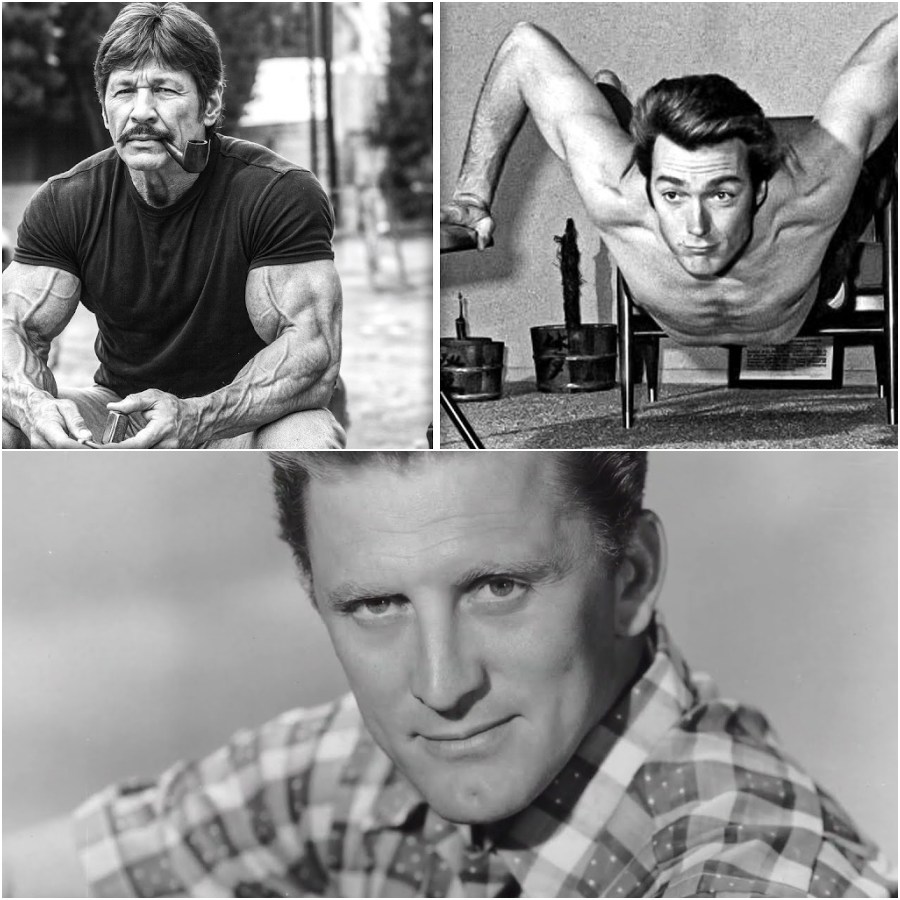
The 10 toughest actors in Hollywood history. Some actors played tough. These men were tough on screen and off. They weren’t just following scripts. They were drawing from real scars, real fights, and real battles. Behind the cameras, they faced wars, prison cells, street brawls, and near-death stunts. They didn’t need to act because life had already hardened them. we’re counting down the 10 toughest actors in Hollywood history. Not just the most famous, but the ones who actually lived what they portrayed.
Some had medals, others had mug shots, but all of them had something real behind their stare. Let’s start with a man whose entire life was a masterclass in raw survival. And uh which is either true or not true or true with reservations or untrue or number 10.
Robert Mitchum, Georgia chain gang prisoner at 16, freight train hopper during the depression. Boxing under fake names for food money. Robert Mitchum’s sleepy eyed stare wasn’t an act. It was a warning. That scarred face and broken nose, all real, not studio makeup. Before Hollywood ever found him, Mitchum was riding rails across America as a teenage drifter. He wasn’t seeking adventure. He was just trying to survive. He dug ditches, mined coal, and took any brutal job that kept him fed.
By the time cameras rolled, Mitchum had lived several lifetimes of hard lessons. The prison time followed him to fame. When he was busted for marijuana in 1948, it should have killed his career. Instead, Mitchum shrugged, did his 60 days, and walked out of jail more popular than ever. He never apologized, never begged. He just went back to work like nothing happened. On screen, he looked like a man who didn’t give a damn because offcreen he didn’t. When asked about his acting technique, Mitchum famously dead panned, “I have two styles: with and without a horse.” Translation: He didn’t fake it.
He was it. Co-stars said there was something unsettling about working with him. Not because he was loud, but because he wasn’t. He had the calm of a man who’d been in real fights and didn’t need to prove anything to anyone. Director Edward Dmitri once admitted, “You didn’t direct Mitchum. You just kept the camera rolling and hoped he didn’t knock someone out.” Robert Mitchum didn’t shout, didn’t strut, didn’t pose. He just stood there and you felt it. You get your big boss up there to snap his almighty fingers and say, “Uh, Steve Bolan, you’re no longer
in a clink.” Number nine, Charles Bronson, coal miner at age 10, Purple Heart recipient, B29 tail gunner, flying bombing raids over Japan. Charles Bronson’s silence wasn’t a performance. It was a warning. Born into crushing poverty as one of 15 children in a Pennsylvania mining family, Bronson was working underground before most kids finished elementary school. covered in soot, breaking his back hundreds of feet below the surface. That coal dust didn’t just shape his body, it carved his soul.
His childhood wasn’t difficult, it was brutal. When World War II erupted, Bronson traded one deadly environment for another, serving as a tail gunner on B29 bombing runs over Japan. He was wounded in combat, earned a Purple Heart, then came home to take whatever work would feed him. Short order cook, onion picker, part-time boxer. By the time Hollywood found him, Bronson wasn’t interested in fame. He just wanted a paycheck. Directors quickly realized this wasn’t a performer. He was the real article.
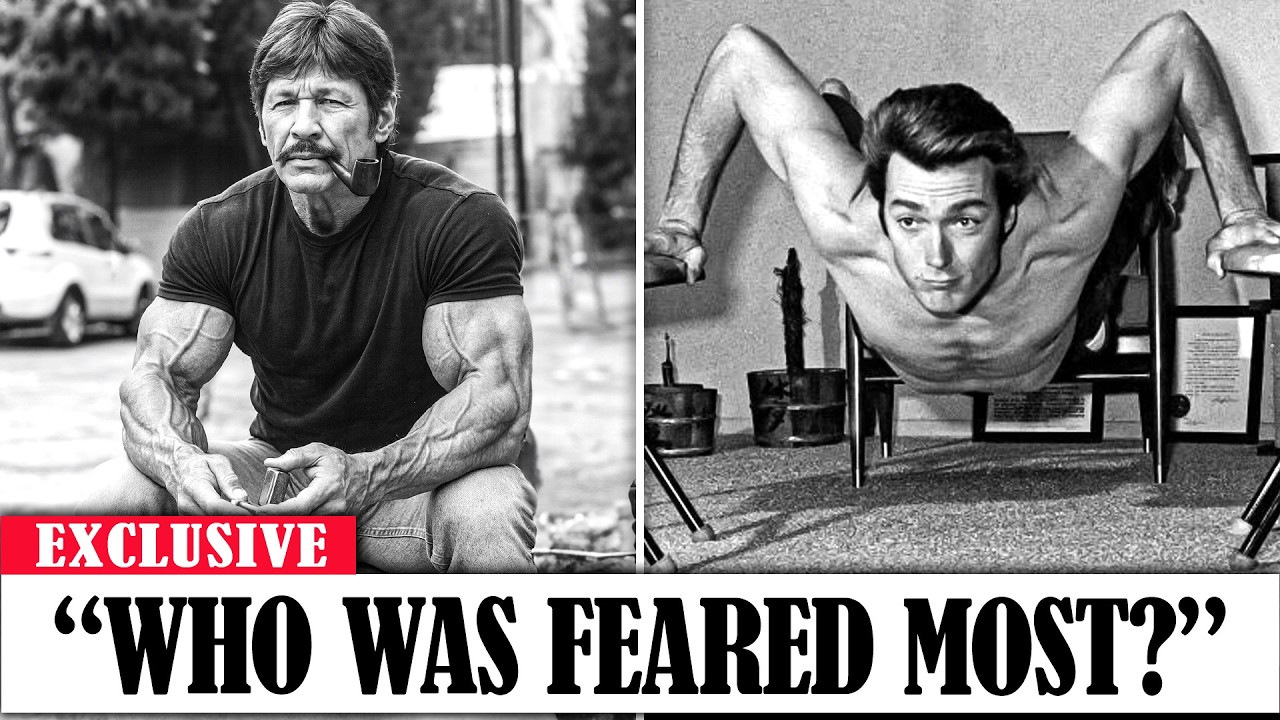
His punches looked efficient because they were. He hit like someone who knew exactly where to strike to end a fight fast. Jan Michael Vincent, who worked with him on the mechanic, said, “He just grabbed my shirt in a scene and I couldn’t believe the strength. He wasn’t pretending. When the mafia allegedly sent death threats after death wish, the studio offered bodyguards.” Bronson laughed it off. I’ve lived too long. I’ve seen too much to be scared of that.
What made Bronson unique was his absolute efficiency. He showed up, hit his marks, delivered lines like steel and left. No ego, no games, just raw presence shaped by a lifetime of survival. Bronson didn’t wear a costume. He was the role. Every role and you felt it. And I believe this. If tomorrow all of us, every single one of us gets out of bed and says, “This is my country, and I’m going to do good for it.” Number eight, John Wayne.
Broken ribs on set, lung removed, stomach cancer from radiation exposure. John Wayne wasn’t just playing tough guys. He was enduring real pain while the cameras rolled. Before the cowboy hat and the draw, Wayne was born into the harsh reality of early 20th century rural America. He worked through college on pure physical strength, earning a football scholarship to USC through grit, not privilege. His early Hollywood years weren’t glamorous. He was moving heavy props, building sets, and handling the backbreaking labor no one else wanted.
His pain tolerance became legendary. During the Alamo, Wayne cracked several ribs performing a horse stunt. Instead of halting production, he simply wrapped his torso, took painkillers, and kept filming. No complaints, just determination. The true measure of his toughness came in 1964 when doctors removed a lung and four ribs after his cancer diagnosis. Most careers would have ended there, not Wayne’s. Months later, he was back doing stunts in the Sons of Katie Elder like nothing had happened. The most haunting chapter came during The Conqueror, filmed Downwind from a nuclear test site in Utah.
The production exposed cast and crew to deadly radiation. Of the 220 people involved, nearly half developed cancer, including Wayne himself. He later died of stomach cancer, likely from that exposure. But he never stopped working, never complained, never slowed his pace. When director Henry Hathaway offered him a stunt double after surgery, Wayne stared him down and said, “Either I do my own stunts or you get someone else.” That wasn’t movie dialogue. That was who he actually was. Even his political opponents respected his physical courage.
Kirk Douglas, who fought Wayne on nearly every issue, admitted disagree with his views all you want, but don’t question the man’s toughness. I’ve seen him work through things that would send most men to the hospital. Hello, Mac. This is Rocky. Surprise, surprise. No, I ain’t down no more. One of your own boys. Say, “Look, Fraser is here. He wants to talk to you.” Number seven, James Kagny, street fighter from Manhattan’s Lower East Side. Former boxer, 5′ 5 in of explosive power.
James Kagny didn’t need height to dominate a room. He just needed to move. Growing up in the roughest neighborhood in New York, Kagny learned early that survival meant fighting daily. He didn’t box for sport. He boxed because otherwise bigger kids would break him. Those street lessons carved something permanent into his reflexes that no acting school could teach. What made Kagny’s screen presence so believable was the authenticity of his movements. His punches weren’t slow theatrical swings. They were sharp, explosive, and precisely targeted, exactly how someone who’d been in real fights would strike.
Director Ral Walsh confirmed it. Jimmy knew how to throw a punch better than any actor I ever worked with because he’d thrown plenty of real ones in his day. The secret weapon in Kagney’s physical arsenal wasn’t just fighting experience. It was his professional dance training. That unique combination, fighter’s aggression with dancer’s precision, made him lethal both on screen and off. He could choreograph violence with the timing of a dancer and the impact of a street brawler. Off camera, his reputation was solid, not because he was imposing, but because he was dangerous when provoked.
Bob Hope once remarked, “Kagny was the kind of guy who’d drop you, then help you up and buy you a drink.” His toughness never faded with age. It just refined into something more controlled, but equally deadly. James Kagny proved that genuine toughness isn’t about size or volume. It’s about coiled precision and the absolute certainty behind your movements. I want to say that I was only competing with myself and I thank you very much for letting me win that fight over myself.
Number six, Anthony Quinn. Born during the Mexican Revolution. Professional boxer carrying two logs alone at age 46. Anthony Quinn didn’t just play strong men. He was one forged through genuine hardship, not gym routines. His earliest memories weren’t playground games. They were fleeing gunfire and watching soldiers storm through streets. After his family escaped to America, Quinn found himself in the slums of East Los Angeles, where survival wasn’t guaranteed and weakness wasn’t an option. By age nine, he was already working as a butcher’s assistant, laborer, and construction hand.
When money got desperately tight, Quinn turned to professional boxing, trading real punches in real rings for real stakes. No stuntman, no rehearsals, just gloves and determination. That trademark broken nose, he earned it the hard way. His raw physical power became legendary on film sets. While shooting Zorba the Greek, Quinn carried massive logs across beaches that normally required two men to lift, not as a display, but because the work needed doing. During the Guns of Navaron, he performed his own cliff climbing stunts at 46, dismissing insurance concerns with a wave of his hand.
What truly separated Quinn from other tough guys was his comfort with both strength and vulnerability. He never hid behind macho posturing. He could weep on screen, show genuine emotion, and still make you absolutely certain he could destroy an opponent if necessary. That duality came from lived experience, not acting classes. Directors knew it. Co-stars felt it. Audiences sensed it instantly. Anthony Quinn didn’t need to pretend to be tough. He simply was. I swear by number five, Kirk Douglas, wrestling scholarship champion, naval combat veteran.
survived helicopter crash at 72, recovered from stroke that should have ended him. Kirk Douglas didn’t get handed anything in life. He fought for every inch. Born to destitute immigrant parents, Douglas grew up in a house where food wasn’t guaranteed. He worked odd jobs from childhood just to keep the lights on. But poverty didn’t break him. It forged him into something unbreakable. He clawed his way into college through competitive wrestling. Not theatrical wrestling, but the brutal collegiate kind where strength and pain tolerance determine everything.
When World War II erupted, Douglas enlisted in the Navy, serving aboard submarine chasers hunting enemy vessels. These small, vulnerable ships faced constant danger from torpedoes and enemy fire. He was injured in service and medically discharged in 1944, but never used it as an excuse for anything. Oncreen, Douglas didn’t just perform action. He attacked every scene with physical conviction that came from real experience. For Spartacus, he trained with actual fighters, refused doubles, and took legitimate hits to make combat sequences feel authentic.
When a dangerous fall during filming caused serious injury, he was back on set within 48 hours. But Douglas’s greatest display of toughness came decades later. In his 70s, he survived a helicopter crash that killed two others. Most men his age would never recover. Douglas rehabilitated and walked again. Then after suffering a devastating stroke that destroyed his speech, he fought through years of grueling therapy, regained his voice, and wrote a book about the experience. His life was living proof that true toughness isn’t about youthful strength.
It’s about relentless resilience. Director Stanley Kubri said it perfectly. When Kirk decided something was going to happen, it happened. That wasn’t movie magic. That was the reality of who Douglas was. Thank you. Thank you all very much. I don’t want to take up too much of your time. There’s too many people to correctly thank for in my career. Number four, Lee Marvin. Marine Corps combat veteran. Purple Heart recipient survived machine gunfire through his back. Lee Marvin’s quiet, dangerous energy wasn’t acting, it was memory.
Before Hollywood ever found him, Marvin had already witnessed the worst humanity could offer. As a marine in the Pacific during World War II, he fought through some of the war’s most brutal island campaigns. During the Battle of Saipan, he took machine gun fire to his back, severing his sciatic nerve and leaving him with a permanent limp he disguised on screen for decades. While other actors studied how to portray killers, Marvin had already seen real combat, real death, and real consequences.
Directors noted he moved differently than other actors with the precise economical movements of someone who understood that real violence isn’t theatrical. It’s efficient, ugly, and final. His understanding of authentic combat made his performances uniquely disturbing. When he played hitmen, soldiers, or criminals, there was something genuinely unsettling in his eyes. He wasn’t pretending to be dangerous. He was dangerous. The legends followed him off camera. During location shooting in Oregon, Marvin got into a bar fight with multiple lumberjacks.
Witnesses reported he held his own against several men, then showed up on set the next morning, still bruised, but refusing to delay filming. Co-stars admitted feeling genuinely intimidated by his presence. Not because he was aggressive, but because he wasn’t. His power came from absolute stillness. The kind of quiet confidence that needs no demonstration. Lee Marvin didn’t act tough. He simply brought real battlefield experience to every role, carried genuine scars under his wardrobe, and showed audiences what authentic danger looked like without ever raising his voice.
Oh, my love is my light shine so bright. Number three, Steve McQueen. Marine Corps rescuer of five men from a sinking tank. Professional race car driver performed nearly all his own stunts. Steve McQueen wasn’t just Hollywood’s king of cool. He was legitimately fearless in ways that terrified studios and insurance companies. Abandoned by both parents and raised in reform schools, McQueen’s childhood was a masterclass in survival. He ran away at 14, drifted through trouble, then joined the Marines, where his rebellious streak continued.
He was demoted seven times and spent 41 days in the brig, not from weakness, but from refusing to back down to authority. Yet, when lives were at stake, McQueen’s true character emerged. During Arctic training, he saved five fellow Marines from drowning in a sinking tank, risking his own life without hesitation. That combination, wild unpredictability with absolute reliability under pressure, defined his entire life. In Hollywood, McQueen didn’t leave danger behind. He chased it relentlessly. He performed nearly every stunt himself against all studio objections.
On The Great Escape, the only stunt he didn’t perform was the fence jump solely because producers physically prevented it. During the sand pebbles, he nearly drowned filming river scenes. For the towering inferno, he insisted on doing fire sequences so dangerous that professional stuntmen hesitated. His off-screen passions weren’t publicity stunts, they were obsessions. McQueen raced motorcycles and cars professionally, often using pseudonyms to prevent studios from stopping him. At the punishing 1970 Sebring race, he placed second overall while wearing a cast on his foot.
When informed his name appeared on Charles Manson’s kill list, McQueen didn’t hire security. He simply began carrying a loaded magnum everywhere. His longtime stunt double, who rarely had work when McQueen was on set, put it perfectly. Steve didn’t act like a racer or fighter. He was better than most professionals I knew. Steve McQueen wasn’t performing fearlessness. He was genuinely fearless, living every moment at maximum intensity until the very end. Of course, you have to remember an absolutely key element in that film is Jakamat who taught me to to drive.
Number two, Charlton H, World War II veteran, performed with torn ligaments, filmed through cancer treatments after having a lung removed. Charlton H brought real physical endurance to roles that demanded superhuman strength. Before becoming Moses or Benhur, Hon served as a radio operator and aerial gunner in the Army Air Forces during World War II. Though not in frontline combat, his service instilled military discipline and physical resilience that defined his approach to acting. What separated H from other Hollywood figures wasn’t just his imposing build.
It was his absolute refusal to accept special treatment. H performed physically punishing scenes that would break most actors. For the Ten Commandments, he hoisted actual stone tablets for countless takes, each repetition brutal on his shoulders and back. He never complained, never asked for lighter props. During The Greatest Story Ever Told, he tore shoulder ligaments performing a stunt. Rather than halt production, he had the injury wrapped during lunch break and returned to filming that same afternoon. His most haunting display of endurance came after working on The Conqueror, filmed near a nuclear testing site in Utah.
Of the 220 cast and crew members, nearly half later developed cancer, including Hel. Yet, even after diagnosis, surgery, and having a lung removed, he continued performing physically demanding roles that would exhaust healthy actors half his age. What drove him wasn’t ego or showmanship. It was a sense of absolute duty to the production and audience. Whether playing prophets or warriors, H brought genuine conviction and almost defiant endurance to every frame. He didn’t just portray strength. He embodied it through military service, raw physical power, and a willingness to endure genuine suffering for his craft.
By the way, I’d like to add that it isn’t just my story. It’s the story of the Third Infantry Division and the men who served in me. Number one, Audi Murphy. Most decorated American combat soldier in history. Medal of Honor recipient. Killed over 240 enemy soldiers personally. If genuine toughness had a face, it wouldn’t be intimidating or scarred. It would look exactly like Audie Murphy. Boyish, unassuming, and absolutely lethal. Before he ever stepped onto a film set, Murphy had already lived through hell and emerged decorated beyond any soldier in American history.
At just 19, he single-handedly held off an entire company of German soldiers for over an hour after mounting a burning tank destroyer. Wounded and out of ammunition, he then led a counterattack that drove back the enemy. That action alone earned him the Medal of Honor. But that wasn’t an isolated incident. By his 21st birthday, Murphy had earned every American medal for Valor available, 28 decorations in total. He destroyed tanks, charged machine gun nests, absorbed wounds, and kept fighting when most men would have collapsed.
Military historians estimate he personally killed over 240 enemy soldiers, more than some entire combat units. The most chilling aspect of Murphy’s deadliness was his appearance. He stood 5’5 in and weighed 112 lb when he enlisted. He looked like a high school student, not a killing machine. When Hollywood discovered him after he appeared on the cover of Life magazine, security guards at the studio didn’t believe this gentlel looking young man could be the legendary Audie Murphy. That disconnect between his innocent appearance and lethal capability made him uniquely terrifying.
When he starred in To Hell and Back, based on his own experiences, producers actually toned down his achievements because audiences wouldn’t believe what he’d really accomplished. It seemed too impossible, too heroic. Behind his calm demeanor, Murphy battled severe PTSD. He slept with a loaded pistol under his pillow and suffered violent flashbacks. His wife once said, “During those episodes, it wasn’t Audi anymore. It was someone I didn’t recognize.” Despite these inner demons, he maintained remarkable control, except for one incident when a businessman became aggressive during an argument.
Witnesses described Murphy’s transformation as instantaneous and terrifying. The man immediately backed down, later admitting, “I realized in that moment he could kill me without hesitation.” Murphy never wanted to play war heroes. He preferred romantic comedies and westerns. But every time he appeared on screen, there was an unmistakable presence, a stillness that communicated, “This man has seen things you cannot imagine and survived them.” He didn’t act tough. He was the realest thing Hollywood ever had. This guy asked me, “Hey, do you want to be in this movie?” And I says, “What do I got to do?”
He said, “Uh, do you want to be extra?” I said, “Extra what?” Honorable mention, Danny Tjo, the modern warrior, San Quentin prison boxing champion, convicted armed robber, overcame heroin addiction. While our list focuses on golden age stars, we’d be remiss not to acknowledge Danny Tjo, possibly the only modern actor whose real life toughness exceeds the golden era legends. Before his face became iconic in films like Machete and Heat, Tjo spent 11 years cycling through California’s hardest prisons for armed robbery and drug offenses.
Inside San Quentin, he became the prison’s lightweight and welterweight boxing champion, fighting the most dangerous inmates in the system and surviving. His prison time wasn’t spent in protective custody. It was in the general population of America’s most notorious penitentiies during their most violent decades. The scars on his face aren’t makeup. They’re permanent reminders of knife fights and prisonard battles that nearly claimed his life multiple times. What makes TJO’s toughness truly remarkable is his transformation. After getting sober in prison, he’s maintained sobriety for over 50 years while working as a drug counselor.
When Hollywood discovered him, he wasn’t seeking fame. He was visiting a film set to help a young actor struggling with addiction. Unlike manufactured tough guys, Tjo doesn’t need to posture. When asked about doing his own stunts, he famously replied, “I’m 75. I don’t want to be 76 trying to act like I’m 35. Actors get hurt. Stuntmen don’t.” That’s the confidence of someone with nothing left to prove to anyone. His legendary status among actual criminals and hardened excons speaks volumes.
In neighborhoods where Hollywood tough guys would be laughed at, Tjo commands immediate respect. As one former inmate put it, “In places where fake toughness gets you killed, Danny’s the real deal. Everyone knows it.” Tjo proves that genuine toughness isn’t just found in Hollywood’s past, it occasionally still walks among us, carrying real prisonard lessons that no acting class could ever teach. So, there you have it. The 10 toughest actors in Hollywood history. Not men who played at strength, but those who lived it, who brought real scars, authentic courage, and hard-earned resilience to every frame they filmed.
Their legends endure not because of scripts or publicity, but because the camera captured something authentic that no amount of training can fake. Which one surprised you most? Would you have ranked them differently?