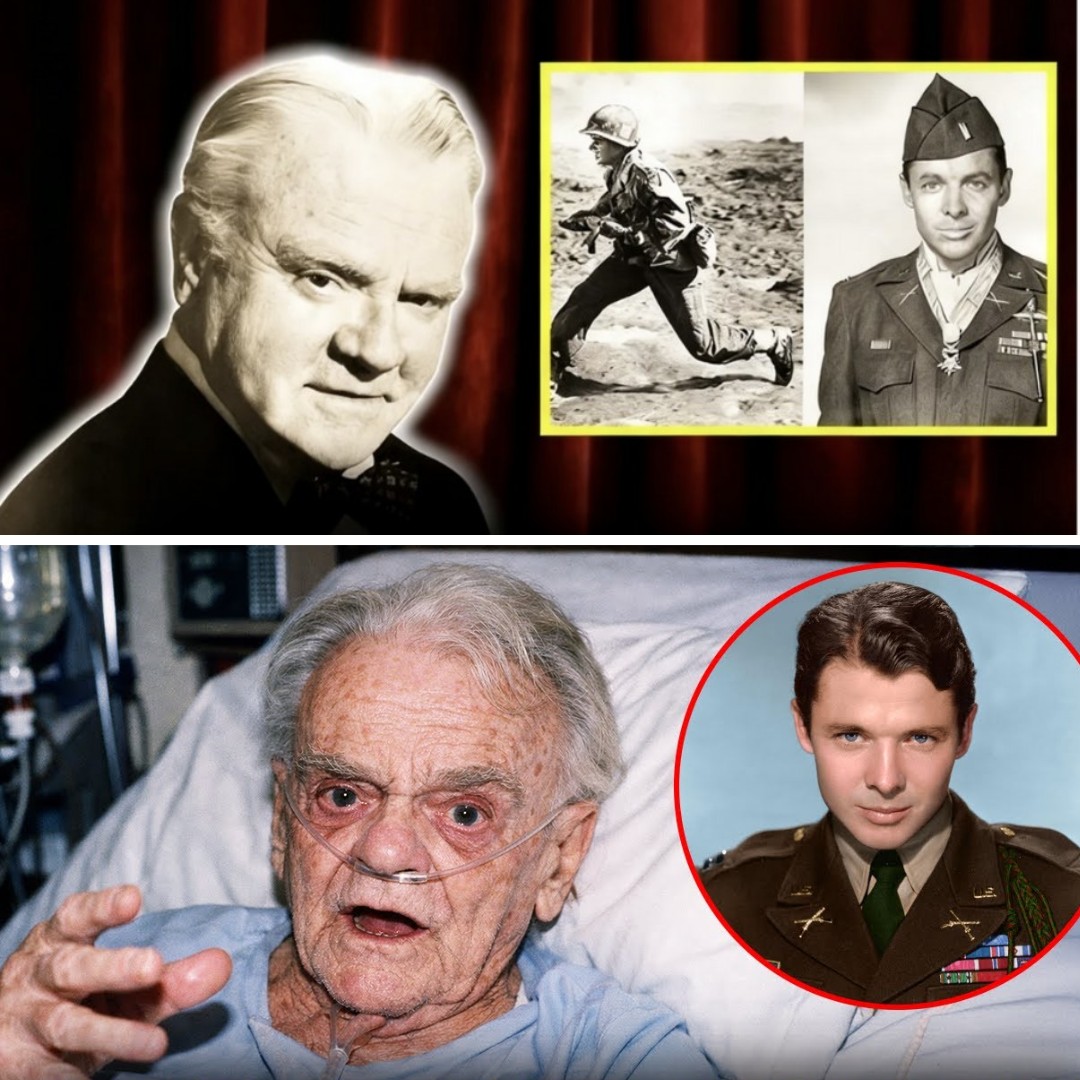
In the later years of his life, James Cagney was said to have revealed a surprising truth, shedding light on the real story behind Audie Murphy.

James Cagney, the iconic Hollywood gangster figure, made a surprising revelation toward the end of his life that shed new light on the story of Audie Murphy. Cagney, who had spent his later years living with a private sense of regret, wasn’t troubled by past roles, feuds, or scandals. Instead, his remorse centered on a man — a man he had believed he saved from one war, only to unknowingly push into another.
That man was Audie Murphy.
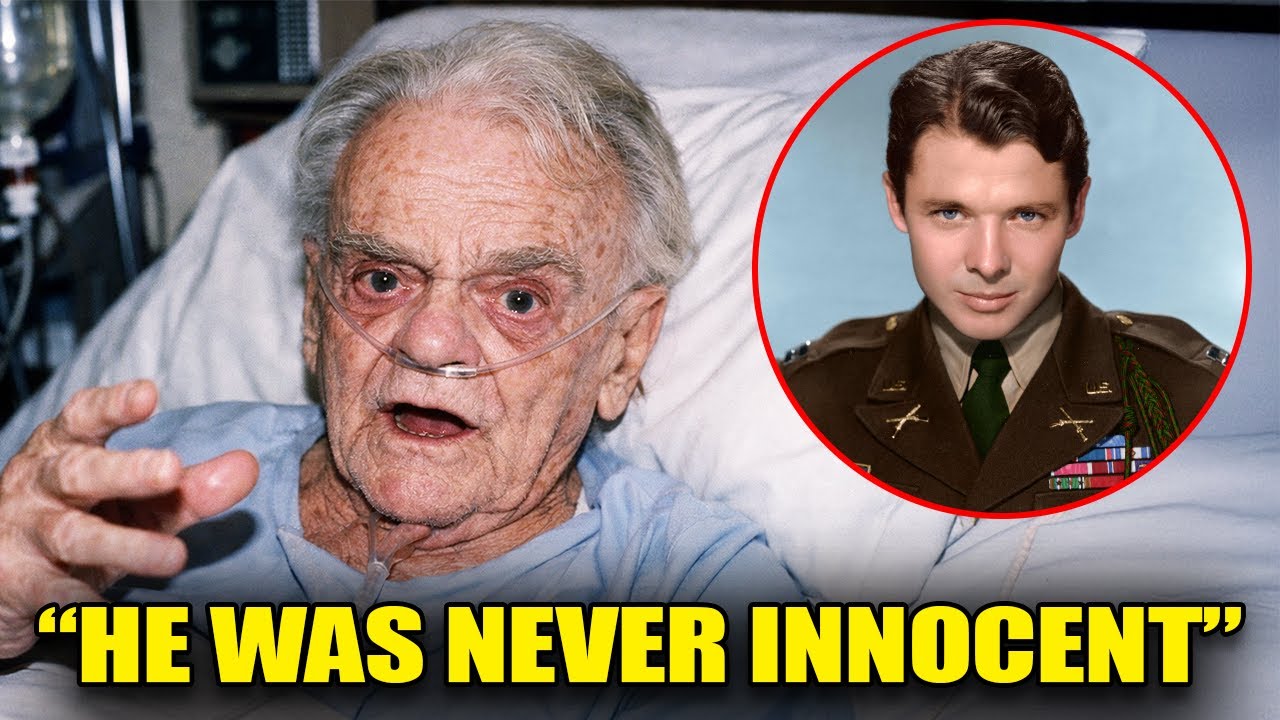
To the American public, Murphy was the epitome of youthful heroism — a soldier with a baby face, blonde hair, blue eyes, and a smile perfect for magazine covers. In 1945, he graced the cover of *Life* magazine, with an article declaring him the most decorated American soldier of World War II. His heroic deeds seemed almost too incredible to believe — wiping out enemy units, destroying tanks, and showing unparalleled courage under fire.
But when Cagney saw that photograph, something within him shifted. Beneath the accolades and carefully crafted narrative, he saw a vulnerability. Murphy appeared far too young to carry the weight described in the article. Rather than triumph, Cagney saw quiet exhaustion in his eyes. He felt both admiration and an overwhelming sense of guilt. In front of him stood a man who had sacrificed everything for his country, only to be sent back to civilian life without the support or guidance he needed.
Moved by instinct, Cagney invited Murphy to Hollywood, believing he could help him adapt and possibly protect him from the brutal spotlight of fame. When Murphy arrived in Los Angeles, Cagney was struck. The war hero before him was frail and fatigued — more a boy than a soldier. His uniform hung loosely, and there was no sign of arrogance or bravado — only a quiet, observant gaze, burdened with unseen struggles.
Cagney took him directly to his estate, where he arranged for Murphy to stay in the guest house. He promised himself that, in some small way, he would make up for what life had taken from Murphy so prematurely.
For a while, all seemed calm. But soon, subtle signs began to surface.
Having spent years studying human nature, Cagney noticed something unsettling about Murphy — it was in his eyes. His smiles never reached them. His eyes remained distant and alert, as if always bracing for danger. He never sat with his back to a door, preferring corners, shadows, and spots that allowed him to stay vigilant. Sudden sounds caused his body to tense, and his hand would move toward his waist without thinking.
This wasn’t just anxiety; it was instinct — a survival mode that couldn’t be turned off.
The full extent of the truth came to light one stormy, violent night in the Hollywood Hills. As thunder rumbled overhead, shaking the windows, Cagney grew concerned that the noise might disturb Murphy. He walked to the guest house, finding the door slightly ajar. Inside, Murphy lay on the bed, seemingly asleep…
…but the moment Cagney’s shadow fell across the threshold, chaos erupted. In one fluid, terrifying motion, Murphy rolled off the bed, a pistol materializing in his hand as if conjured from thin air. The barrel leveled straight at Cagney’s chest. Lightning flashed outside, illuminating the scene in stark, white bursts: Murphy’s face twisted not in recognition, but in primal fury, his eyes wide and unseeing, locked in a battlefield that existed only in his mind.
“Audie! It’s me—Jim!” Cagney shouted, raising his hands slowly, his voice steady despite the surge of fear. He had faced down fictional gangsters with fake guns for decades, but this was real steel, loaded with real intent.
Murphy blinked once, twice. The thunder cracked again, and for a split second, Cagney saw the war flash across the younger man’s features—the mud of Sicily, the snow of the Ardennes, the endless rattle of machine guns. Then, slowly, awareness returned. The pistol lowered, trembling. Murphy sank back onto the edge of the bed, the weapon slipping from his fingers onto the sheets. He buried his face in his hands, breathing in ragged gasps.
“I’m sorry, Mr. Cagney,” he whispered, his Texas drawl thick with shame. “I thought… I was back there. The noise… it sounded just like incoming.”
Cagney stepped inside, closing the door gently behind him. He didn’t turn on the light. Instead, he sat in a chair across the room, giving Murphy space. Rain lashed the windows like enemy fire. For the first time, the older actor understood the depth of what he had invited into his home. This wasn’t a hero ready for the silver screen. This was a man whose war had never ended.

Over the following weeks, Cagney became both mentor and reluctant witness to Murphy’s hidden torment. By day, they worked on acting lessons. Cagney hired coaches to soften the thick accent and teach the basics of projection and presence. Murphy was a quick study in discipline—he had learned that in the Army—but emotion eluded him. When asked to portray fear or joy, his face remained a careful mask. “I don’t know how to pretend anymore,” he confessed one afternoon by the pool. “Everything I feel is real. Too real.”
Cagney pushed gently, drawing from his own rough-and-tumble upbringing in New York’s Lower East Side. He shared stories of street fights and early vaudeville days, trying to build trust. In return, Murphy opened up in fragments. He spoke of enlisting at seventeen, lying about his age after his mother’s death left him the sole provider for his siblings. He described the horror of Anzio, where he held a position alone against waves of Germans, and the frozen hell of the Colmar Pocket, where he climbed atop a burning tank destroyer to turn its .50 caliber machine gun on the enemy, earning the Medal of Honor.
But the nights told the fuller story. Murphy suffered from crushing insomnia. He would pace the guest house until dawn, or sit motionless in the corner, staring at the door. Cagney once found him cleaning the pistol at 3 a.m., disassembling and reassembling it with mechanical precision. “Keeps the hands busy,” Murphy explained quietly. “Stops the memories from flooding in.”
Cagney tried everything he knew. He arranged quiet dinners with trusted friends, introduced Murphy to horseback riding—something that seemed to calm the young man’s nerves—and even suggested therapy, though the word “shell shock” carried too much stigma in those post-war years. Murphy resisted. “I’m supposed to be the hero,” he said bitterly. “Heroes don’t break down.”
Despite the struggles, Cagney saw potential. He signed Murphy to his production company and helped secure small roles. The camera loved Murphy’s boyish face; audiences responded to his quiet authenticity. His first major break came with *The Kid from Texas* in 1950, and soon after, *To Hell and Back*—the film based on his own autobiography—cemented him as a star. Cagney watched with a mix of pride and growing unease as Murphy reenacted his battles on screen. What was meant to be catharsis became a daily reopening of wounds. The simulated explosions, the fake blood, the cries of dying men—they mirrored the real ones too closely.
As Murphy’s fame grew, so did the cracks. He married actress Wanda Hendrix, but the relationship crumbled under the weight of his nightmares. He would wake screaming, reaching for the gun he kept under the pillow, terrifying his wife. Financial troubles followed—bad investments, gambling to numb the pain, and the constant pressure of living up to the “most decorated soldier” label. Hollywood studios pushed the heroic image, but behind closed doors, Murphy battled what we now recognize as severe PTSD: flashbacks, hypervigilance, depression, and a reliance on sleeping pills that bordered on addiction.
Cagney felt the guilt deepen with every report. He had brought this fragile soul into the cutthroat world of Hollywood, thinking fame and work would heal him. Instead, it amplified the isolation. Murphy confided in late-night phone calls that the spotlight made him feel like a fraud. “They cheer for the medals,” he said once, his voice hollow, “but they don’t know the boy who cried in the foxhole because he missed his mama.”
Years passed. Cagney’s own career wound down. He retired to his farm in upstate New York, tending horses and reflecting on a life of tough-guy roles that never quite captured his gentle off-screen soul. Murphy continued making Westerns—reliable, stoic performances that earned him a loyal following—but his personal life spiraled. A plane crash he survived in 1969 only added more trauma. Legal issues, bankruptcy, and whispers of heavier substance struggles followed.
In the quiet of his final years, battling heart issues and the slow fade of memory, Cagney granted a rare, intimate interview. The filmmaker expected tales of *Public Enemy* or *Yankee Doodle Dandy*. Instead, Cagney spoke of Murphy. His voice was frail but clear, laced with decades of regret.
“I thought I was doing right by him,” Cagney said, staring into the camera with those sharp eyes that once commanded the screen. “Saw that kid on the cover of Life and figured Hollywood could give him a soft landing. I set him up in my guest house, fed him, taught him the ropes. But I didn’t understand the war he was still fighting. Every night, that storm came back for him. I pushed him into pictures where he had to relive it all—guns, explosions, death on cue. I saved him from one battlefield and dropped him on another. The cameras rolled while his soul bled.”
Cagney paused, his hands trembling slightly as he recalled that stormy night. “He nearly shot me that evening. Not out of malice, but because his body didn’t know peace. I should have sent him home to Texas, to quiet fields and family. Instead, I made him a star. And stars burn bright, but they burn out.”
He revealed details few knew: the loaded gun always within reach, the way Murphy would vanish for days into the hills to “clear his head,” the private letters where Murphy thanked Cagney for the chance but admitted the fame felt like another uniform he couldn’t shed. Cagney spoke of the horse they both loved—a shared passion for thoroughbred bloodlines that briefly bonded them beyond the trauma. “That was the only pure thing,” he mused. “Two men who understood running fast to escape something.”
The revelation painted Murphy not as an untouchable icon, but as a deeply human figure—brave yet broken, celebrated yet abandoned by the systems meant to support veterans. Cagney’s confession humanized the “perfect soldier” narrative, exposing how post-war America glorified heroism while ignoring its invisible costs. Murphy died in a plane crash in 1971 at age 45, his body laid to rest at Arlington with full honors, but his struggles lingered in the memories of those who knew him best.
In his final days, Cagney found a measure of peace in the telling. He hoped his words might encourage better care for those returning from later wars—Korea, Vietnam, and beyond. “We ask boys to become men too soon,” he reflected. “Then we ask them to forget what that cost them. I failed Audie in that. But maybe, by speaking now, I can honor what he truly was: not just a hero on a magazine cover, but a man who fought every day to simply live with what he’d seen.”
The story of James Cagney and Audie Murphy endures as a poignant reminder of the thin line between salvation and unintended harm. Cagney’s invitation opened doors to stardom, but it also thrust Murphy back into a performance where the stakes were his sanity. In the end, the gangster king of Hollywood revealed his greatest role wasn’t on screen—it was the quiet, flawed attempt to mend a shattered warrior, an attempt that taught him the limits of good intentions in the face of war’s enduring shadow.
Murphy’s legacy, shaped in part by that Hollywood chapter, includes over 40 films and a bronze statue at the National Cowboy & Western Heritage Museum, but also advocacy whispers for veterans’ mental health long before it became mainstream. Cagney’s late-life truth-telling bridged their worlds: one of make-believe violence, the other of all-too-real survival. Together, they illustrate how heroism isn’t a static medal but a lifelong battle—and how even legends like Cagney could carry the weight of believing they had failed to lighten someone else’s load.