In the early hours after the world changed on September 11, 2001, a new kind of war quietly began to take shape. It would not be fought with massive armored divisions rolling across open terrain. There would be no clear front lines, no surrender ceremonies, no conventional battlefield where opposing armies faced each other across miles of trenches.
Instead, this war would unfold in shadows. Across rugged mountain valleys, remote desert villages, and isolated compounds hidden deep within hostile territory, small groups of individuals were planning attacks capable of reaching across continents. They moved quietly through regions where traditional military forces struggled to operate—areas where rugged geography, tribal networks, and weak governments created vast blind spots for conventional warfare.
For the United States, finding these individuals became the central challenge of an entirely new conflict. And the solution would emerge from an unexpected combination of intelligence officers, surveillance technology, and a machine that could watch the earth from the sky for hours at a time without ever touching the ground.
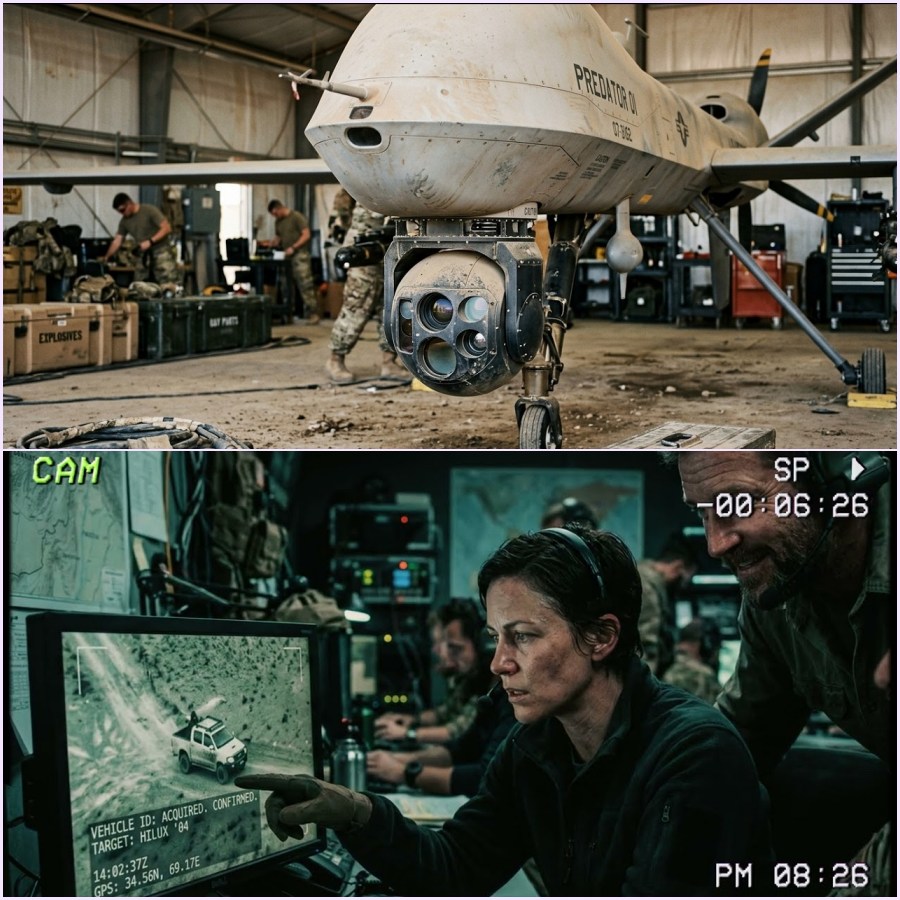
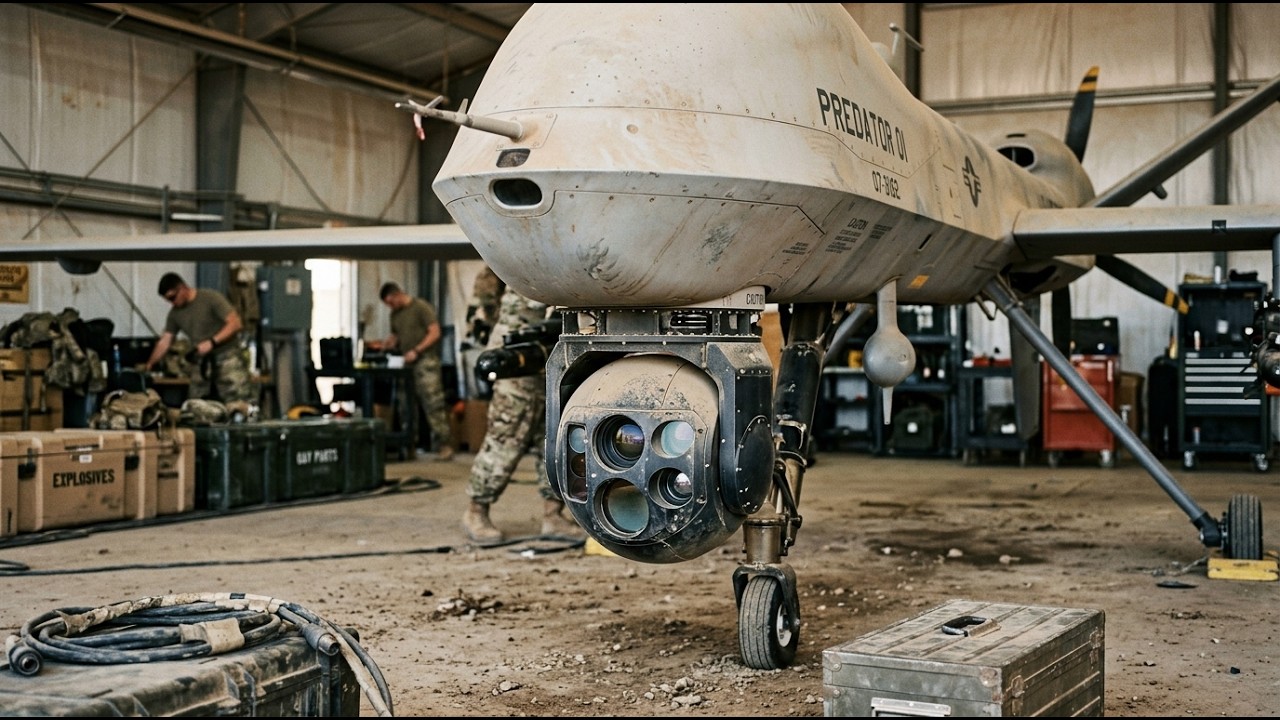
High above the mountains and deserts, a slender aircraft circled silently. It was not a fighter jet. It carried no pilot in the cockpit. The aircraft was the MQ-1 Predator, one of the first unmanned aerial vehicles to become a central tool in the global campaign against terrorist networks. Equipped with powerful cameras and advanced sensors, the Predator could remain in the air for long stretches of time, scanning roads, compounds, and remote valleys that had once been impossible to monitor continuously. Every movement on the ground could be watched.
Vehicles leaving a compound. Small gatherings of men entering a building. Convoys traveling across dusty roads that disappeared into the mountains. The aircraft transmitted its video feed thousands of miles away to command centers where analysts watched carefully, frame by frame, looking for patterns.
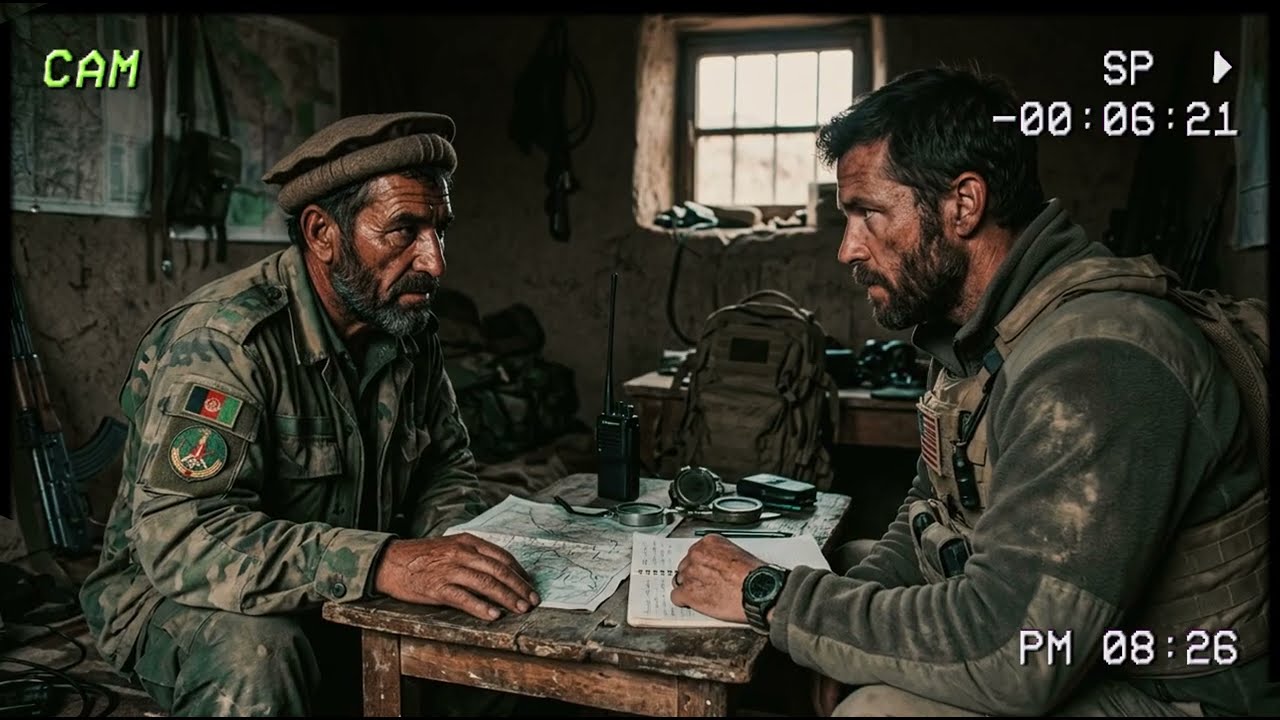
But the Predator alone could not identify who those people were. Watching someone walk through a courtyard or step into a vehicle revealed movement, not identity. The real puzzle—the true challenge of this new war—was determining which individuals inside these scattered networks were actually responsible for planning attacks.
And that is where the work of intelligence officers became critical. Inside secure rooms filled with screens, maps, and streams of incoming data, analysts from the Central Intelligence Agency began piecing together fragments of information collected from many different sources. Communications intercepts provided clues about who was speaking to whom.
Local informants offered reports about unfamiliar visitors arriving in remote villages. Documents seized during military operations revealed names, connections, and fragments of operational plans. And hovering above it all were the eyes in the sky—drones quietly observing movements on the ground. Each piece of information on its own meant very little.
But when combined carefully, patterns began to emerge. An unfamiliar vehicle appeared repeatedly near a compound known to host extremist meetings. A phone number intercepted in one region suddenly connected to a known associate in another. A courier traveled the same road every week, stopping briefly at isolated locations before disappearing again into the mountains.
Slowly, analysts started building a picture of hidden networks. And sometimes, within those networks, a particular individual began to stand out. Someone who met with multiple operatives. Someone who moved frequently between safe houses. Someone whose communications connected different cells together. When intelligence officers believed they had identified a key member of a terrorist organization, the next phase began. Surveillance.
Day after day, sometimes week after week, drones would watch quietly from above while intelligence teams studied every movement. They monitored when the individual left buildings, who he met, which vehicles he used, and which locations he visited. Patterns were essential. Because in this war, a mistake carried enormous consequences.
A single misidentification could mean targeting the wrong person. And in remote regions where villages, families, and fighters often lived side by side, certainty was not easy to achieve. But the longer the surveillance continued, the clearer the patterns sometimes became. And this is where the story becomes extraordinary.
Because once intelligence officers believed they had identified the right target, the quiet observation phase could suddenly transform into something far more decisive. At that moment, information gathered from informants, intercepted communications, captured documents, and hours of drone surveillance all converged into a single question.
Was the person on that screen truly who they believed he was? And if the answer was yes, another decision would soon follow. A decision that could be made from thousands of miles away… yet would change the course of events on the ground in an instant. In the years that followed the September 11 attacks, the United States found itself confronting an adversary unlike any it had faced before. Traditional wars had clear geography.
Front lines could be drawn on maps. Enemy armies moved in formations that satellites could track and intelligence agencies could monitor. But the network known as Al-Qaeda operated differently. It did not control territory in the conventional sense. Its leadership was dispersed across several countries.
Its members traveled quietly between villages, cities, and mountainous regions where government authority was often weak or nonexistent. Many of the places where these individuals operated were among the most difficult environments on Earth. Remote valleys cut through Afghanistan’s rugged mountain ranges. Isolated compounds hidden in Pakistan’s tribal regions.
Desert towns scattered across Yemen where narrow streets and dense buildings created a maze for anyone trying to follow movements from the ground. Deploying large military forces into these areas carried enormous risks. Ground operations required helicopters, convoys, and soldiers moving through hostile terrain where ambushes were always possible. Even when successful, such operations could take weeks of planning and still fail if the target slipped away moments before the assault.
In the early years of the conflict, this happened more often than anyone in Washington wanted to admit. Targets disappeared into mountain passes. Vehicles vanished into crowded cities. Safe houses were abandoned hours before special forces arrived. The enemy had learned how to move through the landscape in ways that made them extremely difficult to capture.
And this forced American intelligence agencies to rethink how the war would be fought. Rather than sending soldiers into every remote valley, they needed a way to watch continuously… patiently… waiting for the right moment. But that raised another problem. Even with drones observing from above, identifying the right person on the ground was rarely simple.
Many of the individuals being tracked lived in environments where dozens of men dressed similarly, traveled similar routes, and gathered in the same compounds. Vehicles were often shared among families or associates. A man stepping into a truck might be a courier. He might be a driver. Or he might simply be a relative borrowing the vehicle for an ordinary trip.
From thousands of feet in the air, those differences were not obvious. And that uncertainty created one of the most difficult intelligence challenges of the modern battlefield. Because drone strikes were not meant for anonymous fighters. They were designed to target specific individuals believed to be key figures inside terrorist organizations.
The margin for error was extremely small. This is where the process became incredibly meticulous. Inside intelligence centers, teams of analysts began constructing what they called “pattern-of-life” profiles. These profiles were not built from a single observation. They were constructed from days, sometimes weeks, of surveillance data.
Drone footage showed when someone left a compound in the morning. Signals intelligence might reveal when that same person used a satellite phone later that afternoon. Human informants could report a meeting scheduled for that evening in a nearby village. Each data point alone was insignificant. But layered together, they created a behavioral map.
The time someone typically left their home. The roads they preferred. The buildings where they met with associates. The vehicles they used and who accompanied them. Over time, the identity of the individual under surveillance became clearer. And this is where intelligence work often resembled detective work more than traditional warfare.
Analysts paused video frames repeatedly, comparing clothing, body language, and even walking patterns. Vehicles were tracked across multiple days to confirm whether the same driver appeared each time. Meetings between individuals were logged carefully to understand the structure of the network. Every detail mattered.
Because before any strike could even be considered, analysts needed to answer one fundamental question. Was the man they were watching truly the person they believed he was? But that question carried another complication. Al-Qaeda leaders understood the danger they faced. They rarely stayed in one location for long. They avoided predictable routines.
Many relied on trusted couriers rather than electronic communication, knowing that phones and radios could betray their position. Some even traveled at night or switched vehicles frequently to avoid detection. For intelligence officers attempting to track them, it was like watching shadows move through a maze. And sometimes the trail simply went cold.
Days of surveillance could end with nothing. A compound emptied overnight. A vehicle vanished from the road network. An individual disappeared into a crowded city where the drone’s camera could no longer distinguish one person from another. But occasionally, persistence paid off. A familiar vehicle appeared again.
The same group of men gathered in a compound that had previously hosted meetings. A courier returned along a route analysts had already mapped. Gradually, the pieces began to align. The network revealed its structure. The movements of key figures became more predictable. And that is when the tension inside the operations centers began to rise.
Because once the intelligence picture became clear enough, the quiet observation phase could shift rapidly into something far more consequential. A target had been identified. Surveillance confirmed his presence. The aircraft was already overhead. But something else still had to happen before any action could be taken. And this is where the story takes a deeper turn.
Because behind every potential strike was an invisible chain of coordination—intelligence officers, analysts, military commanders, and legal authorities—each responsible for verifying that the person on that screen was not just suspicious… But the right target. Even after days of surveillance, hundreds of hours of video footage, and layers of intelligence analysis, uncertainty still lingered.
Because identifying a target inside a global terrorist network was never a single moment of discovery. It was a slow accumulation of evidence. Inside intelligence operations centers, analysts examined every available fragment of information connected to the individual under surveillance. A name appearing in captured documents. A voice recorded during intercepted communications.
A courier seen visiting multiple safe houses across different regions. Each fragment alone was incomplete. But when combined, they began to outline the silhouette of a person who mattered inside the network. Yet even then, confirmation was not simple. Because the man being tracked on a drone camera might be using an alias.
His appearance might have changed since the last known photograph. In many cases, intelligence agencies had never even seen the individual they were trying to identify. They knew his voice. They knew the names others used when referring to him. They knew the locations where he had previously appeared. But his face remained uncertain.
This created one of the most delicate stages in the entire process. Analysts began comparing the surveillance footage with every available piece of intelligence gathered over months or even years. If a suspect entered a compound known to host Al-Qaeda meetings, the location itself became a clue. If couriers arrived shortly afterward, carrying packages or documents, that pattern reinforced the suspicion. But there was always the possibility of error.
And this is where the mystery deepened. Because the individuals being tracked were often surrounded by others who looked nearly identical through the grainy lens of a drone camera. Loose clothing. Head coverings. Similar vehicles. At high altitude, even advanced sensors could not always distinguish between individuals standing a few feet apart. So the analysts began focusing on behavior.
Not just where the suspect traveled, but how. Did he lead meetings, or simply attend them? Did others defer to him during gatherings? Did couriers arrive specifically to meet him? Did vehicles escort him when he moved between locations? Over time, these behavioral clues began revealing the hierarchy within the network.
And that hierarchy mattered enormously. Because the purpose of these operations was not simply to eliminate random fighters. The objective was to disrupt leadership. To remove the planners, coordinators, and commanders whose decisions shaped the network’s operations. But that raised an even larger question.
How could intelligence officers be certain that the individual on the screen was truly one of those leaders? And the answer required a level of coordination that stretched across multiple intelligence disciplines. Signals intelligence specialists analyzed communications data to track patterns of phone usage and message relays.
Human intelligence officers evaluated reports from local sources who might have seen the individual in person. Imagery analysts studied drone footage frame by frame, comparing physical characteristics and movements. The process resembled a massive puzzle assembled by dozens of experts working simultaneously. Every new piece of information either strengthened the case… or raised new doubts.
But there was another complication. Time. Because the individual being watched might not remain in that location for long. A drone could monitor a compound for hours, sometimes days, but targets rarely stayed still forever. If intelligence officers waited too long to confirm their identity, the opportunity might vanish completely.
And this is where tension inside the operations center could rise dramatically. Multiple screens displayed live drone footage. Maps tracked the movement of vehicles across dusty roads. Analysts exchanged quiet discussions over secure communications. Someone would notice a familiar vehicle entering the compound. Another analyst might recognize a courier previously linked to a known Al-Qaeda facilitator.
A third analyst might confirm that intercepted communications earlier that day suggested a meeting was about to occur. Slowly, confidence began to build. The pieces were aligning. But even then, no single analyst could make the decision alone. Because authorizing a strike required more than just suspicion. It required verification.
At this stage, intelligence officers compiled detailed reports summarizing everything known about the target. The individual’s suspected role inside the organization. The locations he had visited. The network of associates connected to him. The surveillance evidence confirming his current position. These reports moved through a chain of review involving intelligence leadership, military planners, and legal authorities responsible for evaluating the operation.
Every step existed to answer the same fundamental question. Was the intelligence strong enough to justify action? But what happened next surprised many outside observers. Because even when the target appeared clearly on the screen, even when surveillance confirmed his location, the final decision was not always immediate. Sometimes the drone simply continued circling above. Watching. Waiting.
Because the moment of opportunity had to be exactly right. If civilians were nearby, the strike might be delayed. If the target moved too close to a populated area, the risk might be considered too high. And sometimes, analysts believed the individual might lead them to someone even more important. So the aircraft remained overhead, quietly tracking every movement.
Hours passed. Vehicles arrived and departed. Meetings unfolded inside the compound. The tension inside the operations center grew heavier. Because eventually, the waiting would end. And when it did, the operation would move from observation to action in a matter of seconds.
By this stage of the operation, the technology itself was no longer the most important factor. The drone circling high above the landscape had already done its job. Its cameras captured every movement below, its sensors transmitted live images across continents, and its endurance allowed intelligence officers to watch the same compound for hours without interruption.
But the machine in the sky was only one piece of a far larger system. What truly determined whether a strike would happen—or whether it would be delayed—was a doctrine that had evolved quietly in the years after September 11. A doctrine built around patience, verification, and control.
Inside secure operations centers, the flow of information moved through carefully structured channels. Intelligence officers from the Central Intelligence Agency monitored the surveillance data alongside analysts who specialized in communications, regional networks, and terrorist organizational structures. But the process did not stop with intelligence.
Military commanders were also involved. Because although the drone might be flown remotely from a control station thousands of miles away, the weapon it carried was still a military asset. The decision to use it required coordination between intelligence agencies and defense authorities responsible for the broader campaign against terrorist networks.
And layered on top of both of those institutions was another level of oversight. Legal review. Before any targeted strike could take place, government lawyers often evaluated the intelligence package that analysts had assembled. They reviewed whether the individual under surveillance had been properly identified and whether his role within the terrorist organization justified the use of lethal force under the rules governing the conflict.
This legal scrutiny became an essential part of the system. Because unlike conventional battlefields, many of these operations occurred in regions where civilians lived nearby. Villages, farms, and family compounds often existed within the same landscapes where extremist networks operated. The consequences of a mistake could be severe.
So intelligence officers developed a framework that required a high degree of certainty before any strike could be authorized. This framework revolved around what analysts called positive identification. Positive identification did not mean merely spotting a suspicious person on a drone camera. It meant establishing, through multiple independent sources of intelligence, that the individual being watched was almost certainly the intended target.
Signals intelligence might confirm that the person had recently communicated with other known members of the network. Human sources might report that a senior figure had arrived in the area for a meeting. Drone surveillance might show the same individual greeting couriers or entering buildings known to host operational planning sessions.
Only when these separate streams of intelligence reinforced one another did the picture become convincing enough to move forward. And even then, there was another factor that shaped the decision. Timing. Because striking too early could mean missing a more valuable opportunity. If intelligence officers believed that the individual under surveillance was meeting with other operatives, they might delay action in hopes of identifying additional members of the network.
In some cases, drones monitored compounds through entire nights while analysts waited for more people to arrive. Every new vehicle entering the compound was carefully recorded. Every face captured by the camera was examined by analysts searching for connections to previously identified operatives. Sometimes this patience produced remarkable results.
A target believed to be a mid-level facilitator might suddenly be seen meeting with a senior planner. A courier might arrive carrying messages from another region, revealing a previously unknown link between cells. In those moments, intelligence officers realized that the man they had been watching was not simply a suspect.
He was a doorway into a much larger network. But patience came with risks. The longer analysts waited, the greater the chance that the target might disappear. Vehicles could leave the compound at any moment. A meeting might end unexpectedly. The individual under surveillance could simply walk away, entering a dense urban area where the drone’s camera would lose track of him.
And that is where the doctrine guiding these operations became most visible. The system demanded restraint. If the intelligence picture was incomplete, analysts continued watching. If civilians were nearby, the strike could be delayed. If there was uncertainty about the target’s identity, the operation might be canceled entirely.
This discipline sometimes frustrated commanders eager to eliminate threats quickly. But intelligence officers understood that the credibility of the entire program depended on accuracy. Every strike had to be justified not only by the threat posed by the target but also by the confidence that the right person had been identified.
And this careful balance between intelligence, technology, and restraint created a new kind of battlefield rhythm. Long periods of silence. Hours of observation. Weeks of intelligence gathering. All building toward a moment that might last only seconds. But the true complexity of these operations was not only in deciding when to strike.
It was in coordinating the people responsible for making that decision. Because when the moment finally arrived, dozens of individuals across multiple agencies were already involved—each watching the same screen, each evaluating the same information, and each aware that the next few seconds would determine whether months of intelligence work would end in success… Or vanish into the shadows once again.
What emerged from this complex system of surveillance, intelligence gathering, and verification was a new doctrine of warfare—one that did not depend on massed forces or large battlefield maneuvers. Instead, it depended on precision. The concept was simple in theory but extraordinarily complex in practice.
Rather than targeting large groups or locations indiscriminately, operations focused on removing specific individuals whose roles inside the terrorist network made them strategically important. Planners. Financiers. Communications coordinators. Field commanders who linked scattered cells together. These individuals formed the connective tissue of the organization.
Remove them, and the network struggled to function effectively. But identifying these figures required far more than simply recognizing a face. It required understanding the internal structure of the organization itself. Inside intelligence centers, analysts studied the relationships between operatives across multiple regions.
They mapped connections like investigators building a vast criminal network chart. One individual might coordinate logistics. Another might arrange safe houses. A third might deliver instructions from senior leadership to regional operatives. Each role mattered differently. And eliminating the wrong individual—someone who appeared important but actually played a minor role—might have little impact on the organization.
But removing the right person could disrupt entire chains of communication. This approach became known informally among analysts as targeting the network rather than the battlefield. And this is where intelligence officers from the CIA played a particularly important role. Because unlike traditional military units focused on territory and combat operations, CIA officers specialized in understanding people.
Their job was to identify who mattered. Which individuals inside the organization held real authority. Which couriers connected different regions. Which facilitators moved money or arranged travel for operatives. This kind of knowledge came from years of intelligence collection. Human sources inside communities.
Captured documents from previous raids. Interrogations of detainees who revealed fragments of organizational structure. Signals intelligence showing who communicated with whom. Each fragment helped build a clearer map of the network. But even the most detailed intelligence picture was constantly changing. Al-Qaeda was not a rigid hierarchy like a conventional army.
It was flexible. Cells could operate independently. New leaders could emerge when others were removed. Individuals moved frequently between regions, often crossing national borders where intelligence coverage was uneven. For analysts trying to track these movements, the situation resembled a constantly shifting puzzle.
One week, a suspect might appear in a compound in Pakistan’s tribal areas. Two weeks later, communications intercepts suggested he had traveled across the border into Afghanistan. A month later, a courier might deliver messages to operatives in Yemen linked back to the same network. And this is where the drone surveillance system became extraordinarily valuable.
Because while human sources and intercepted communications provided fragments of the picture, drones offered something intelligence agencies had rarely possessed before. Persistence. An aircraft could circle above a suspected safe house for hours without interruption.
It could follow vehicles traveling along remote mountain roads. It could observe who entered a compound and who left it again. Over time, these observations revealed patterns that might otherwise have remained invisible. The same vehicle returning to a compound every few days. The same group of men gathering repeatedly at specific times.
The arrival of couriers carrying packages or documents. Gradually, analysts could see how the network functioned in practice. But what happened next was often the most delicate moment of the entire operation. Because identifying a target was only the beginning. The final step required coordination between intelligence officers, drone operators, and commanders responsible for authorizing the strike.
Inside the operations center, the atmosphere during these moments was tense but controlled. Multiple teams were watching the same live feed from the drone’s cameras. Analysts confirmed that the individual under surveillance matched the intelligence profile compiled earlier. They reviewed the pattern-of-life data collected during days or weeks of observation.
They checked whether any civilians were visible near the target location. At the same time, drone pilots—sitting in remote control stations often thousands of miles away—kept the aircraft steady above the scene. Their screens displayed the same compound, the same vehicles, the same individuals moving across dusty courtyards or narrow roads.
But even as the target remained clearly visible, one final confirmation was required. Because the entire doctrine depended on certainty. Was the person on that screen truly the individual identified by the intelligence community? If the answer was still uncertain, the aircraft would simply continue circling overhead. Watching. Waiting.
But if the confirmation came—if analysts agreed that the individual matched the intelligence profile and the conditions on the ground allowed it—the operation moved into its final stage. And in that moment, months of intelligence work, countless hours of surveillance, and coordination across multiple agencies converged into a single decision.
A decision that could unfold in less than ten seconds. But the moment that followed would determine whether the invisible war being fought across mountains and deserts had just eliminated a key figure in the network… Or whether the target would slip away once again into the shadows. The moment a strike moved from possibility to execution rarely arrived with dramatic announcements.
Inside the operations center, the transition was almost quiet. Analysts leaned closer to their screens. Communications channels became more focused. The drone’s camera feed filled multiple monitors, showing the same compound or narrow stretch of road where the target had appeared. Months of intelligence gathering had already brought the operation to this point.
Now everything depended on seconds. The aircraft circling above was still many thousands of feet in the air, invisible to anyone on the ground. Its engines produced only a faint sound that blended with the wind, and the people moving below rarely knew they were being watched. On the drone pilot’s display, the target area appeared in sharp contrast—rooftops, vehicles, small figures walking through courtyards.
The camera could zoom in closely enough to observe movements in remarkable detail. But before any action could be taken, the final confirmations moved rapidly through the system. Analysts verified once again that the individual visible on the screen matched the intelligence profile assembled over days or weeks of surveillance.
Signals intelligence teams confirmed that recent communications activity aligned with the presence of the target. Human intelligence reports from earlier in the day might have indicated that the individual planned to meet associates at that location. Each confirmation reduced uncertainty. Each verification brought the operation closer to a decision. But that wasn’t the only consideration.
Drone operators also examined the environment surrounding the target. Were there civilians nearby? Were children visible in the area? Had any unexpected vehicles entered the scene? These questions mattered enormously. Because the entire doctrine behind targeted drone operations depended not only on identifying the correct individual but also on minimizing harm to others nearby.
If analysts saw civilians entering the target area, the strike might be delayed. If the individual moved closer to a crowded marketplace or residential street, the opportunity might be abandoned entirely. And sometimes that is exactly what happened. Targets who had been tracked for weeks suddenly moved into areas where a strike was no longer acceptable.
The drone continued watching as the opportunity disappeared. And the operation returned to surveillance mode. But when conditions aligned—when the identity was confirmed and the surrounding area appeared clear—the final step unfolded quickly. Inside the control station, the drone pilot aligned the aircraft’s sensors with the target.
The weapon mounted beneath the wing was designed for precision rather than wide destruction. A guided missile capable of striking a specific vehicle or small structure with remarkable accuracy. The pilot’s controls were steady. Analysts continued watching the video feed. The target moved across the courtyard. Perhaps entering a vehicle.
Perhaps standing near the doorway of a building. The confirmation came through the secure communications channel. The conditions were satisfied. Authorization granted. And this is where the quiet tension of the operations center condensed into a single irreversible moment. The command was issued. From thousands of miles away, the pilot activated the missile.
The weapon detached from the drone and began descending toward the ground. For a brief moment, it was visible on the camera as a small shape falling rapidly toward the target. Then the image filled with dust and debris. The strike itself lasted only seconds. But its consequences extended far beyond that instant. Inside the operations center, analysts immediately began examining the aftermath.
The drone remained overhead, continuing to transmit live images. They looked for signs confirming whether the intended target had been present at the moment of impact. Vehicles damaged by the strike. Individuals fleeing the area. Any movement that might indicate survivors. This phase was known as battle damage assessment.
It was not enough to launch the strike. Intelligence officers needed to determine whether the operation had achieved its objective. Sometimes the result was immediately clear. The vehicle targeted moments earlier was destroyed. The individual believed to be inside had no chance of escape. But other times, uncertainty returned.
Dust clouds obscured the scene. Additional individuals appeared from nearby buildings. The drone continued watching, waiting for clearer confirmation. And this is where the story reveals something many people outside these operations rarely considered. Because even after a successful strike, the work of intelligence officers was far from finished.
They continued analyzing the network connected to the target. Communications patterns often changed rapidly after such events. Associates might attempt to contact the missing individual. Couriers might travel unexpectedly to investigate what had happened. These reactions sometimes revealed new names, new connections, and new locations within the network.
In other words, the strike was not the end of the intelligence process. It was often the beginning of another phase. Because the removal of one figure inside the organization could expose the hidden structure surrounding him. And somewhere inside that shifting network, another individual might soon emerge as a new priority target.
Which meant that somewhere above another remote valley or desert road, a drone would once again begin circling quietly… Watching. Waiting. Studying the movements below. Because in this new form of warfare, the battle rarely ended with a single strike. It simply moved on to the next shadow in the network. The aftermath of a strike often appeared simple when viewed from a distance. A missile fired from a drone.
A compound destroyed. A suspected leader removed from the battlefield. But inside the intelligence community, the real work began only after the smoke cleared. Because every strike produced information. And that information became the foundation for understanding how the network would respond next.
In the hours immediately following an operation, analysts began examining communications across the region. Signals intelligence teams monitored whether phones previously linked to the target suddenly went silent or whether associates attempted to reach him repeatedly. Sometimes those unanswered calls told a story. A courier trying again and again to contact someone who would never answer.
A series of hurried messages sent between operatives trying to understand what had just happened. Each reaction revealed something about the network’s structure. Who depended on the individual who had just been removed. Who attempted to fill the sudden gap in communication. And which parts of the organization remained active despite the disruption.
But that wasn’t the only information analysts examined. Drone surveillance continued over the strike site, sometimes for hours. Vehicles arrived. Individuals gathered cautiously near the damaged structure. Some appeared to inspect the destruction. Others quickly removed debris or searched for survivors. Every movement was recorded.
Because those who came to investigate the strike often revealed connections that had previously remained hidden. A previously unknown associate might appear at the site. A vehicle already linked to another extremist figure might arrive unexpectedly. Slowly, analysts added these observations to the growing intelligence picture.
And this is where the tactical significance of drone operations became clearer. The strike itself was only one element. The real objective was to weaken the network’s ability to operate. Removing a senior planner might disrupt upcoming operations. Eliminating a communications coordinator might sever links between regional cells. But understanding whether those disruptions had actually occurred required careful analysis.
Over the following days, intelligence teams watched for signs that the organization had been affected. Did communications traffic decline? Did couriers alter their routes? Did meetings that had previously occurred regularly suddenly stop? Sometimes the results were immediate. Operations planned by the targeted individual were abandoned.
Associates scattered across different regions, unsure who would now coordinate their activities. In those moments, analysts could see the network struggling to reorganize itself. But in other cases, the organization adapted quickly. Another figure stepped forward to assume the responsibilities of the one who had been removed. Communications resumed through new channels.
Couriers adjusted their routes. The network survived. And this reality forced intelligence officers to confront a difficult truth. Targeted strikes alone could not end the conflict. They could disrupt, delay, and weaken terrorist organizations. But networks built around ideology and decentralized structures often proved resilient. New leaders emerged. New cells formed.
New methods of communication replaced those that had been compromised. For analysts studying these patterns, the challenge was constant. Each operation had to be evaluated not just for its immediate success but for its long-term impact. Did removing that individual actually reduce the network’s operational capacity? Or had the organization simply shifted its structure to compensate? And this is where the tactical analysis of drone operations became deeply intertwined with intelligence strategy. Because every strike revealed something about how the enemy
functioned. Which individuals were essential. Which roles could be replaced easily. Which connections linked separate cells together. Over time, these insights allowed intelligence agencies to refine their targeting strategies. Rather than focusing solely on the most visible leaders, analysts began identifying the facilitators who quietly sustained the network’s operations.
The financiers who moved money across borders. The logistics coordinators who arranged travel and safe houses. The couriers who carried instructions between regions where electronic communication was too dangerous. Removing these individuals sometimes caused deeper disruption than eliminating a public figure.
But identifying them required patience. They rarely appeared in propaganda messages. Their names were seldom known outside the network. Yet their movements—captured quietly by surveillance and pieced together by analysts—revealed their importance. And this is where the tactical breakdown of these operations became something more than a story of technology.
It became a story of understanding the hidden architecture of a clandestine organization. Each drone flight. Each intercepted message. Each captured document. All of it contributed to a constantly evolving map of the network. A map that intelligence officers used to decide where the next operation would occur.
Because somewhere beyond the immediate aftermath of a strike, new patterns were already beginning to form. A courier adjusting his route. A new meeting location chosen. A replacement figure stepping quietly into a leadership role. And far above those movements, unseen from the ground, another aircraft might already be circling.
Watching the network rebuild itself. Waiting for the moment when another crucial link revealed itself. Beyond the immediate tactical effects of any single operation, the broader significance of drone-targeting campaigns emerged slowly over the years that followed. The system that intelligence officers, analysts, and military planners had built after the September 11 attacks represented a fundamental transformation in how modern conflicts could be fought.
For most of the twentieth century, military power had been measured by the size of armies, the number of aircraft, and the ability to deploy massive forces across continents. Victory often depended on controlling territory. Cities were captured. Borders shifted. Armies advanced across front lines that could be traced on maps.
But the campaign against Al-Qaeda introduced a different strategic model. Instead of confronting an enemy army, the objective was to dismantle a dispersed network that existed across multiple countries and operated largely in secret. The battlefield was not defined by geography. It was defined by information. Every operation began not with troops moving forward but with intelligence gathering. Analysts studying fragments of communication.
Officers evaluating reports from sources on the ground. Surveillance aircraft quietly observing compounds and roads that appeared unremarkable to anyone passing nearby. Only when those pieces aligned did an operation become possible. And even then, the strike itself was only a small part of the overall strategy.
Because the true objective was not destruction for its own sake. It was disruption. Removing key individuals forced terrorist organizations to constantly reorganize their leadership structures. Plans had to be rewritten. Operations delayed. New couriers recruited. New communication channels established. In some cases, entire cells lost contact with senior leadership for extended periods.
From a strategic perspective, this constant pressure created friction inside the network. But this approach also carried complex implications. Because the use of drones to conduct targeted strikes raised questions about the nature of warfare itself. The aircraft launching the strike might be controlled from a location thousands of miles away.
The intelligence identifying the target might come from analysts on another continent. The legal authority approving the operation might involve officials in government offices far removed from the battlefield. In effect, the traditional boundaries of war had become blurred. The people responsible for identifying, authorizing, and executing an operation were often separated by oceans.
Yet the consequences of their decisions unfolded instantly on the ground. This new form of warfare required a level of coordination that previous generations of military planners could scarcely have imagined. Intelligence agencies, military units, legal authorities, and political leadership all became part of the same operational chain. Each decision required careful evaluation.
Each strike carried strategic consequences beyond the immediate target. And this is where the deeper lesson of these operations began to emerge. Technology alone did not determine success. The drones circling high above remote landscapes were powerful tools, but they were only as effective as the intelligence guiding them.
Without accurate information, the aircraft were simply cameras in the sky. The real advantage came from the ability to combine technology with human analysis. Analysts interpreting patterns of behavior. Officers cultivating sources who could reveal hidden connections. Specialists studying the structure of clandestine organizations. Together, these efforts transformed scattered fragments of information into actionable intelligence.
And that intelligence became the true weapon in this kind of conflict. But even with these capabilities, the campaign remained an ongoing struggle. Networks adapted. Individuals changed their methods of communication. Leaders avoided predictable routines. Every time intelligence agencies learned how to track one pattern of behavior, the adversary often developed another.
The contest became a continuous cycle of adaptation. One side developing new tools for surveillance and analysis. The other side searching for ways to disappear into the shadows once again. And yet, over time, the strategic effect of persistent intelligence-driven targeting became increasingly visible.
Senior figures who once moved freely across multiple regions found themselves constantly relocating. Meetings that had once been routine became rare. Communication chains grew more cautious and fragmented. The network was forced to operate under constant pressure. But that wasn’t the final chapter of the story. Because the true significance of this transformation in warfare extended far beyond the specific campaign against Al-Qaeda.
What intelligence officers and military planners had built during those years was a model for how future conflicts might unfold. A model where information moved faster than armies. Where surveillance could reach places soldiers could not easily enter. Where a single individual inside a network could become the focus of a global intelligence effort.
And where the quiet hum of an aircraft circling high above the clouds could represent the culmination of thousands of hours of intelligence work carried out by people who might never see the battlefield themselves. Yet the most striking aspect of this entire system was how invisible it often remained. To those living in the villages and towns beneath the flight paths of these aircraft, the war above them was often silent.
To observers outside the intelligence community, the complexity behind each operation was rarely visible. But inside the secure rooms where analysts watched those live feeds and tracked the shifting patterns of hidden networks, one reality was always clear. The conflict being fought was no longer defined by the size of armies.
It was defined by the ability to find the right person… in the right place… at the right moment. Long after the strike had ended and the drone finally turned away from the target area, the landscape below often returned to its ordinary rhythm. Dust settled. Vehicles cautiously returned to the road. People moved through villages and valleys much as they had the day before.
To an outside observer, the moment might appear small—almost invisible in the vast geography where these events unfolded. But within the quiet world of intelligence and counterterrorism operations, each of those moments marked the end of a long and complex chain of decisions. A chain that began weeks, sometimes months earlier.
It began with fragments. A voice intercepted during a brief phone call. A name discovered in documents captured during a military raid. A report from a local source describing a meeting scheduled somewhere in a remote valley. At first, none of these fragments seemed decisive. They were simply pieces of information collected in the endless flow of intelligence that moved through analysis centers every day. But occasionally, those fragments aligned.
Patterns emerged. Connections formed between individuals who had once appeared unrelated. A courier moved between two regions where extremist activity had been reported. A safe house received visitors who later appeared in other intelligence reports. And slowly, analysts began to see something larger. A network revealing itself piece by piece.
Once that network became visible, the quiet surveillance began. Aircraft drifting high above mountain passes. Cameras watching compounds where meetings took place behind closed doors. Analysts studying movement patterns that might reveal which individuals held real authority inside the organization. Days passed. Sometimes weeks. Often the target remained elusive.
People moved unpredictably. Vehicles traveled at night. Meetings shifted locations without warning. But persistence was the defining feature of this system. The aircraft continued circling. The analysts continued watching. And eventually, a moment arrived when the pieces of the puzzle aligned clearly enough to act.
Yet even then, action was never immediate. Verification followed verification. Different intelligence sources confirming the same conclusion. Careful evaluation of the environment around the target. Constant awareness that a single mistake could have consequences far beyond the immediate operation.
Only when those conditions were satisfied did the quiet surveillance transform into something final. A command transmitted across secure channels. A drone pilot aligning the aircraft’s sensors with the target below. A guided missile descending through the sky toward a precise location on the ground. Seconds later, the moment was over.
But what made these operations extraordinary was not simply the technology involved. It was the system behind it. The integration of human judgment, intelligence analysis, and advanced surveillance tools into a single coordinated effort. Dozens of individuals often participated in decisions that unfolded in a matter of seconds. Analysts examining patterns of behavior.
Officers evaluating intelligence reports. Pilots controlling aircraft from distant continents. Legal authorities reviewing the framework that governed each operation. Together, they formed a structure that allowed the United States to conduct operations in places where traditional military forces could rarely operate for long. And yet, the deeper story of these campaigns was not one of machines replacing human decision-making. It was the opposite.
Technology expanded the reach of intelligence, but the critical judgments remained human. Analysts deciding whether patterns truly indicated leadership. Officers weighing the reliability of information provided by sources. Commanders determining whether the opportunity justified the risk.
In that sense, the aircraft circling high above remote landscapes were not the central actors in the story. They were tools. The real battlefield existed inside the networks that intelligence officers spent years trying to understand. Hidden structures connecting individuals across continents. Quiet channels through which instructions moved from planners to operatives.
Invisible relationships linking financiers, facilitators, and field commanders. Every time a drone strike removed one figure from that network, the structure shifted. Sometimes the disruption was immediate. Plans collapsed. Communications halted. Associates scattered in confusion. But other times the network adapted. Another figure stepped forward. New couriers replaced the old ones.
Different methods of communication emerged. The contest continued. And that may be the most defining feature of the era that followed the attacks of September 11. A conflict that rarely appeared on conventional battlefields. A struggle fought through intelligence collection, surveillance, and patient analysis rather than massive military formations.
A war where the most decisive moments often occurred far from public view. Inside secure rooms filled with maps and screens. Where analysts watched quietly as small figures moved across distant landscapes. Waiting for the moment when a pattern revealed something important. Waiting for the moment when the identity of one individual became clear enough to matter.
Because in this form of warfare, victory was rarely measured by territory captured or armies defeated. It was measured by something far more precise. The ability to find the right person… Hidden somewhere inside a vast and constantly shifting network. And when that person finally appeared on the screen, under the watchful gaze of an aircraft circling silently in the sky, months of intelligence work could converge into a single decision.
A decision made in seconds. But shaped by years of learning how to fight a war that existed largely in the shadows.