In October 1940, the United States Army sat down and made a list of the men it expected to die. Not in those words. The language was bureaucratic, measured, the kind of language that fills Army ordinance reports. But the logic underneath it was clear. There was a category of soldier, medics, radio operators, truck drivers, mortar crews, engineers, ammunition handlers who would be moving through combat zones without carrying a full rifle.
They had the 45 ACP pistol for personal defense. The army had decided that was sufficient. Then someone looked at the pistol, looked at the distances these men were likely to be engaged at and wrote something that changed American military history. The infantry board put it plainly in 1938. Pistols and revolvers, even fitted with shoulder stocks, failed to meet requirements.
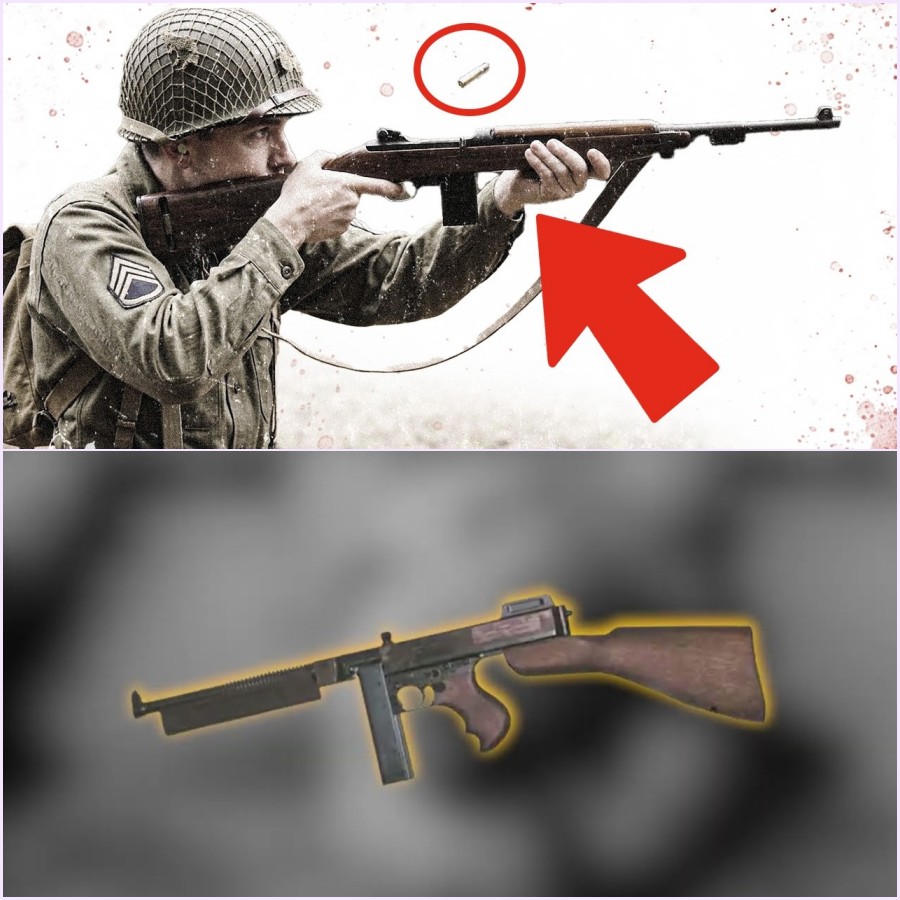
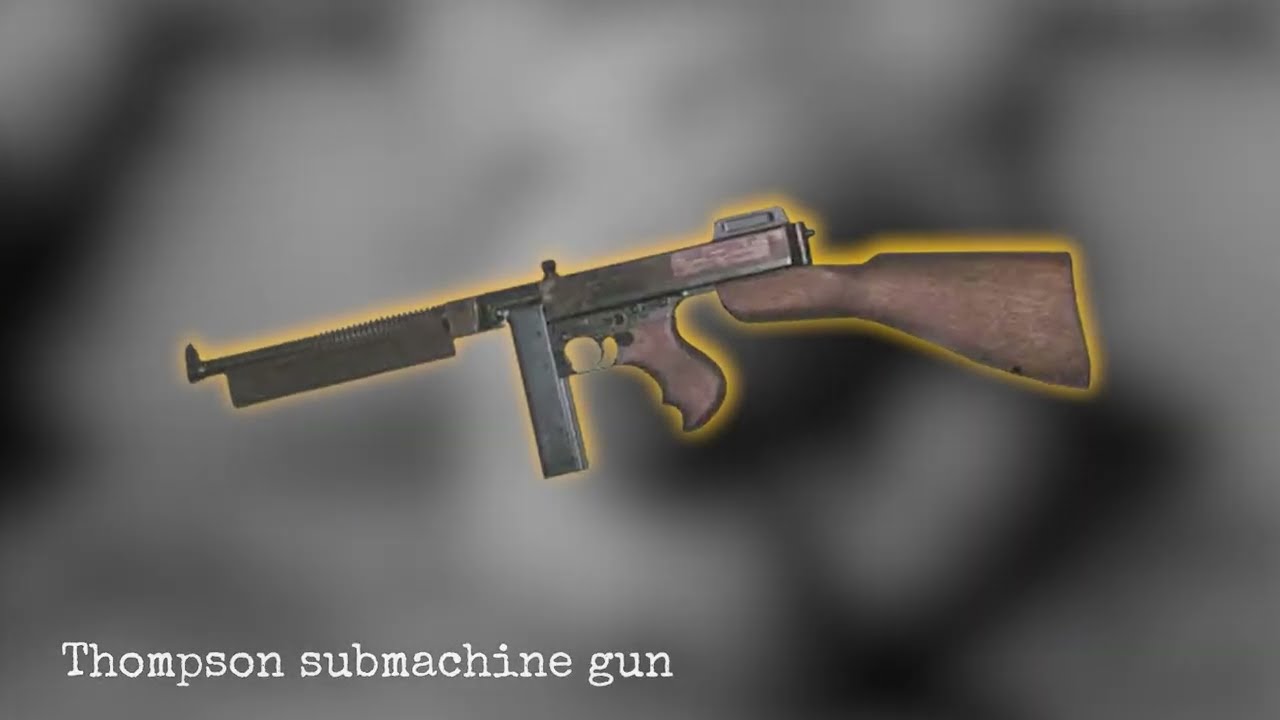
What these men needed wasn’t a sidearm. It was something between a sidearm and a rifle, lighter than either the 9 12 lb M1 Garand or the 11lb Thompson submachine gun, effective to 300 yd and capable of semi-automatic fire from a detachable magazine. The army was asking for a weapon for the people behind the front line.
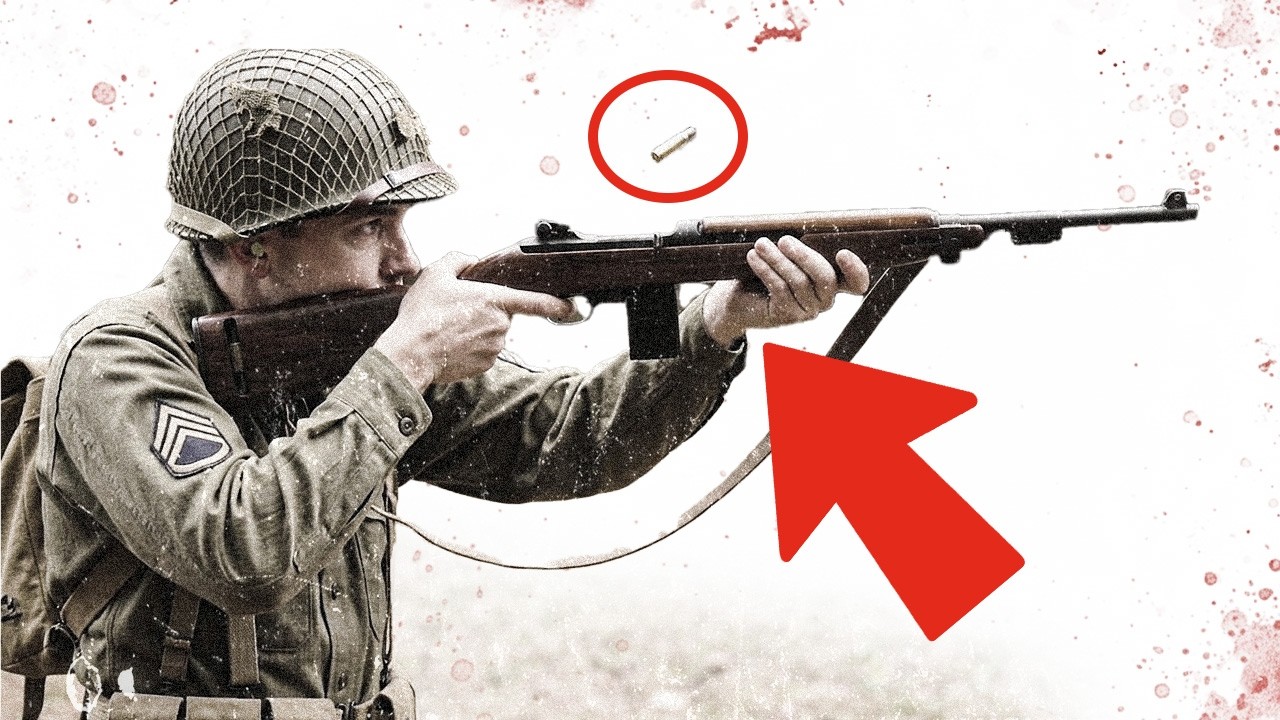
What it got was the M1 carbine. And the cartridge built to feed it, the 30 carbine, became one of the most produced rounds in American military history. Fired from a weapon that turned up in places no one had originally planned for it to go. By the time Japanese soldiers encountered it in the islands of the Pacific, the 30 carbine was everywhere.
Not because the army had planned it that way, because the men carrying it had found out the hard way that the people behind the front line still needed to kill. To understand why the 30 carbine exists, you have to understand what American infantry looked like on paper in 1940. The M1 Garand was the primary battle rifle.
Eight rounds of 306 semi-automatic, deadly to 500 yd and beyond. It was also nearly 10 lb empty and 44 in long. For a rifleman whose job was to close with and destroy the enemy, that was a reasonable trade-off. For a radio man humping 50 lb of equipment through jungle, or a mortar crew already loaded with tubes and base plates, or a medical corman who needed both hands free to keep someone alive, it was a weapon they could barely carry and rarely use. The alternative was the .
45 ACP pistol, the M1911A. Proven, reliable, a genuine stopper at close range. But in any engagement beyond 25 yd, the pistol was a hope, not a weapon. The army had already established this. The pistol failed the requirement. The Thompson submachine gun was heavier than the Garand and burned through ammunition at a rate that made it impractical to issue widely.
There was a gap. The requirement the army wrote in October 1940 defined that gap with precision, under 5 lb, effective to 300 yd, semi-automatic, chambered in a new 30 caliber cartridge that Winchester would develop specifically for the weapon. That cartridge specification became the 30 carbine, a 110 grain bullet at roughly 2,000 ft pers carrying more than twice the muzzle energy of the 45 ACP.
Not a rifle round, nothing close to the 3006 Springfield’s power, but in the space between a pistol and a rifle, it was exactly what the army needed. And it came in a package that weighed 5 lb and fit into one hand. The story of how the M1 Carbine came to exist in a war that had not yet started is one of the more remarkable episodes in American military procurement history.
Winchester had initially sat out the rifle competition. The company had been developing the 30 carbine cartridge, but hadn’t submitted a gun design for the Army trials. When Army Ordinance Major Renee Studler saw Winchester’s scaledown prototype rifle and decided it had potential as a carbine, he asked Winchester to enter. With a prototype ready in time for the second round of testing, Winchester had 13 days.
A team of engineers, William Romer, Fred Hum, and three colleagues supervised by Edwin Pugsley built a working prototype by cannibalizing parts from other weapons. the trigger group from a Winchester model 1905, [music] the operating rod from a Garand, a bolt system adapted from Williams shortstroke gas piston design.
On the morning of testing, the gas port was still undized. An engineer opened it with a drill bit in the final hours before the deadline. The prototype went to trials. It won. On October 22nd, 1941, 7 weeks before Pearl Harbor, the United States adopted the Winchester design as the US carbine caliber 30 M1. What followed was one of the great feats of American industrial production.
Over 6 million M1 carbines were manufactured during World War II by companies that had never built a military rifle. the Inland Division of General Motors, IBM, the National Postal Meter Company, Underwood Typewriters, Rock Ola Jukeboxes. More M1 carbines were produced during the war than any other American small arm.
More than the M1 Grand, more than the Thompson. The weapon designed for the men who weren’t supposed to fight became the most manufactured gun of the war. That list of manufacturers is worth pausing on. A jukebox company built infantry weapons. A typewriter company built infantry weapons. The same industrial capacity that had been stamping out consumer goods for a peaceime economy retoled, hired, and started producing weapons at a rate that no country fighting a war on a war footing could match.
Because America was running its factories on a civilian economy’s labor pool, untouched by enemy bombs, fed by supply chains that crossed an entire continent. The M1 Carbine cost the government $45 per unit. For that price, every support soldier in the American military got a semi-automatic weapon that was better than anything his Japanese counterpart was carrying for self-defense.
Quantity at that scale is its own kind of strategy. The initial distribution list for the M1 Carbine reads like a catalog of everyone the army expected to be somewhere other than the main line of battle. Infantry officers, artillery and mortar crews, machine gun teams, tank and vehicle crews, military police, engineers, signalmen, medical personnel.
The carbine went to everyone who needed a weapon that was better than a pistol and lighter than a rifle, which turned out to be an enormous proportion of the American military. Paratroopers got their own version. The M1 A1 folding stock carbine was built specifically for men who jumped out of aircraft in the dark over enemy territory.
A weapon that could be strapped to the body for the drop and still function when they hit the ground. The problem with jumping with a full-sized rifle was not just the weight, it was the geometry. A man tumbling through a door at 120 mph in the dark over Normandy or the Pacific needed a weapon he could control before he could see anything.
With the stock folded, the M1 A1 came in at around 25 in, barely longer than a man’s arm. It weighed 5 lb. It was the right answer for a problem that no other military had solved as cleanly. And the paratroopers who carried it into combat knew exactly what they had. What happened next was not what the ordinance department had planned.
As carbines flooded into the Pacific theater, frontline troops who were supposed to carry gerans began picking them up. The carbine was 5 lb. The jungle was 120° and 100% humidity. A marine who had been fighting for 3 days without sleep could carry the carbine where he could barely lift the grand.
Squad leaders who needed to move fast and keep their hands free for other things traded their rifles for carbines. By the time of the island campaigns, Saipan, Pleu, Ewima, M1 carbines were everywhere in the photographs carried by men for whom it was never designed. The weapon had escaped its category. The Pacific War was not a war of open ground and long sightelines.
It was fought in jungles so dense that opposing soldiers sometimes heard each other before they could see each other. It was fought in bunker networks, on landing beaches, in the tunnels and cave systems the Japanese defenders used across island after island. Engagements happened at close range. Bolt-action rifles designed for the kind of warfare that had been fought a generation earlier were at a disadvantage in terrain where the target appeared at 20 ft, not 200.
[music] The Japanese army’s standard rifle was the Aerasaka in 6.5 mm and later 7.7 mm. Bolt action, accurate, and no faster to operate under fire than any other bolt gun. A Japanese soldier who missed with his first shot worked the bolt, acquired the target, and fired again. Against an American carrying an M1 carbine, that sequence was a problem.
The carbine fired semi-automatically from a 15 round magazine. At the ranges where Pacific jungle fighting was actually decided, 15 rounds of rapid semi-automatic fire was not a minor advantage. It was the difference between a two-way exchange of fire and a one-sided one. What made the M1 carbine dangerous in the Pacific was not the power of its cartridge.
American soldiers reported honestly that the 30 carbine round could struggle at longer ranges and in certain conditions. But at 20, 30, 50 yards, the ranges that mattered in the Guadal Canal jungle, on the beaches of Teroa, in the volcanic tunnels of Ewima, the carbine put more rounds on target faster than anything in the Japanese infantry’s hands.
A medic who found himself between a Japanese patrol and his patients was not firing at 300 yd. He was firing at the length of a room and he had 15 rounds to do it with. That mattered for every Japanese soldier moving through American rear areas. His plan doctrine going back decades assumed that support personnel were effectively unarmed.
You push past the front, you scatter the men in the back, you destroy the supplies and the communications. It had worked against armies where support troops genuinely had nothing more than a sidearm and the hope that the fighting would stay somewhere else. It did not work against an army where the radio man, the cook, and the ammunition runner were all carrying 15 rounds of semi-automatic fire and had been trained to use it.
Night raids on American positions encountered return fire from directions and at volumes that Japanese tactical planning had not accounted for. The carbine’s lightweight and non-corrosive ammunition were specific advantages in the Pacific that mattered more than any ballistic comparison. The humidity corroded barrels.
The volcanic sand on Ewima clogged actions. Troops adapted, but the carbine’s reliability in wet, filthy conditions was well documented, and the men who depended on it knew the difference. The cartridge specification that Winchester built in 1940 was never intended for what it ended up doing. It was optimized for the men behind the fighting.
Light, controllable, accurate to practical defensive ranges, easy to produce in volume. What no one fully anticipated was what would happen when those quantities hit a theater of war where every man, regardless of his official role, might find himself in a firefight. Japan had no equivalent weapon. The Japanese military had not developed an intermediate caliber semi-automatic carbine for support troops. Their officers carried pistols.
Their specialty troops made do with what the infantry carried. Nothing in the Japanese smallarms inventory combined the M1 carbine’s weight, magazine capacity, and semi-automatic rate of fire in a package light enough to be carried as a secondary weapon. The category the American army had invented, the inbetween gun for the inbetween soldier, had no Japanese counterpart, which meant that when a Japanese infantry assault hit an American supply depot, a communications post, or a mortar position, the men defending it
were not standing there with pistols. They were standing there with 15 round semi-automatic carbines. The attack that was supposed to roll over support troops, scatter them, and destroy their position encountered a volume of fire that support troops were not supposed to be able to deliver. This was the fundamental miscalculation that the 30 carbine forced on Japanese tactical planning.
The American backline was not soft, it was armed. The dark reason Japanese soldiers feared the American 30 carbine was not about the cartridge. It was about the decision that created the cartridge. America looked at the men behind the front line, the drivers, the radio men, the medics, the crew chiefs, and decided they deserved a real weapon.
Not a gesture toward self-defense. Not a pistol that worked at arms reach and failed at everything beyond. a semi-automatic carbine built to a military specification, produced in the millions, and issued broadly enough that it was carried by more American soldiers than any other weapon of the war. That decision reflects something about how America understood war that other nations didn’t fully grasp or couldn’t afford to act on.
Every man in the American military was a potential combatant. Not because the doctrine said so, but because the industrial base made it possible to arm everyone. And the tactical reality of modern war, where front lines blurred, where raids came at night, where a supply column or a field hospital could become a firefight without warning, made it necessary.
The carbine didn’t create that philosophy. It expressed it. The 30 carbine didn’t need to be the most powerful round in the Pacific. It needed to be better than what was in the pistol holster. And it needed to be everywhere. It was both. 6 million carbines meant that when Japanese forces probed American positions, any American positions, not just the ones held by riflemen, they faced a wall of semi-automatic fire from men who were supposed to be easy targets.
America armed the people who weren’t supposed to need arming at a scale no other military in the war matched. And in the Pacific, where the jungle collapsed, the distance between combatant and non-combatant to nothing. That decision won firefights that were never supposed to happen. If this is the kind of history you come here for, the decisions underneath the battles, the weapons underneath the decisions. There are more of them.