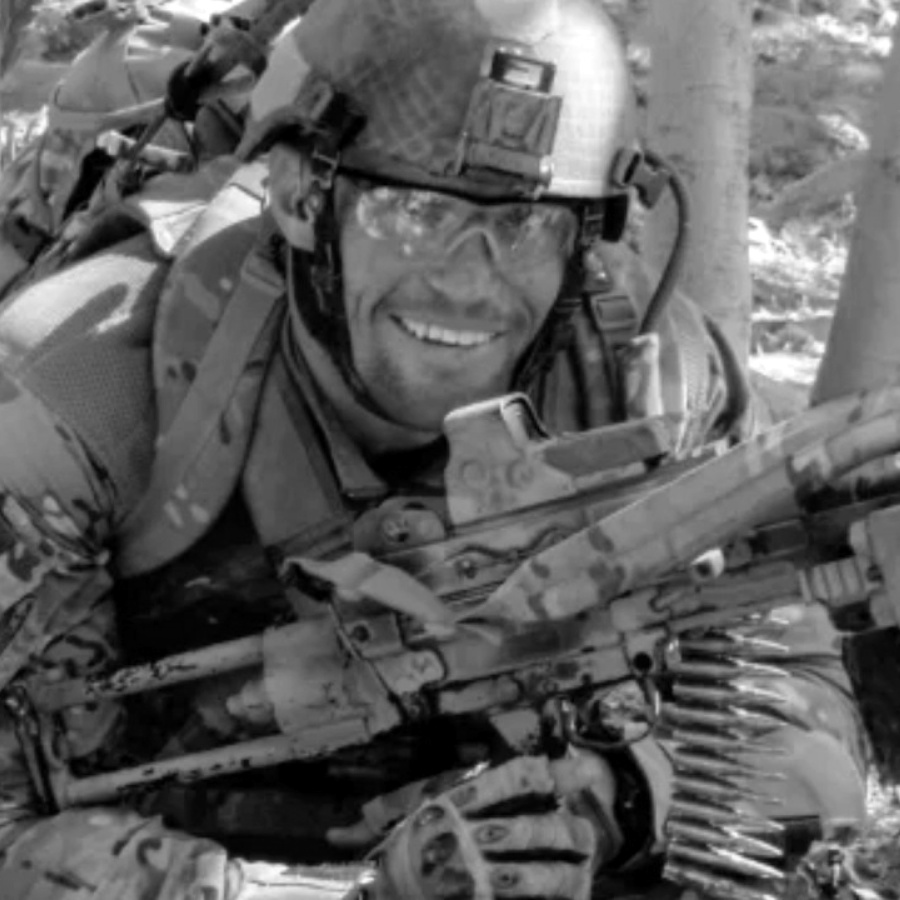
What happens when a man spends 10 years in hell and comes back alive? What does it cost to lead the deadliest soldiers on Earth through 87 missions into the darkness? And why did the Taliban fear one Australian commander more than American air strikes? Tonight, we’re pulling back the curtain on Mark Wales, the ghost who haunted Afghanistan for a decade.
The squadron commander who broke every rule in the book and somehow became a legend. The man who went to war 10 times when most operators tap out after three. You think you know what elite warfare looks like. You think Navy Seals are the apex predators? Wait until you hear what the bearded ones did in the mountains of Ursan Province. Wait until you discover why American Tier 1 operators watched the Australians work and felt genuinely afraid.
This isn’t a hero story. This isn’t propaganda. This is the raw, unfiltered truth about a warrior who gave everything to a war that America forgot. A commander who led men through compounds in complete silence while bullets screamed past their heads. a tactician who perfected the art of violence and paid for it with pieces of his soul.
We’re talking about classified operations that won’t be declassified for 50 years. We’re talking about missions so dark that even now the Australian government won’t acknowledge they happened. We’re talking about a man who became so good at ending lives that it terrified him more than any enemy ever could.
Why did he walk away after rotation number 10? What happened on that final mission in 2013 that made him quit? And what did he see in the mirror that convinced him to stop before he became something irredeemable? Stick with us because by the end of this video, you’ll understand why Mark Wales is both the most decorated and most controversial figure in Australian special forces history.
You’ll learn tactics the SASR used that made Delta Force operators shake their heads in disbelief. And you’ll discover the hidden cost of creating the perfect human weapon. This is the story they don’t want you to hear. The architect of chaos. The man who spent 10 years building hell and somehow found his way back. Let’s begin.
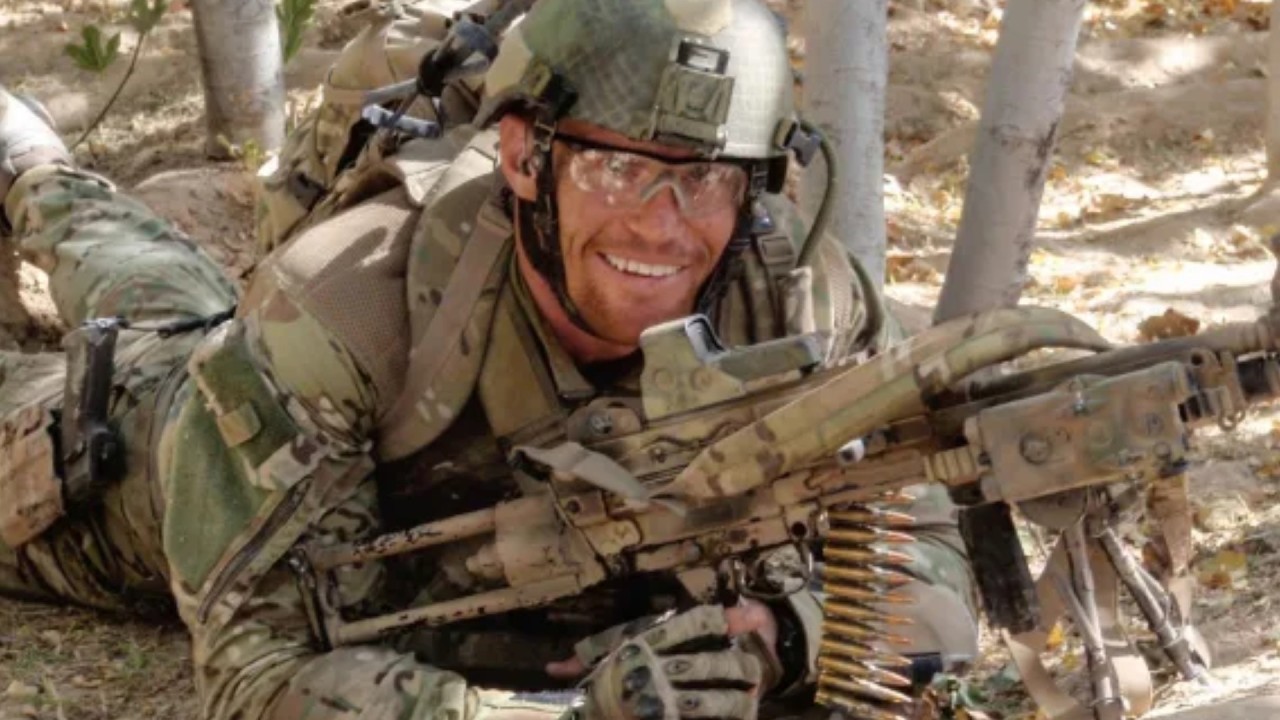
The Chinook dropped through the night like a falling anvil. Inside the belly of the beast, 32 men sat in absolute silence. No jokes, no nervous chatter, just the mechanical drone of twin rotors chopping through Afghan air at 200 km per hour. The green glow of night vision painted their faces like corpses.
At the front of the chalk, Major Mark Wales checked his watch. 2300 hours, 3 minutes to insertion. This was his 87th mission as squadron commander, his 10th rotation in a war that America was slowly forgetting. His 10th journey into what the Australians darkly called the Grinder. The helicopter banked hard left, and Wales felt the familiar tightness in his chest. Not fear, never fear.
something else. The weight of knowing that in exactly 180 seconds he would make decisions that would either bring all these men home or shatter families on the other side of the planet. But tonight’s mission was different from the 86 that came before it. The target was a Taliban shadow governor operating out of a compound in Urusan province. High value, high risk.
The Americans had passed on the mission twice. Too many unknowns, too many civilians, too many ways it could turn into a political nightmare. The SASR didn’t operate under American rules. They operated under results. Wales had spent the last 6 hours memorizing satellite imagery, thermal scans, and intercepted radio chatter.
He knew the compound layout better than his own childhood home. He knew where the guard rotations changed. He knew which door squeaked. He knew which room the target slept in. Knowledge was the only armor that mattered. And Mark Wales was a walking encyclopedia of violence. The loadmaster raised his fist. 2 minutes. Wales tapped the shoulder of his lead breacher. No words. The man nodded.
They had done this so many times that language had become obsolete. Communication happened through glances, through muscle memory, through a shared understanding that only comes from walking through fire together again and again. What nobody in that helicopter knew was that this would be Wales’s last mission.
10 rotations, 10 deployments, 10 separate journeys into the most dangerous provinces in Afghanistan. Most operators burned out after three. The exceptional ones made it to five. Wales had doubled that and kept going. The question wasn’t whether he was good at his job. The question was what the job had done to him.
Mark Wales didn’t start as a killer. He started as a thinker. Born in Australia in the late 1970s, he grew up in a country that respected military service, but didn’t worship it the way Americans did. The Australian Defense Force was professional, selective, and utterly allergic to glory seekers. If you wanted medals and parades, you joined the wrong army.
If you wanted to be genuinely dangerous, you tried out for the Special Air Service Regiment. Wales enlisted young. Not because of patriotism, not because of family tradition. He enlisted because he was bored. University felt like a cage. Civilian life felt like watching paint dry. He needed something that would test every fiber of his being.
The SASR selection course gave him exactly that and nearly destroyed him in the process. The selection process for Australian special forces makes Navy Seal training look like summer camp. It’s not about pain tolerance or physical endurance, though both are tested beyond human limits. It’s about psychological endurance. Can you think clearly when your body is screaming for rest? Can you navigate through mountains when you haven’t slept in 72 hours? Can you make decisions when your brain is operating on fumes? Whales passed not because he was the
strongest, not because he was the fastest. He passed because he could turn off the panic switch in his brain. He could compartmentalize suffering. He could look at chaos and see patterns. That ability would define his entire career and ultimately nearly cost him his sanity. His first deployment was to East Teimour in 2006.
It was supposed to be peacekeeping. It turned into urban combat against militias who didn’t care about UN resolutions. Wales learned something crucial in those dusty streets. Rules were luxuries. Survival required adaptation. The operators who survived weren’t the ones who followed doctrine. They were the ones who rewrote it in real time.
By 2009, Australia had committed the SASR to Afghanistan as part of the special operations task group. The mission was simple on paper. Hunt down Taliban leadership. Support coalition forces. Provide surgical precision in a war that was becoming a meat grinder. Nothing in Afghanistan was simple, and Wales was about to learn exactly how complicated war could become.
Wales arrived for his first Afghan rotation as a captain. He led a troop of 16 men into Urus Gan province, a region so hostile that even the Taliban fighters from other provinces considered it a death sentence. The terrain was brutal. Jagged mountains, narrow valleys filled with opium fields, and ancient irrigation channels.
Villages that looked like they hadn’t changed since Alexander the Great marched through. The enemy was invisible. They didn’t wear uniforms. They didn’t mask for battle. They planted IEDs. They sniped from ridgeel lines. They melted into the civilian population. Fighting them required a completely different mindset than conventional warfare.
You couldn’t bomb your way to victory. You had to think like a hunter. Wales was a natural hunter. He studied patterns. He analyzed intelligence reports with obsessive detail. He learned to read the micro signals that separated a farmer from a fighter. The way someone walked, the way they looked away, the way a village went silent when the Australians approached.
These instincts would save lives, but they would also corrode something essential inside him. His troop conducted raids three to four times per week, always at night, always fast. The Americans called it F3A. Find, fix, finish, exploit, analyze. The Australians just called it work. They would insert via helicopter, hit the target compound with overwhelming speed, capture or eliminate the objective, and extract before dawn. Rinse and repeat.
Wales noticed something disturbing. The Taliban they captured were often released within weeks. The Afghan judicial system was broken. Corruption was rampant. Insurgents who should have been imprisoned were walking free and returning to the battlefield. It created a sick cycle. Capture the same fighter multiple times. Watch him go free.
Watch him end coalition soldiers. Capture him again. The psychological toll was immense. You started to question the point. Why risk your life to capture someone who would be back planting bombs in a month? Why follow rules of engagement when the enemy had none? Why show restraint when restraint got your brothers mutilated? Wales never publicly discussed how he answered those questions, but his actions began to tell their own story.
His termination count climbed. His capture rate dropped. His missions became faster, harder, more efficient. He was promoted to major and given command of an entire squadron, 60 men, the best of the best, and he led them back into Afghanistan for rotation number two, then rotation number three, then four, then five.
Each rotation was supposed to be 6 months, but 6 months in Urusan felt like 6 years. The operational tempo was insane. Some weeks they conducted raids every single night. Whales would plan a mission during the day, executed at midnight, debrief at dawn, and start planning the next one by noon. Sleep became a luxury.
Food became fuel. Relationships back home became ghosts. By rotation number six, Wales had been in Afghanistan longer than most American soldiers served total. He had seen friends eviscerated by IEDs. He had held dying men in his arms. He had made split-second decisions that saved lives and split-second decisions that ended them.
He had become something that civilian society couldn’t quite understand, and he was only halfway through his Afghanistan career. Wales transformed into a professional architect of violence, but he was also something else, a leader. The men under his command trusted him absolutely. Not because he was invincible, not because he never made mistakes.
They trusted him because he was transparent about the risks. He never sugarcoated the danger. He never pretended the mission was more important than their lives. He made calculated decisions and when those decisions went wrong, he owned them. There was a mission in 2012 that defined this philosophy. Wales led a raid on a compound believed to house a Taliban explosives expert.
Intelligence was solid. Planning was meticulous. The insertion went flawlessly. But when the assault team breached the main building, they walked into an ambush. The compound was fortified. The Taliban had heavy weapons. What should have been a 10-minute raid turned into a 40minute firefight. Wales was on the command net, coordinating air support, managing casualties, directing fire teams.
His voice never wavered, never panicked. He spoke in calm, measured tones while bullets tore through the air around him. When one of his breachers took a round through the shoulder, Wales personally dragged him to cover, applied a tourniquet, and got him to the medevac bird. The mission was a tactical success.
They terminated 12 fighters and recovered bomb-making materials. But it was also the night Wales realized he had stopped feeling fear entirely. Rotation number seven was when Wales noticed the fundamental change in himself. He stopped feeling much of anything. When the Chinuk doors opened and bullets started flying, his heart rate didn’t spike anymore.
He didn’t get adrenaline dumps. He just moved efficiently, mechanically, like a machine built for one purpose. His soldiers noticed it, too. They called it the stare, that thousandy gaze common among operators who had seen too much. Whales would sit in briefings, perfectly calm, perfectly focused. But there was something hollow behind his eyes, something unreachable.
The fire that had once driven him was now a cold ember. Still burning, still dangerous, but no longer warm. The missions kept coming. High value targets never stopped appearing. The Taliban leadership was like a hydra. Cut off one head, two more grew back. Wales and his squadron became the primary tool for decapitation strikes.
They were so effective that Taliban commanders started issuing warnings about the bearded ones. If you see the bearded ones, don’t fight. Run. The Australians had earned a reputation that exceeded even their American counterparts. The Americans operated with overwhelming firepower. They had drones, gunships, artillery, air support.
The Australians operated with precision and silence. They inserted quietly. They moved like ghosts. They eliminated targets without waking the neighbors. By the time the Taliban realized the SASR was in their compound, it was already over. Wales perfected this approach. He trained his men to operate without radios inside buildings. Sound discipline was absolute.
They communicated through hand signals and muscle memory. A four-man team could clear a compound in complete silence, synchronized so perfectly that their shots sounded like one. The Americans thought it was reckless. The Australians thought it was poetry. But poetry written in blood has consequences that don’t appear in afteraction reports.
Rotation number eight was when the cracks started showing. Wales came home for his mandatory leave and realized he didn’t fit anymore. Civilian conversations felt absurd. People complained about traffic, about their jobs, about trivial inconveniences. Whales had just spent 6 months hunting human beings in the dark.
He had made decisions that ended bloodlines. He had become an expert in violence. And now he was supposed to care about quarterly earnings reports and mortgage rates. He couldn’t do it. He cut his leave short and volunteered for rotation number nine. His commanders were concerned. They suggested counseling. They suggested a desk job. Wales declined.
He knew what he was. He knew what he was good at. and he knew that the war needed men like him, even if those men were slowly being consumed by it. What his commanders didn’t understand was that whales had become addicted to the simplicity of combat. Rotation 9 and 10 blurred together. Whales stopped counting missions, stopped counting eliminations. He operated on autopilot.
Wake up, brief. Insert. Execute. Extract. Debrief. >> [snorts] >> sleep. Repeat. The squadron rotated personnel, but whales stayed. He became a fixture. A permanent ghost haunting the Hindu Kush. His final mission came in 2013. Another compound. Another shadow governor. Another night insertion. But this time, Wales felt something he hadn’t felt in years.
Hesitation, not fear, not doubt about the mission. hesitation about himself. He was 36 years old. He had spent a third of his life at war. He had become incredibly good at ending lives. And that scared him more than any Taliban fighter ever could. The raid went perfectly. They captured the target alive, recovered intelligence, no casualties, a textbook operation.
But as Wales sat in the helicopter on the flight back, watching the Afghan landscape disappear into darkness, he made a decision that would define the rest of his life. This was his last rotation. He was done. He submitted his resignation 6 weeks later. The Australian Defense Force tried to keep him. They offered promotions. They offered desk commands.
They offered everything except the one thing Wales needed, distance. He needed to be far away from the war before the war became the only thing he knew how to do. Leaving the SASR was like leaving a religious order. The regiment wasn’t just a job. It was an identity. Wales had spent 15 years becoming the perfect warrior.
Now he had to figure out how to be human again. It was the hardest mission he ever faced. He moved back to Australia and tried civilian life. Started a business, tried to reconnect with family, tried to pretend that the last decade hadn’t fundamentally rewired his brain. It was brutal, and the war followed him home in ways he never anticipated.
He would wake up at 3:00 in the morning, reaching for a rifle that wasn’t there. He would hear helicopters and instinctively start planning an insert. He would see crowds and automatically scan for threats. But Wales was disciplined. If he could survive 10 rotations in Afghanistan, he could survive his own mind. He threw himself into fitness, into meditation, into anything that gave him structure and purpose.
Slowly, painfully, he started to rebuild a life that didn’t revolve around violence. In 2022, he appeared on the Australian version of Survivor. It seemed like an odd choice for a former special forces commander, but Wales understood something that civilians didn’t. War and reality television had a lot in common. Both required strategy.
Both required reading people. both required performing under pressure while maintaining a public face. He didn’t win, but he earned respect in ways that medals never could. Not because he was physically dominant, though he was. Not because he was strategic, though he was. He earned respect because he was transparent about his struggles.
He talked openly about the cost of service, about the difficulty of transition, about the fact that coming home from war is often harder than going to war. That honesty resonated. Veterans across Australia reached out. They shared their own stories. They thanked him for making it okay to admit that you weren’t okay. Wales had found a new mission, not leading soldiers through compounds, leading veterans through reintegration.
He started speaking publicly about mental health, about PTSD, about the invisible wounds that don’t show up on medical reports. He became an advocate for better support systems, for better transition programs, for recognition that elite soldiers are human beings who break just like everyone else. But Wales never romanticized his service, and that authenticity made him more effective than any propaganda campaign.
He never claimed to be a hero. When asked about his 10 rotations, he would simply say they were necessary. The war was real. The threats were real. Someone had to do the work. He just happened to be good at it. His legacy in the SASR is complicated. On one hand, he’s remembered as one of the most effective combat leaders in regiment history.
His tactical innovations are still taught. His operational philosophy is still studied. On the other hand, he’s also a reminder of the cost. 10 rotations broke something in him that can never be fully repaired. The Australian government doesn’t publicly discuss what Wales and his squadron did in Afghanistan.
The missions are classified. The body counts are redacted. The moral compromises are buried in files that won’t be opened for 50 years, but the results speak for themselves, and those results tell a story the government would prefer remain classified. The SASR decimated Taliban leadership in Urusan province.
They disrupted networks. They saved coalition lives. They did the dirty work that allowed politicians to claim progress. Wales understands the contradiction. He’s proud of his service and haunted by it. He saved lives and ended them. He upheld values and violated them. He was both the hero and the monster, depending on which side of the rifle you were standing on.
The men who served under him describe him with religious reverence. They talk about his calmness under fire, his ability to make impossible decisions look easy, his willingness to put himself in danger to protect his soldiers. They would follow him into hell without question. Some of them did literally, but they also noticed the toll, how each rotation made him a little harder, a little colder, a little more distant.
By rotation 10, Wales wasn’t the same man who had arrived for rotation one, and everyone who knew him could see the transformation. The war had carved away everything soft and left only the functional parts. He had become a weapon, incredibly effective, incredibly dangerous, and incredibly damaged. The question that haunts whales now is whether it was worth it.
Did those 10 rotations make a difference? Afghanistan fell back to the Taliban in 2021. The government collapsed. The insurgents Wales spent a decade hunting are now in power. The men he captured are free. The networks he disrupted are rebuilt. From a strategic perspective, it looks like futility. But Wales doesn’t think in strategic terms anymore.
He thinks in individual moments. The interpreter whose family he evacuated. The village elder who gave him intelligence that stopped an attack. The Australian soldier who went home because Wales made the right call in a firefight. Those moments mattered. Those lives mattered. Even if the war was lost, those individual victories were real.
And that’s what allows him to sleep at night. He also thinks about the darkness, the missions that crossed lines, the decisions made in the heat of combat that look different in the cold light of retrospect. The SASR faced allegations of misconduct during the Afghan deployment. Some were investigated, some were substantiated.
Wales was never personally charged, but he commanded men who were. That weight sits on him like a stone. He doesn’t make excuses. He doesn’t claim ignorance. He acknowledges that war brings out the worst in people and that he operated in an environment where the worst was sometimes necessary for survival.
He admits that he made decisions he’s not proud of, that he prioritized mission success over moral clarity, that he became the kind of man his younger self would have feared. But he also refuses to be defined solely by those moments because doing so would erase the good he accomplished. He was more than someone who ended lives.
He was a leader, a tactician, a protector. He carried wounded men under fire. He mentored young operators. He made impossible choices in impossible circumstances. reducing his entire career to its darkest chapters would be as dishonest as pretending those chapters don’t exist. The truth is that Mark Wales is a product of a specific time and place.
He was shaped by a war that demanded brutality and rewarded efficiency. He excelled in that environment because he was willing to pay the costs that others weren’t. He gave a decade of his life. He gave his peace of mind. He gave parts of his soul and he did it because someone had to. Now years removed from the battlefield, Wales has perspective that active operators lack.
He can see the forest instead of just the trees. He understands that the global war on terror was a strategic disaster. But that knowledge doesn’t diminish what he accomplished. He understands that the tactics that worked in 2009 stopped working by 2012. That the Afghans never wanted foreign soldiers on their soil, no matter how noble the intentions.
But he also understands that his job wasn’t to fix Afghanistan. His job was to keep his men alive and eliminate threats. By that metric, he succeeded. He brought most of his soldiers home. He disrupted enemy networks. He made the Taliban afraid. Whether that was worth the personal cost is a question he still wrestles with.
His post-military career reflects this complexity. He’s not a flagwaving patriot selling books about heroism. He’s not a bitter veteran blaming politicians for betrayal. He’s something more nuanced. a thoughtful warrior trying to make sense of what he experienced and share lessons that might help others.
When he speaks to younger soldiers, he doesn’t glorify combat. And that honesty makes him more credible than any recruitment poster. He tells them the truth. War is chaos. Leadership is burden. Violence is seductive and corrosive. You can do everything right and still lose people. You can be incredibly skilled and still be haunted by your choices.
Glory is a lie sold by people who have never pulled a trigger in anger. But he also tells them that service matters. That defending your country, even in a flawed war, is honorable. That the bonds formed in combat are deeper than anything civilian life offers. that there’s a strange purity to knowing exactly what you’re supposed to do and doing it with absolute commitment.
Mark Wales is now in his late 40s. He runs a successful business. He mentors veterans. He spends time with family. From the outside, he looks like a success story, a warrior who transitioned smoothly to civilian life. But inside he still carries Afghanistan every single day. He still hears the rotors. He still sees the faces.
He still wakes up planning raids that will never happen. The war ended for Australia in 2013. But it never ended for Mark Wales. It lives in his muscle memory, in his hyper vigilance, in his inability to fully relax, in his need for mission and purpose. He managed to leave the battlefield, but the battlefield never left him.
His story is a mirror for an entire generation of tier 1 operators. Men who spent their prime years hunting enemies in the mountains and deserts. Men who became incredibly proficient at violence. Men who sacrificed normaly for operational excellence. men who came home to a society that didn’t understand them and didn’t particularly want to.
The American public romanticizes Navy Seals. They make movies about them. They write books about them. They turn them into brands. But the Australians kept their operators in the shadows. And that silence made reintegration even harder. The SASR didn’t do book tours. They didn’t appear on podcasts.
They stayed quiet professionals. And that silence made reintegration even harder. You can’t process trauma if you can’t talk about it. Wales broke that silence, not by revealing classified details, not by seeking fame, but by being honest about the cost. He became a voice for the voiceless. The operators who couldn’t speak publicly but needed their story told.
The veterans struggling with transition but too proud to ask for help. The families shattered by deployments but expected to just cope. His advocacy work focuses on systemic change, better mental health support, better transition programs, better recognition that elite soldiers need elite support when they leave service. He argues that if you’re going to create human weapons, you have an obligation to help them become human again.
It’s slow work, but Wales has the patience of a man who spent years hunting in the mountains. Institutional change always is. But Wales has patience. He learned it in the mountains. He learned it during 10 rotations worth of waiting for the perfect moment to strike. He applies that same patience to bureaucracy, to advocacy, to healing.
The question people ask him most is whether he would do it again. If he could go back to 2009 and choose a different path, would he? Wales always pauses before answering. He thinks about the brothers he lost, the innocence he sacrificed, the moral lines he crossed, the pieces of himself he left in Afghan compounds.
Then he thinks about the lives saved, the families protected, the moments of perfect teamwork when everything clicked, the pride of serving with the best soldiers on earth. the knowledge that when the world needed someone to walk into darkness, he didn’t hesitate. His answer is always the same. And it reveals everything about who Mark Wales really is. He would do it again.
Not because it was easy, not because it was fun, but because it mattered. Because those 10 rotations, with all their horror and brutality and moral compromise, were necessary. Someone had to be the tip of the spear. Someone had to make the hard calls. Someone had to carry the weight. Mark Wales was that someone. And he carried it further than almost anyone else.
10 rotations, 10 journeys into hell, 10 chances to quit. And he never did. He stayed until there was nothing left to give. until the war had taken everything it could take, until he was so thoroughly broken that staying would have meant becoming something irredeemable. But he came back. He rebuilt. He found purpose beyond the battlefield.
And in doing that, he proved something important that every struggling veteran needs to hear. That even the hardest men can heal. that even the darkest experiences can be survived. That the warriors who frighten us can also teach us. That strength isn’t just about enduring hell. It’s about finding your way back from it.
His legacy isn’t measured in body counts or medals. It’s measured in the operators he mentored who went on to lead their own squadrons. In the veterans he helped transition who now help others. In the conversations started about mental health and moral injury, in the slow shift toward recognizing that creating elite warriors requires elite support, the SASR continues without him.
New operators cycle through. New commanders take the reigns. The regiment adapts and evolves. But Wales influence remains in the tactics taught, in the standards maintained, in the understanding that leadership means more than tactical brilliance. It means carrying the weight so others don’t have to. Mark Wales spent 10 years as an architect of chaos.
He planned raids that dismantled networks. He led men into the most dangerous corners of Afghanistan. He made split-second decisions with generational consequences. He became one of the most effective combat commanders in Australian military history. But his greatest achievement isn’t what he did in Afghanistan.
And that’s what makes his story truly remarkable. It’s what he did after. He came home broken and chose to heal publicly. He admitted weakness when strength was expected. He prioritized helping others over protecting his image. He became a different kind of warrior, won fighting battles that don’t have clear enemies or definitive victories. The scars remain.
The nightmares persist. The hyper vigilance never fully fades. Mark Wales will never be the man he was before Afghanistan. That person is gone. buried somewhere in the Hindu Kush alongside the innocence of everyone who deployed. But the man he became is valuable too. Harder, wiser, more honest about the costs of violence.
More committed to ensuring those costs aren’t paid in vain. He transformed his trauma into advocacy, his guilt into purpose, his darkness into a light for others stumbling through their own shadows. This is the true story of Mark Wales, stripped of propaganda and pretense. Not a hero, not a villain, a human being who went to war 10 times and came back different each time.
A soldier who did terrible things for understandable reasons. A leader who inspired loyalty through competence and honesty. A veteran who refused to let his service define him but also refused to pretend it didn’t shape him. He walked through 10 circles of hell and somehow found his way back to the surface.
Scarred, changed, but still standing, still fighting, still leading. just on a different battlefield now. One where the enemy is stigma and silence and the mission is helping others survive their own wars. That’s the legacy of the man who commanded the SASR through the grinder, not perfection, not glory, just raw, honest survival, and the strength to help others do the same.
The Chinuk lifted off from that final mission in 2013, carrying Mark Wales away from Afghanistan for the last time. He looked down at the compound they had just cleared. Another successful operation. Another target neutralized. Another small victory in an unwininnable war. The sun was beginning to rise over the mountains, painting the brutal landscape in shades of orange and gold.
It looked almost beautiful from this altitude, almost peaceful. Wales knew better. He had seen what lurked in those valleys. He had become part of that darkness. But as the helicopter banked toward the forward operating base, Wales allowed himself something he hadn’t felt in years. hope. Hope that he could leave this behind. Hope that he could rebuild.
Hope that the man he had become wasn’t permanent. The war would continue without him. Other operators would take his place. The mission would go on. But Mark Wales was done. And for the first time in a decade, that felt like victory enough.