September 1940.
Somewhere over occupied France, a lone aircraft crosses the channel at just 500 ft.
So low the pilot can see moonlight reflecting off the rivers below.
His destination is a farmer’s field he has never visited, marked only by three people holding pocket torches.
He has no radio beacon, no fighter escort, no weapons.
His Bristol Mercury engine hums at reduced power to keep the exhaust glow dim.
In 3 minutes, he will land, collect two passengers, and vanish back into the darkness.
Often the Germans never knew he had been there at all.
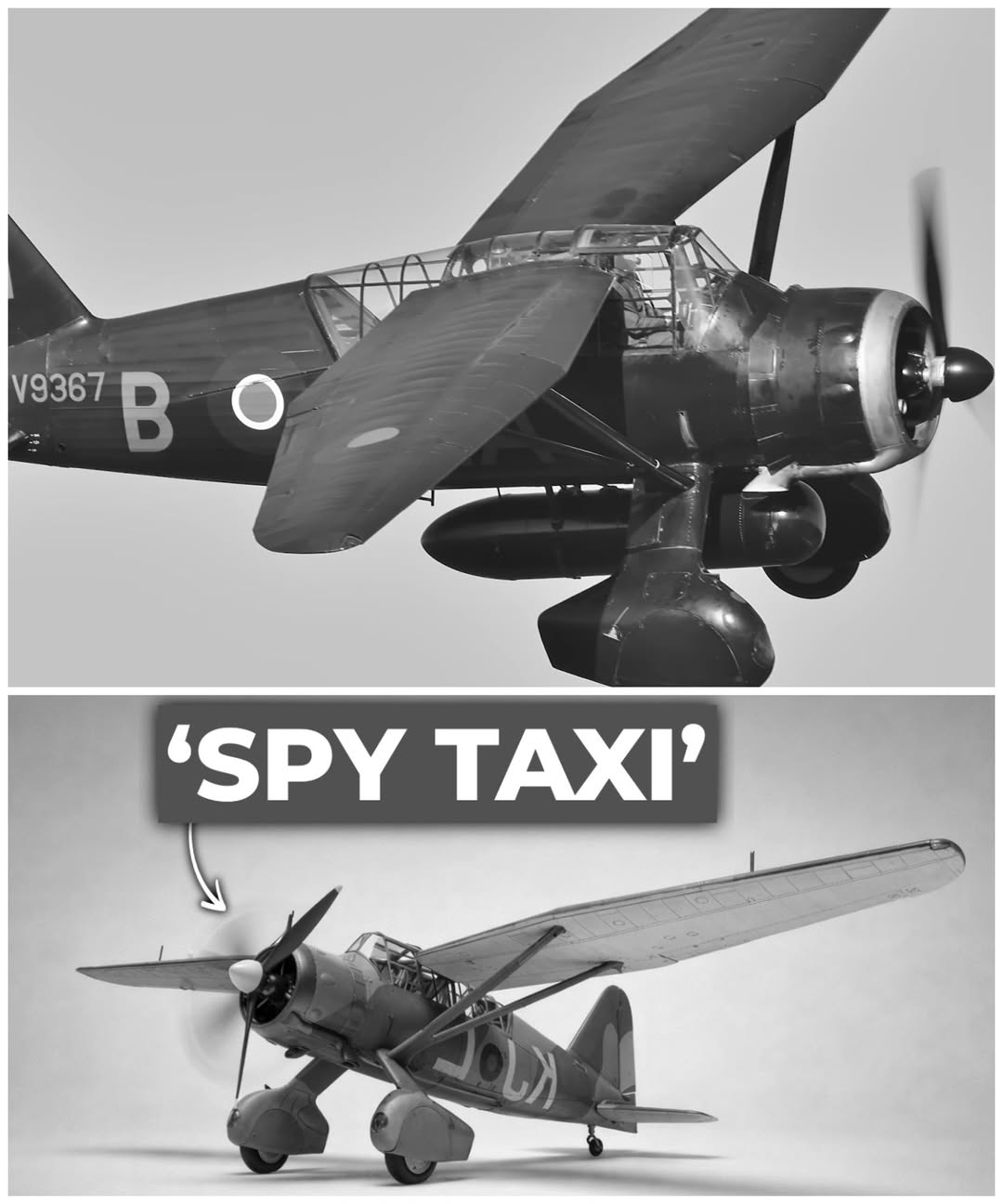
The aircraft is a Westlander.
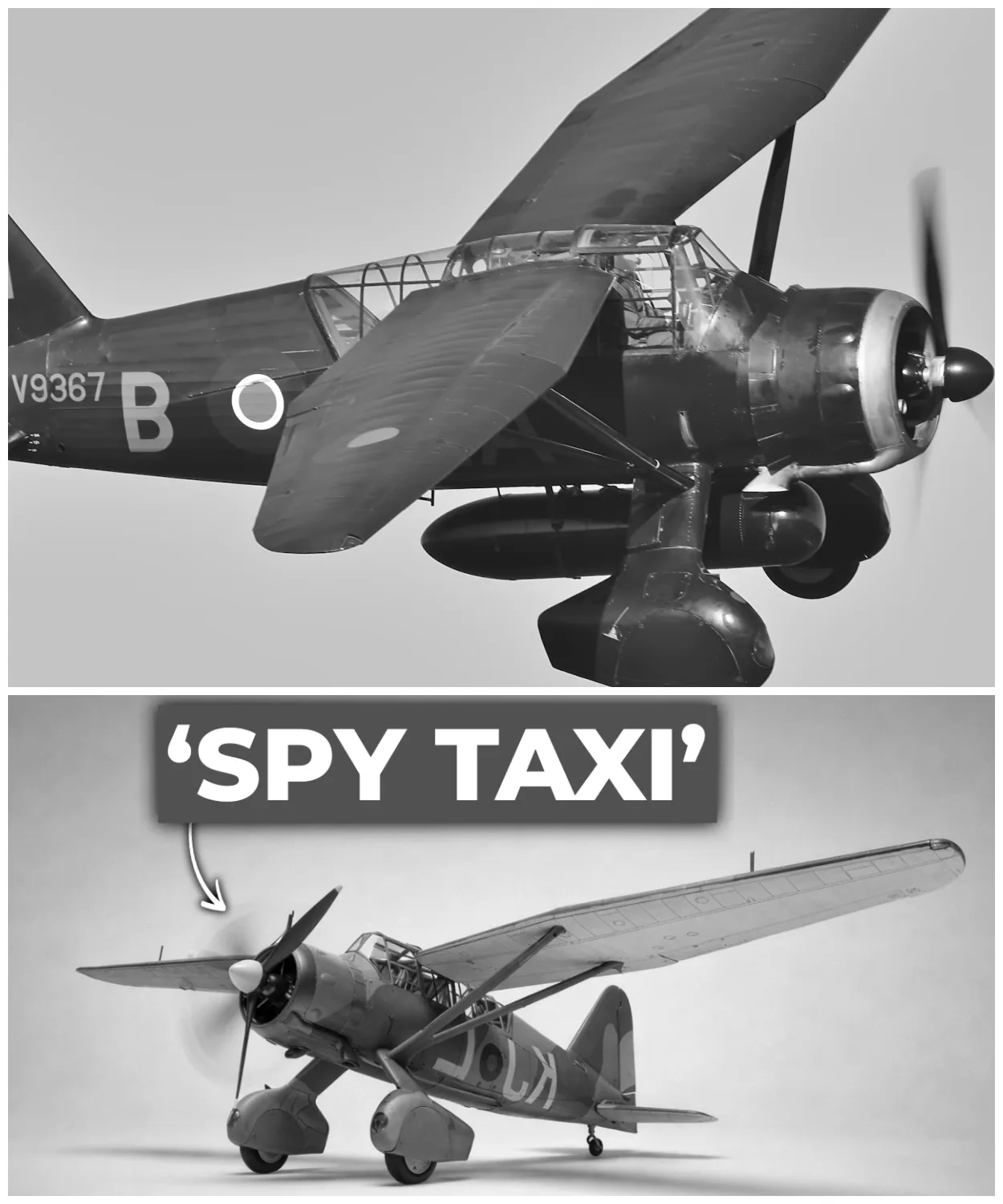
By 1940, the Royal Air Force had all but written the Lander off as obsolete.
Bomber Command refused to waste resources on it.
Fighter Command wants nothing to do with it.
Just 4 months earlier, 118 Landers were destroyed in 6 weeks during the fall of France.
120 air crew killed or captured.
An air marshal declared it quite unsuited to modern warfare.
The army complained it was too slow to evade fighters, too fast for artillery spotting, too big to hide, too heavy for soft ground.
The Lander managed to be simultaneously too much and too little of everything.
And yet, this useless aircraft would become the most important plane in Britain’s secret war.
It would deliver and extract over 200 agents from occupied Europe.
It would carry the man who unified the French resistance.
It would transport future presidents and generals.
It would achieve this with a combat loss rate that borded on Miraculous.
According to squadron records, only one Lander was officially confirmed lost to enemy fire in France across four years of clandestine operations.
The same plane that died in droves during conventional warfare became remarkably survivable when used for something its designers never imagined.
This is the story of how the RAF’s greatest failure became its most unlikely triumph.
The Lysander’s origins traced to Air Ministry specification, a 39/34 issued in 1934 for a two seat army cooperation aircraft.
The role itself was poorly defined.
Artillery spotting, reconnaissance, message pickup, liazison.
Even the army complained they had never been consulted about what they actually needed.
At Westland Aircraft in Yoville, technical director Teddy Peta interviewed dozens of Army Cooperation pilots and found no consensus whatsoever.
He distilled three priorities from the confusion.
First, the aircraft must operate from tiny spaces.
Second, it must fly slowly without stalling.
Third, it must provide superb downward visibility so observers could spot targets on the ground.
Senior designer Arthur Davenport translated these requirements into an unconventional airframe.
He raised the wing to the top of the canopy for unobstructed ground observation.
He incorporated automatic wing slats and slotted flaps.
Novel technology for British service aircraft at the time.
A variable incident tail plane allowed steep approach angles.
The fixed undercarriage formed from a single massive electron alloy beam in an inverted V-shape was the largest such extrusion ever manufactured.
Chief test pilot Harold Penrose flew the prototype on its maiden flight on June 15, 1936 from Boscom down.
Westland beat Bristol’s competing design and a production order for 169 Mark 1’s followed in December 1936.
Number 16 squadron at RAF Old Saurum received the first production aircraft on May 15, 1938.
The Lysander Mark III, the definitive variant and the one later modified for special operations executive work was powered by the Bristol Mercury 20 or Mercury 30 engine producing 870 horsepower.
Its specifications tell the story of its dual identity.
Maximum speed 212 mph at 5,000 ft.
Stall speed with slats and flaps deployed just 65 mph.
Service ceiling 21,500 ft.
Standard range on 106 Imperial gallons of internal fuel 600 mi.
Wingspan 50 ft.
Length 30t 6 in.
Empty weight approximately 4365 lb.
Maximum takeoff weight 6318 lbs.
It could clear a 50-ft obstacle in just 915 ft of takeoff run and land in even less.
Total production reached approximately 1,786 aircraft across all variants.
69 Mark 1’s, 517 MK is with the Bristol Perseus engine, 517 Mark III’s, plus target towing conversions and export models for Turkey, Finland, Egypt, Portugal, Ireland, India, and Canada.
By September 1939, seven RAF squadrons flew Lissanders.
Four accompanied the British Expeditionary Force to France that October.
Numbers 2, 4, 13, and 26 squadrons.
Their job was straightforward.
Fly low and slow over the front lines, spot artillery targets, photograph enemy positions, drop messages to ground units.
The problem was elementary.
Flying low and slow over a battlefield dominated by Mesashmmit BF109s, traveling at over 350 mph was suicidal.
The catastrophe arrived with the German offensive in May 1940.
Of 175 Landers deployed to France and Belgium, 118 were destroyed in roughly 6 weeks.
88 fell to Luftvafa fighters.
30 were bombed on the ground.
120 air crew were killed or captured in one especially devastating mission to resupply troops trapped at Calala.
14 of 16 Landers and Hawker Hector’s dispatched were lost.
Air Marshal Arthur Barrett, commanding British Air Forces in France, delivered a damning verdict.
The Lander was quite unsuited to the task.
A faster, less vulnerable aircraft was required.
By 1941, camera equipped Curtis Tomahawks and North American Mustangs took over reconnaissance.
Tiny tailorcraft osters handled artillery direction.
The Lander was banished to the margins.
Target towing, radar calibration, air sea rescue, coastal patrol.
It was by any conventional measure finished.
Now, before we see how this failure became a triumph, if you’re enjoying this deep dive into British aviation history, hit subscribe.
It takes a second, costs nothing, and helps the channel grow.
All right, let us get into the secret war.
The special operations executive established by Churchill in July 1940 with orders to set Europe ablaze needed aircraft nobody else wanted.
Air vice marshal Arthur Harris subjected to diverting resources to what he called carrying ragmuffins to distant spots, but Churchill overruled him.
SOE got the scraps, including Lysanders that bomber command was glad to part with as obsolete.
Number 14.
19 special duties flight formed on August 21, 1940 at RAF Northfield with just two lysanders.
The very first clandestine mission on October 19 and 20, 1940 was a near far.
Flight Lieutenant WR Farley flew to pick up agent Philip Schneidau.
He took a century’s bullet through his compass, got hopelessly lost and landed at Oben, Scotland with his fuel gauge on empty.
Yet the concept was proven.
In August 1941, 1419 flight expanded into number 138 Special Duty Squadron.
On February 15, 1942, number 161 Special Duty Squadron formed, taking permanent ownership of the Lysander pickup mission.
Its first commanding officer was winging commander eh Fielden, previously captain of the King’s Flight.
Aircraft from the Royal Household’s own fleet were included in 161’s initial compliment.
The King’s aircraft now delivered spies.
The squadrons operated from RAF Tempsford in Bedfordshire, perhaps the most secret airfield of the war.
Cenamed Gibraltar Farm, it was disguised to resemble a working agricultural estate.
Lines painted across runways mimicked hedros.
Hangers resembled derelictked farm buildings.
Postwar accounts suggest German intelligence suspected secret activity there, though they never located the source.
They never did find it.
For Lysander operations, pilots staged forward to RAF Tangmir on the south coast, close enough to reach central France and return in a single night of darkness.
The irony was total.
Every floor that killed the Lander in conventional combat became an asset in its clandestine role.
Slow speed meant it could approach tiny fields without overshooting.
The 65 mph stall speed allowed near hovering precision approaches by moonlight.
The highwing gave pilots what one described as a grandstand position for spotting three feeble torch light markers in a dark French meadow.
The fixed undercarriage was bomb-proof, reliable on rough, unprepared ground with no retraction mechanism to jam, and the robust construction absorbed punishment from ruts, ditches, and soden pastures that would have collapsed a sleeker airframe.
Operations were dictated by the moon.
Pilots navigated entirely by dead reckoning and map reading.
no radio beacons for most of the war.
So they needed moonlight to identify rivers, forests, railways, and coastlines.
This restricted flying to roughly 10 to 14 nights per month, approximately one week either side of the full moon.
Weather narrowed this further.
Cloud, fog, or rain could cancel everything.
The pickup procedure was methodical and terrifyingly precise.
A resistance group selected a flat meadow and sent its coordinates to London.
The RAF photographic reconnaissance unit photographed the site so pilots could study it beforehand.
On the appointed night, a BBC broadcast of a coded message alerted the reception committee that aircraft would come.
Something like, “The beaver will tread the snow twice.” Three people with pocket torches arranged themselves in an inverted Lshape roughly 150 yard long.
The agent at the foot of the L flashed a pre-agreed Morse letter.
The pilot identified the correct letter, acknowledged it, and the other torches switched on, defining the landing run.
The Lysander touched down, taxied to the far end, turned around for takeoff.
Passengers scrambled down a fixed metal ladder bolted to the port fuselage.
Its top rungs painted yellow for visibility and moonlight.
Incoming agents climbed aboard.
Gifts of champagne and perfume were sometimes thrust up to pilots in the frantic seconds of turnaround under 3 minutes on the ground.
The very first successful pickup on September 4th, 1941 near Chataroo reportedly took just 2 minutes.
One extraordinary operation recorded a 12 1/2 second landing and takeoff under German smallarms fire.
The special duties Lander was stripped for its mission.
All armorament removed, both the forward firing Browning machine guns in the wheel spats and the rear observer’s gun.
A 150 Imperial gallon belly tank hung between the undercarriage legs, doubling the fuel load and extending range to over 1,100 mi with endurance of approximately 8 hours, enough to reach deep into France and back.
The rear cockpit was modified with a rearward-facing bench seat for two passengers and a shelf that could squeeze a third or even a fourth in extreme discomfort.
Matte black paint covered the airframe, though pilots later had upper surfaces repainted dark green and pale gray.
After discovering the all black silhouette was paradoxically too visible against cloud on moonlit nights.
Exhaust flame dampeners suppressed the engine’s glow.
Approximately 40 special duties variants were constructed.
Squadron leader Hugh Verity commanded 161 Squadron’s Lander flight and made at least 29, possibly as many as 36 night flights into France, more than any other pilot.
His 1978 book, We Landed by Moonlight, remains the definitive account of RAF clandestine landings.
Among his passengers were Jean Mulan, the man who unified the French resistance, Franis Miteron, future president of France, and General Jeatra de Tasini.
His most famous mission was his most spectacular failure.
On February 24th, 1943, carrying Mulan toward a fogged out field near Isuden, Verity returned to Tangmir to find it also socked in, he made 11 blind approaches without seeing the runway.
On the 12th, he estimated his height and closed the throttle, but he was 30 ft too high.
The Lander crashed, but did not catch fire.
Neither man was injured.
Mulan’s response, according to Varity, was simply, “Thank you for a very agreeable flight.” A month later, flight lieutenant John Bridger successfully delivered Mulan to a field at Malay on the night of March 19th and 20th, 1943.
Flying officer James McCann’s completed 25 successful Lissander pickups.
More than any other pilot from Tangmir, his backstory was extraordinary.
Previously shot down in a Spitfire while flying in Douglas Bada’s Tangmir wing, he escaped to German prison camp with help from the Belgian Comet escape line.
Then he joined 161 squadron specifically to repay his debt to the resistance.
Flight Lieutenant John Bridger provided one of the war’s most improbable anecdotes.
After shredding a tire on a rough landing in April 1943, unable to taxi with one flat, he drew his Smith and Wesson revolver and shot out the other tire.
It took five rounds.
Both rims would now roll evenly on the dry ground.
He took off without incident.
Flight Lieutenant Robin Hooper’s Lander bogged hopelessly in mud during a pickup.
Four bulocks from a nearby farm were hitched to the aircraft.
Even they could not budge it.
Hooper burned the Lysander and was hidden by the resistance for a month before being rescued by Hudson.
He went on to become Britain’s ambassador to Greece.
Between 1940 and 1944, number 161 squadron records show that Lander operations inserted 101 agents into and extracted 128 agents from occupied France across 279 sorties.
The broader 161 squadron effort, including Hudson operations moved 293 people into France and 500 out.
Jean Muair was parachuted into France on his first mission in January 1942.
He returned to England and was flown back by Lissander on the night of March 19th and 20th, 1943 to create the conc national dea resistance.
He succeeded holding the first meeting on May 27th, 1943 in Paris.
Arrested at Calwir on June 21st, 1943 by Klaus Barbie.
He died under torture around July 8th, 1943.
Today he is intombed in the Pantheon, France’s highest honor.
Norinat Khn was landed by Lissander on the night of June 16th and 17th, 1943 near Anger.
She was one of two Lee Sanders on a double mission that night.
The daughter of an Indian Sufi mystic and an American mother.
She had trained as a wireless operator and was sent to become the sole radio link for the Prosper network in Paris.
Tragically, the man greeting her on the field was Henri Derkur.
Later exposed as a double agent feeding landing schedules to the German SD.
The Gestapo knew when and where flights would land after other agents were arrested, Nor became the sole SOE wireless operator in Paris.
Transmitting for months while the network collapsed around her.
Betrayed for 100,000 Franks, she was captured and eventually executed at Dachau on September the 13th, 1944.
Her final word was reported to be liberty.
She received aostumous George Cross.
Vlette Sabo flew into France by Lissander on the night of April 5th and 6th 1944 landing near Azai Lurido.
Pilot Bob Large flew her in.
She completed her first mission successfully coordinating resistance sabotage operations and returned to England by Lander.
Her second mission by parachute on June 8th 1944 just 2 days after D-Day ended in capture after a fierce gunfight with elements of the Dasri division near Limoj.
She emptied her steam gun covering the escape of her comrade Macki leader Jacqu Dufour.
Executed at Ravensbrook concentration camp aged just 23.
Postuous George Cross her daughter Tanya only four years old when Vlet was captured accepted the medal from King George V 6th.
Forest Yo Thomas, cenamed the White Rabbit, was extracted by Lysander twice in April and November 1943.
Between his three missions into occupied France, he was one of the most important SOE agents, coordinating directly with resistance leaders and meeting with Charles de Gaul, captured on his third mission in March 1944.
He survived Bkenwald concentration camp through extraordinary resilience and multiple escape attempts.
Some historians believe he may have been an inspiration for Ian Fleming’s James Bond.
Fleming received Yo Thomas’s farewell letter from the concentration camp addressed to his fiance.
Postwar accounts describe German commanders as both mystified and frustrated by these operations.
A slow single engine aircraft crossing occupied France at treetop height, landing in a farmer’s field for 3 minutes, then vanishing.
It was nearly impossible to counter.
German commanders were described in postwar accounts as both mystified and curious about this new stealth-like plane that could drop an agent before seeming to vanish into the night.
Several factors combined to make Lissander operations remarkably survivable.
The aircraft flew at extremely low altitude below radar detection.
German night fighter defenses were overwhelmingly preoccupied with the far greater threat of bomber command strategic raids over German cities.
Hundreds of heavy bombers attacking the ruer demanded attention.
A single Lander crossing the Lir Valley did not.
The Lander’s small radar cross-section, slow speed, and unpredictable destinations gave the German air defense system nothing to target.
Landing zones changed constantly.
No field was used twice in quick succession.
The ground turnaround was so fast that even alerted troops struggled to respond.
The Germans eventually adopted an ambush strategy.
If they suspected a landing field, they would wait silently until the Lander was loading passengers, then opened fire to capture everyone alive for interrogation.
This meant that landing in the absence of gunfire was not necessarily proof the Germans were absent, a calculation that haunted every pilot.
The resistance countered German efforts to pound wooden stakes into likely meadows by developing stake extraction tools.
They would remove them before each operation and replace them by morning so the Germans never noticed the field had been used.
German commanders knew of the Lander’s existence and desperately wanted to study one.
Their closest opportunity came when soldiers found an almost intact crash Lander in March 1942 and loaded it onto a truck only for a train to hit the truck at a level crossing, destroying the specimen.
They never captured one intact.
The statistical contrast is staggering.
In conventional warfare during 1940, 118 Landers were destroyed in 6 weeks.
Across the entire four-year SOE campaign, only one Lander is officially recorded as having been shot down by enemy action in France.
The loss of aircraft who is 9673 on December 11th, 1943 near Lavilo Bois.
Flying officer James Bgate of New Zealand and his French passenger.
Capitane Claudius 4 were both killed by flack.
Total losses from all causes across 279 sorties, 13 aircraft and six pilots.
Most to weather and fog in England.
Not German action, the same aircraft in the same country.
Just used correctly.
Roughly 12 to 15 Landers survive worldwide today.
The RAF Museum London holds the only surviving genuine special duties variant.
Recently restored in 161 Squadron markings, complete with fixed ladder and belly tank replica.
The shuttleworth collection at Old Warden maintains an airworthy example that regularly flies at air shows.
Painted in the black scheme of 161 Squadron, the National Air and Space Museum in Washington displays one in 138 Squadron markings.
RAF Tempsford’s barn at Gibralta Farm where agents collected their weapons, forged papers, and cyanide pills before stepping into the night still stands as a memorial.
The Valenci memorial in France lists the 91 men and 13 women of SOE’s Fsection who did not return.
The Lysander’s legacy is a lesson in the gap between design, intent, and destiny.
No aircraft better illustrates how military value is contextual, how the same machine can be worthless in one role and irreplaceable in another.
Its short takeoff and landing capability, conceived for a vaguely defined army cooperation mission that proved obsolete on contact with modern warfare, turned out to be the precise capability needed for a mission nobody had imagined when the specification was written in 1934.
The 65 mph stall speed that made it prey for fighters made it master of moonlit meadows.
The fixed undercarriage that cost its speed gave it reliability on ground that would have wrecked retractable gear.
The aircraft established the template for special operations aviation.
The concept of a purpose modified aircraft for clandestine insertion that would echo through cold war special missions and into the modern special operations transport fleet.
But perhaps its truest legacy is human.
The 229 agents moved in and out of occupied France.
The network sustained, the intelligence gathered, the resistance organized, all resting on an aircraft the RAF had thrown away.
The Lander looked useless.
It looked obsolete.
It looked like a failure.
It became something else entirely.
It became the aircraft that let agents vanish behind