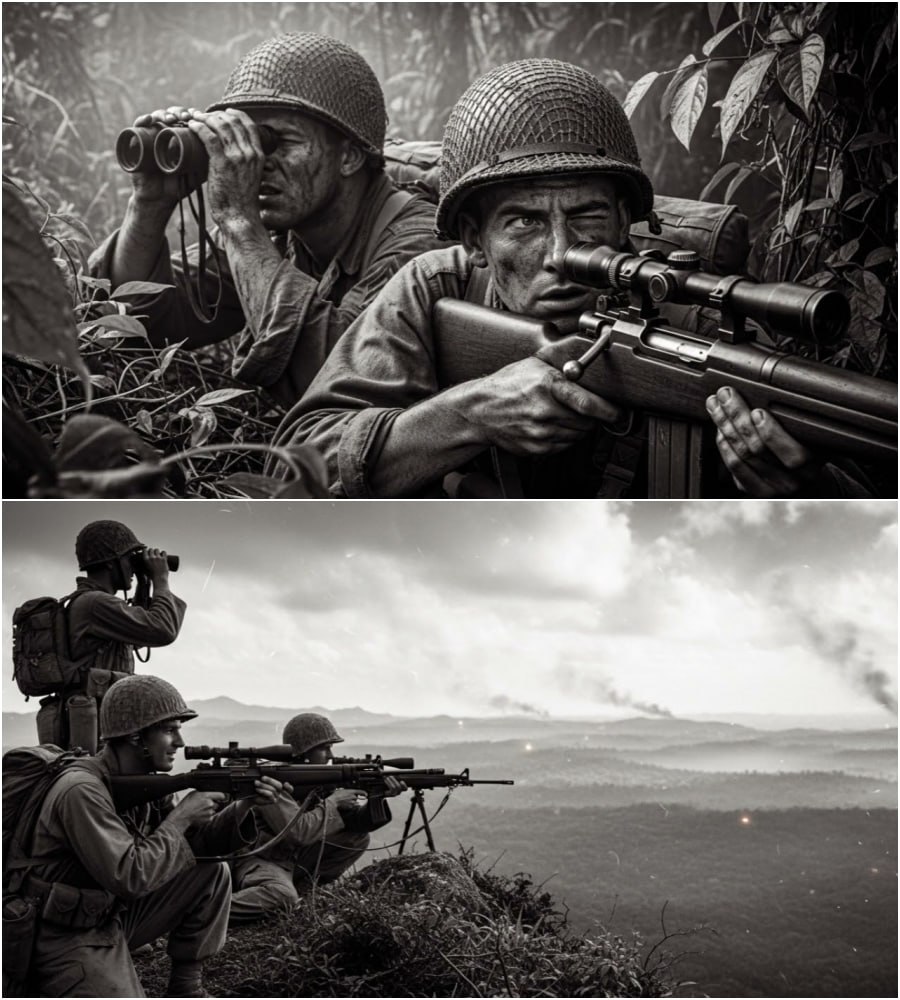
August 9th, 1942. The jungle canopy near the Lunga River, Guadal Canal. Private First Class James Henderson had been walking point for exactly 4 minutes when the back of Corporal William Morrison’s skull exploded 3 ft in front of him. No sound preceded the shot. No muzzle flash betrayed a position. The patrol of 12 Marines from first battalion, fifth regiment hit the mud, scanning trees that offered 300 potential firing positions within 50 yards. For the next 40 minutes, they would remain pinned down by an enemy they could not locate, could not suppress and could not kill.
Three more Marines would die trying to advance. Two more would fall, attempting retreat. When the invisible shooter finally ceased fire and melted into the jungle, Henderson realized something that would define the next three years of Pacific combat. The US Marine Corps had no idea how to fight this kind of war.
The Americans called it jungle fever, the paralyzing psychological effect of knowing that death could arrive from any direction without warning. In those first weeks on Guadal Canal, marine casualties from Japanese sniper fire exceeded those from direct combat engagements. Patrols moved through the jungle expecting ambush, but finding something worse. Precision assassination. Japanese snipers didn’t announce themselves with the rattle of machine guns or the distinctive crack of rifle volleys. They fired once, killed once, and vanished. Lieutenant Colonel Merritt Edson reported to division headquarters on August 12th that his first raider battalion had suffered 47 casualties in 6 days without ever clearly identifying a single enemy sniper position.
The mathematics were devastating. An invisible enemy was bleeding the Marines faster than they could learn to adapt. The jungle itself conspired against conventional tactics. The rainforest canopy on Guadal Canal rose 150 ft, creating a three-dimensional battlefield where elevation meant advantage and concealment was absolute. Marines trained to fight from foxholes and advance across open ground themselves exposed from above, below, and every compass point simultaneously. Corporal Eugene Sledge, who would survive Paleu and Okinawa, later wrote that the jungle wasn’t terrain, it was the enemy’s weapon.
Japanese snipers understood this terrain with intimate precision. They had trained in similar jungles throughout the South Pacific for years. American Marines, by contrast, had conducted exactly zero jungle warfare training exercises before landing on Guadal Canal. The killing ratio told the story in blood. During the first month of combat operations on Guadal Canal, Japanese snipers achieved an estimated kill ratio of 8:1. Eight marine casualties for every sniper eliminated. Marine riflemen fired thousands of rounds attempting to suppress an enemy they couldn’t see, wasting precious ammunition while achieving negligible results.
Battalion commanders filed desperate requests for counter sniper training, specialized equipment, and tactical doctrine that didn’t yet exist. Captain John Sweeney of F Company, second battalion, First Marines wrote in his afteraction report, “We are fighting blind. The enemy sees everything. We see nothing until it’s too late. Division intelligence estimated that a single skilled Japanese sniper could pin down an entire Marine platoon for hours, disrupting operations far beyond the immediate casualties inflicted. The psychological impact multiplied the tactical effect.
Marines began hesitating before moving through jungle trails. Patrol slowed to crawls. aggressiveness, the Marine Corps’s defining characteristic, withered under invisible threat. Yet, within this crucible of casualties and confusion, patterns began emerging. Marines who survived multiple encounters with Japanese snipers started recognizing subtle indicators. Disturbed foliage that looked almost natural. Unnaturally straight lines and trees were camouflaged netting hung. The faint metallic reflection of a rifle scope at specific sun angles. Sergeant Mitchell Page, who would win the Medal of Honor on Guadal Canal, noted that Japanese snipers rarely change positions immediately after firing, trusting their camouflage over mobility.
This overconfidence would become their first exploitable weakness. But Marines had to survive long enough to learn these lessons. And in August 1942, survival itself was far from guaranteed. The price of education was measured in body bags. Henderson’s patrol lost six men to a single sniper in 40 minutes. Across the island, similar stories multiplied. The Marines were fighting an enemy who had mastered the jungle while they were still learning its alphabet. The question wasn’t whether they could adapt.
Marines always adapted. The question was whether they could adapt fast enough to survive long enough to win. The answer would take 3 years, 13 major island campaigns, and innovations born from desperation. But first, they had to understand exactly what they were fighting against. The Japanese sniper wasn’t just a skilled marksman. He was a weapon system designed specifically to exploit every American vulnerability. And that weapon system was about to teach the Marine Corps the most expensive lessons in its history.
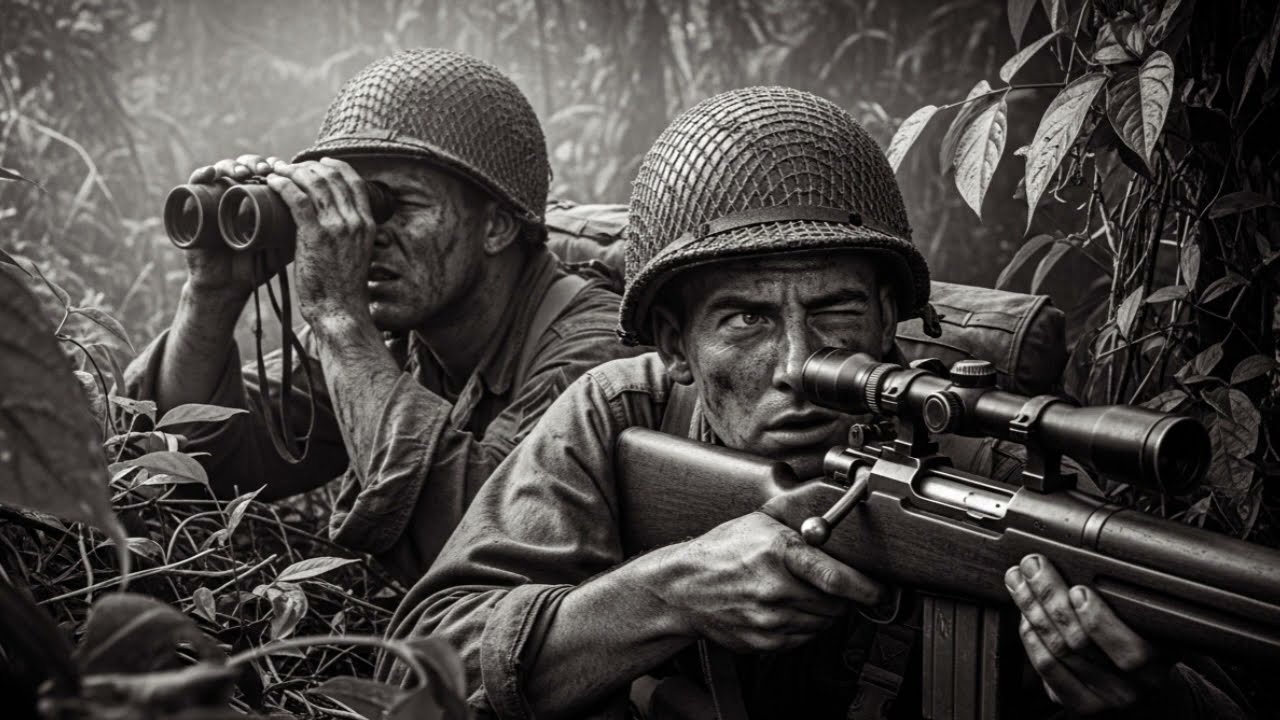
Understanding how Marines eventually defeated Japanese snipers requires understanding what made those snipers so lethally effective in the first place. The Imperial Japanese Army didn’t stumble into sniper excellence. They engineered it through a training system that began years before Pearl Harbor. Japanese sniper doctrine emerged from their brutal campaigns in China during the 1930s, where Japanese forces learned that precision marksmen could terrorize enemy formations far beyond their numerical strength. By 1941, the JA had codified these lessons into a comprehensive sniper training program that produced some of the most skilled jungle fighters in military history.
The men who would torment Marines on Guadal Canal weren’t just good shots. They were the products of a selection and training system designed to create invisible killers. Japanese sniper candidates underwent screening that eliminated 90% of applicants. The Imperial Army sought men with specific psychological profiles, extreme patience, comfort with isolation, and the ability to remain motionless for hours. Physical requirements were equally demanding. Candidates needed exceptional eyesight, 20s or better without correction, and the hand eye coordination to hit man-sized targets at 400 m consistently.
Those who passed initial screening entered a six-month training program at facilities like the one near Hiroshima, where instructors transformed competent riflemen into jungle phantoms. The curriculum emphasized fieldcraft over marksmanship. Japanese doctrine held that any soldier could be taught to shoot accurately. Creating a sniper who could survive in enemy territory for days while remaining undetected required different skills entirely. The training program’s jungle phase lasted 8 weeks and took place in conditions designed to replicate Pacific combat environments. Trainee learned to construct tree hides that blended seamlessly with natural vegetation.
They practiced remaining motionless in uncomfortable positions for 6-hour stretches while instructors attempted to spot them from 50 yards. They studied the behavior of jungle birds and insects, learning which sounds indicated human presence and which were natural. Perhaps most importantly, they mastered the art of patience. Japanese sniper doctrine emphasized waiting for the perfect shot rather than engaging multiple targets. One kill that created maximum psychological impact was worth more than three kills that revealed position. This patience would prove devastatingly effective against Americans conditioned to aggressive action.
The equipment Japanese snipers carried reflected their tactical doctrine. The type 97 sniper rifle, a modified arasaka with a 2.5x telescopic sight, prioritized reliability over precision. Japanese armorers understood that jungle conditions, heat, humidity, rain, mud would degrade weapon performance rapidly. The Type 97 sacrificed some accuracy for the ability to function after days of exposure to elements. Snipers typically carried only 60 rounds of ammunition, reinforcing the doctrine of patience and precision. They supplemented rifle work with camouflage materials that would shock American observers.
Japanese snipers used live vegetation woven into their uniforms daily, ensuring their camouflage matched the current environment perfectly. Some snipers reportedly incorporated bird feathers, bark, and even spiderw webs into their concealment. The effect was near perfect invisibility at ranges beyond 30 yards. Tactical doctrine emphasized psychological warfare as much as physical casualties. Japanese snipers targeted specific individuals, officers, radio operators, medics to maximize disruption. They learned to identify American unit structures and pick targets accordingly. A typical engagement pattern involved shooting the last marine in a patrol, then waiting for the unit to investigate before shooting the next target.
This pattern pinned units in place and multiplied terror. Snipers also employed disturbing psychological tactics. They sometimes allowed patrols to pass unmolested, then shot stragglers from behind. They targeted marines during vulnerable moments while eating, sleeping, or performing bodily functions. These tactics weren’t random cruelty. They were calculated to create an environment of perpetual dread where no moment felt safe. The Japanese also understood something Americans initially missed. Sniper teams were force multipliers in jungle terrain. Intelligence reports from Guadal Canal suggest Japanese commanders positioned snipers in mutually supporting positions, creating overlapping fields of fire that made counter sniper operations suicidal.
When Marines attempted to suppress one sniper position, another would engage from a different angle. This tactic transformed individual snipers into a coordinated defensive system. Some Japanese units deployed snipers in groups of three to five with specific roles, primary shooter, spotter, and security elements. This teamwork approach meant that even if Marines located one sniper, others remained hidden to continue harassment. Perhaps most critically, Japanese snipers benefited from exceptional tactical patience supported by logistical preparation. Snipers positioned in trees often carried water and rice balls sufficient for 48 to 72 hours.
They would tie themselves to branches to avoid falling if wounded or exhausted. Some were issued morphine to suppress pain if injured, allowing them to remain silent even when wounded. American intelligence reports from capture documents revealed that some snipers had orders to remain in position until killed, accepting death rather than retreat. This fanatic dedication created situations where Marines would clear an area, advance, and then receive fire from snipers who had remained hidden during the initial sweep. The cultural dimension amplified the tactical challenge.
Japanese military culture emphasized individual sacrifice for collective success, making snipers willing to accept near certain death to inflict maximum casualties. Many snipers viewed their mission as sacred duty. They understood that even if they died in position, the hours they pinned down American units and the casualties they inflicted served strategic purposes. American Marines conditioned to value individual survival and return fire found themselves fighting an enemy operating under completely different psychological parameters. You couldn’t suppress a Japanese sniper through superior firepower if that sniper was willing to die rather than reveal position.
You couldn’t intimidate an enemy who embraced death as honorable sacrifice. By late 1942, marine intelligence had compiled detailed reports on Japanese sniper capabilities. But understanding the enemy didn’t immediately translate to defeating them. The invisible killing would continue through Terawa, Saipan, and into the Philippines. Japanese snipers had mastered their craft over years. American Marines would have to compress equivalent learning into months, adapting under fire while casualties mounted. The education was about to begin in earnest, paid for in blood and measured in the brutal calculus of trial and error.
Every mistake cost lives. Every lesson learned came wrapped in a body bag. But Marines were learning. The transformation from prey to predator began not with brilliant tactical innovation, but with grim statistical analysis and desperate improvisation. By November 1942, Marine Corps headquarters on Guadal Canal had compiled casualty data that told a brutal story. Japanese snipers were inflicting losses disproportionate to their numbers, and conventional infantry tactics were failing catastrophically. Major General Alexander Vandergrift, commanding the First Marine Division, authorized a radical departure from standard doctrine.
If Japanese snipers operated as specialists with unique training and equipment, Americans would have to create equivalent specialists. The Marine Corps had no sniper training program, no specialized equipment stockpile, and no institutional knowledge of counter sniper operations. They would have to invent everything from scratch, and they would do it while fighting a war. The first American counter sniper teams were assembled through brutal natural selection. Officers identified Marines who had survived multiple jungle patrols, demonstrated exceptional marksmanship, and possessed the psychological stability to operate in small, isolated teams.
These weren’t volunteers drawn from comfortable rear areas. They were survivors who had already proven themselves in the worst conditions imaginable. Sergeant John Basselon, who would win the Medal of Honor at Guadal Canal, helped select men for early counter sniper training. His criteria were simple. Find me the three commst Marines in the company who can hit a jab at 300 yards. These early teams received no formal training because no training program existed. They learned through experiment, observation, and painful losses.
The equipment situation was equally improvised. The Marine Corps entered the Pacific War without a standardized sniper rifle. The primary American infantry weapon, the M1 Garand, was an excellent battle rifle, but poorly suited for precision marksmanship at extended ranges. Its semi-automatic action and inblock clip system created noise and movement that betrayed positions. Early Marine counter snipers used whatever they could scrunch. Springfield 1903 rifles with commercial hunting scopes. Winchester Model 70 rifles purchased privately, even captured Japanese Type 97s.
The 8x unnerle scope, which would become standard equipment by 1944, didn’t arrive in theater until mid 1943. Marines made do with 2.5x and 4x scopes of varying quality. Some early counter sniper teams operated with iron sights alone, relying on fieldcraft and patience to close ranges where optical sights became unnecessary. The learning process was methodical and bloody. Marines began documenting every sniper encounter, building a database of tactics, positions, and patterns. Captain William Hawkins, an intelligence officer with the Second Marine Division, created what he called sniper probability maps for Terawa, marking every position where Japanese snipers had operated in previous island assaults.
These maps revealed patterns invisible to individual units. Japanese snipers favored specific tree species that offered both elevation and concealment. They positioned themselves along likely American advance routes, particularly near water sources and supply dumps. They avoided open areas where American artillery could suppress them efficiently. By identifying these patterns, Marines could predict likely sniper positions and either avoid them or prepare specific counters. Tactical innovation emerged from desperate necessity. On Terawa in November 1943, marine engineers began using flamethrowers against suspected sniper positions in coconut trees.
The results were spectacularly effective and psychologically devastating. A single burst from an M2 flamethrower could envelope a 30-foot section of tree canopy, forcing snipers to reveal themselves or die. The tactic required careful coordination. Flamethrower operators were obvious targets, but it solved the fundamental problem of engaging an enemy you couldn’t precisely locate. If you couldn’t see the sniper, you could sterilize his entire possible position. This crude but effective approach killed dozens of Japanese snipers across the Terawa operation.
More importantly, it forced Japanese snipers to abandon their preferred tree positions for ground level hides where Marines had better chances of detection. Simultaneously, Marines developed twoman counter sniper teams modeled loosely on Japanese tactics. One Marine served as spotter, scanning for indicators while the shooter remained ready to engage. These teams operated independently of main units. Stalking suspected sniper positions with the same patience Japanese snipers employed. The psychological shift was crucial. Instead of reacting to sniper attacks, Marines began proactively hunting snipers.
The tactic required immense discipline. Counter sniper teams might observe a suspected position for hours waiting for the smallest indication of occupation. Lieutenant William Dean, who led a counter sniper platoon on Saipan, described the experience. You become part of the jungle. You don’t move, don’t think, just watch. When you see that one leaf move wrong, that’s when you’ve got him. By mid 1944, the Marine Corps had established formal sniper training at Camp Leune and Camp Pendleton. The 8-week course taught fieldcraft, camouflage, stocking, advanced marksmanship, and range estimation.
Instructors included Marines who had survived multiple Pacific campaigns and brought real combat experience into training. The program produced roughly 350 trained Marine snipers before wars end. A tiny number compared to Japanese sniper strength. But these Americans were force multipliers. A single trained marine sniper could neutralize multiple Japanese positions, eliminating the enemy’s numerical advantage through superior training and equipment. Technology began shifting the balance decisively in America’s favor. The M1C and M1D sniper variants of the Garand rifle reached the Pacific in late 1944, giving Marines semi-automatic firepower in a precision platform.
The improvement over bolt-action rifles was revolutionary. Marine snipers could engage multiple targets rapidly or take a second shot before a Japanese sniper could relocate. Additionally, the Marine Corps deployed M2 Browning 050 caliber machine guns specifically for counter sniper work. The massive 050 BMG round could penetrate tree trunks and palm logs that stopped smaller caliber weapons. Marines learned to suppress suspected sniper positions with 050 calf fire, either killing snipers outright or forcing them to reveal positions. The psychological impact was severe.
Japanese snipers accustomed to near invulnerability now faced weapons that could kill them through their cover. Artillery forward observers began calling fire missions specifically for sniper suppression. While using 105 mm howitzer fire to engage a single sniper was extravagant, it proved effective. On Paleu in September 1944, Marine artillery conducted over 200 fire missions against identified or suspected sniper positions. The tactic worked because Japanese snipers often operated from reinforced positions, bunkers, caves, concrete pill boxes that small arms couldn’t penetrate.
A single 105 mm high explosive round eliminated positions that might otherwise have pinned down Marines for hours. The doctrine shifted from precision counter sniper operations to overwhelming firepower. If you couldn’t locate the exact position of a sniper within a 50 m area, you could destroy that entire 50 m area. American industrial capacity made such extravagance possible. Close air support added another dimension to counter sniper operations. Marine Corsair pilots began conducting strafing runs against suspected sniper positions marked by ground units.
The psychological impact of a 2,000lb aircraft diving at 300 mph while firing 6.50 caliber machine guns proved as valuable as the physical destruction inflicted. Japanese snipers who survived air attacks often broke position prematurely, making themselves vulnerable to ground forces. The integration of air, artillery, and infantry created a combined arms approach to counter sniper warfare that Japanese forces couldn’t match. They had trained individual snipers to excellence. Americans created a system that made individual excellence insufficient. By 1945, the tactical situation had reversed completely.
On Okinawa, the last major island campaign, Marine snipers achieved kill ratios exceeding 15 to1, nearly double what Japanese snipers had achieved in 1942. Marine scout sniper platoon hunted Japanese positions with ruthless efficiency. They used lessons learned across three years of island warfare, understanding vegetation patterns, recognizing artificial camouflage, identifying fire lanes, predicting positions based on terrain analysis. Japanese snipers, still using tactics perfected in 1941, found themselves predictable and vulnerable. The hunters had become the hunted. American Marines who once feared every jungle shadow now moved through terrain with confidence knowing their own snipers provided overwatch and that Japanese counterparts were running out of places to hide.
The cost of this education was staggering. Marine casualties from Japanese sniper fire across the Pacific campaigns totaled an estimated 4,200 killed and 7,800 wounded. more than 12,000 casualties inflicted by an enemy specialty unit numbering perhaps 2,000 individuals at peak strength. But the final accounting favored American adaptation. By war’s end, Marine counter sniper operations had killed an estimated 8,500 Japanese snipers and forced countless others to abandon effective positions or alter tactics. The kill ratio had inverted. The invisible enemy had become visible.
And the marines who learned these lessons in the worst classrooms imaginable. The jungles of Guadal Canal, the caves of Paleu, the ridges of Okinawa had transformed from helpless victims into the most lethal light infantry force in the Pacific. The transformation wasn’t elegant or sophisticated. It was brutal, improvisational, and soaked in blood. Marines learned because they had no choice. They adapted because the alternative was death. They innovated because no one would innovate for them. Three years of war had turned frightened young men pinned down by invisible killers into hunters who owned the jungle as completely as their enemies once had.
The price was terrible. The lessons were eternal. And the Japanese sniper, once the terror of Pacific jungles, learned too late that Americans possessed something more valuable than perfect camouflage or fanatical dedication. They possessed the ability to learn faster than their enemy could kill them. In the mathematics of attrition warfare, that was the only advantage that mattered. The lesson endures in modern military doctrine. Technical excellence means nothing without the ability to adapt. The Japanese sniper program of 1941 was arguably superior to anything American forces possessed.
But superiority is temporary. Adaptation is permanent. The Marines who learned this lesson in Pacific jungles paid for it with years of their lives and thousands of their brothers. What they gained was the knowledge that no enemy, no matter how skilled or terrifying, can defeat an opponent who refuses to stop learning. That’s not inspiration. That’s mathematics. And mathematics in the end always wins. What surprised you most about how Marines transformed from victims to victors in the sniper war?