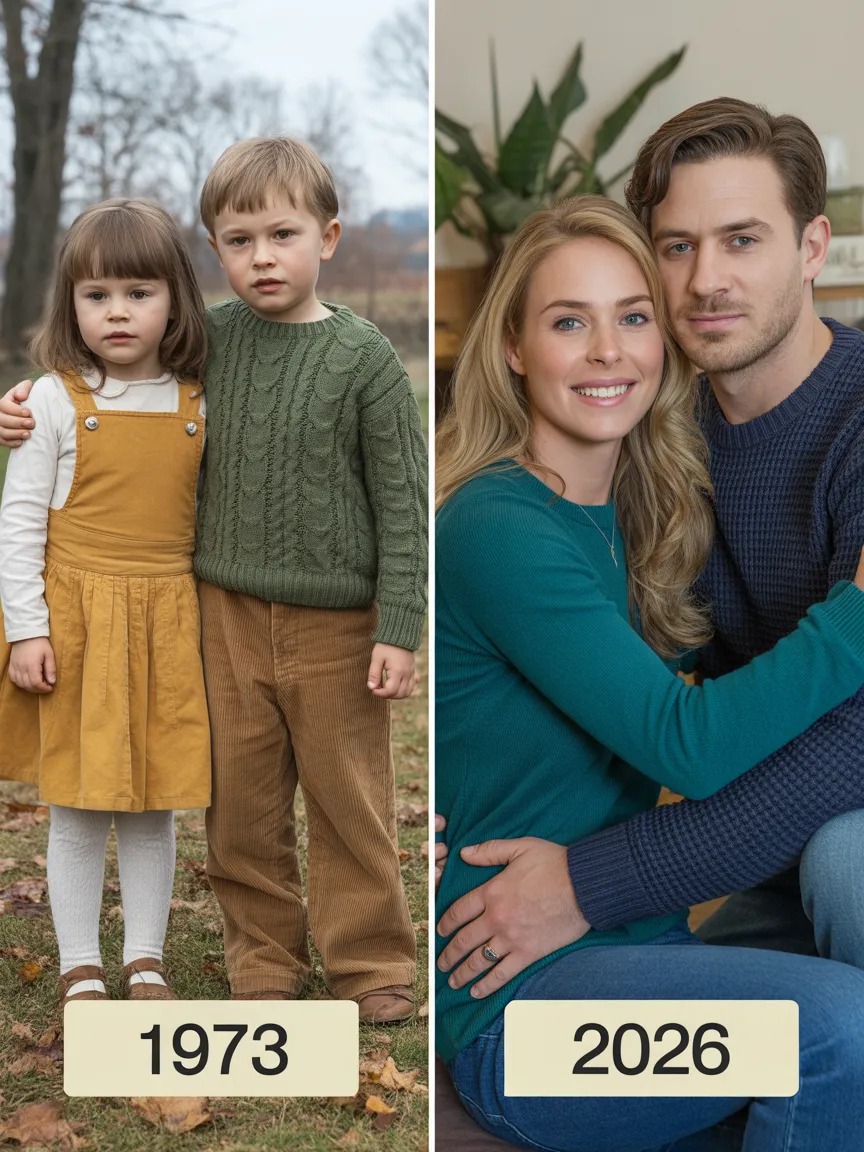
I stand by the casket, a widow for a man I divorced. Thirty-six years we were together, before I finally cut the cord, walked away. Now, seeing him like this, so still, so irrevocably gone, it’s a strange kind of grief. Not the searing pain of a love lost too soon, but a dull ache for what might have been, what we built and then tore down. Was it really all my fault, as he so often implied in those final, bitter years?
The funeral is a blur. Faces I haven’t seen in years, murmurs of sympathy that feel oddly out of place. I’m the ex-wife. The one who left. There’s a quiet judgment in some of their eyes, I can feel it. But I tried. God, I tried.
His father, bless his heart, is already halfway through a bottle of whiskey before the service even truly begins. A quiet, gruff man, always. But today, grief and alcohol are a potent cocktail. He’s slurring, leaning heavily on the arm of a distant cousin. I give him a sympathetic nod, a gesture of shared loss, because despite everything, he was my father-in-law for nearly four decades.
He catches my eye, his gaze cloudy. He pushes away the cousin, stumbles towards me. Oh, God. Please don’t make a scene.
He grabs my arm, his grip surprisingly strong, his breath hot with whiskey. He leans in close, his voice a raspy whisper that still carries too loudly in the hushed room.
“You don’t even know what he did for you, do you?”
The words hit me like a physical blow. A cold dread spreads through my chest. What? What is he talking about? I try to pull away, but he holds fast.
“You don’t know. You never knew. You just… left.” His voice cracks, filled with an ancient, raw pain I’d never heard before. “He broke his own heart to save yours.”
Then he’s led away, sobbing, muttering incoherently. I stand there, frozen, the echo of his words ringing in my ears. He broke his own heart to save yours.
What did that even mean?
Our divorce had been long, agonizing. For years, I felt like I was married to a ghost. He was there, physically, but emotionally absent. Distant. Cold. We’d started with such fire, such passion, so many shared dreams. But somewhere along the line, it just… faded. Or, rather, he faded. He stopped talking to me, truly talking. He’d shrug off my attempts at connection, grow irritable at my questions, retreat into himself.
I remembered the arguments, the desperate pleas. “What’s wrong? Why are you so distant? I feel like I’m losing you!” His usual response? A shrug, a sigh, or a cutting remark about my incessant need for attention. I convinced myself he just didn’t love me anymore. Or that he resented me. Resented our life, our children, me.
So, after 36 years, I made the hardest decision of my life. I packed a bag, told him I couldn’t do it anymore, and left. He didn’t fight. He just looked at me with those vacant eyes, nodded, and said, “Whatever makes you happy.”
That line, that dismissive, emotionless line, had fueled my resentment for years. Whatever makes me happy. It felt like a slap. Like he just wanted me gone.
The years after the divorce were hard at first, but then… a quiet peace settled over me. I reconnected with old friends, found new hobbies, rediscovered parts of myself I’d buried. I learned to be happy on my own. I finally felt free. I saw him occasionally, at family gatherings for the kids. He was always thinner, paler, more withdrawn. But I told myself it was the natural progression of age, the consequence of a life lived without me. A little bit of me even thought he deserved it, for how he’d made me feel.
But his father’s words at the funeral. They clawed at me. They wouldn’t let go. He broke his own heart to save yours.
I started looking back, replaying every distant glance, every sharp word, every dismissive gesture. Was it really disinterest? Or was it… something else? The memory of his eyes when I left, not vacant, but filled with an unbearable sadness I’d been too hurt to recognize.
I sought out his father again, a few days after the funeral, when he was sober. He was reluctant, his face etched with a fresh grief. But I pleaded. I told him I needed to understand. That his words had haunted me.
He sighed, a deep, weary sound. He invited me in, sat me down in the quiet living room that still smelled faintly of my ex-husband’s pipe tobacco.
“He swore me to secrecy,” his father began, his voice raspy. “Made me promise I’d never tell you, no matter what. He said it would hurt you too much.”
My heart pounded. “What? What did he do?”
His father looked at me, tears welling in his eyes. “About five years before you left… he got sick. They didn’t know what it was at first. Thought it was just stress, depression. But then, the tests came back.”
He paused, swallowed hard. “Early-onset dementia. The same thing my wife had. His mother.”
My breath hitched. Dementia. His mother. I remembered her slow, agonizing decline, the way she lost herself, the way my ex-husband cared for her until the very end.
“He saw what it did to her. What it did to him, watching her. He saw how hard it was on our family. He couldn’t bear the thought of putting you through that.” His father’s voice broke. “He started noticing the little things first. Forgetting words, misplacing things, the confusion. He knew what was coming. He knew it would get worse.”
A sickening wave of nausea washed over me. All those times I’d thought he was just being absent-minded. My God.
“He said he couldn’t let you see him disappear like that. He said he loved you too much to watch you waste your life taking care of a man who wouldn’t even know your name anymore.” His father choked back a sob. “So, he made a plan. He decided he would push you away. Deliberately.”
The air left my lungs. The room spun. ALL CAPS. ALL CAPS IN MY MIND. HE PUSHED ME AWAY. DELIBERATELY.
“He started making himself distant. He stopped listening. He provoked arguments. He acted cold, unfeeling. He told me he was trying to make you hate him. To make you want to leave. To free you.”
My mind flashed back. Every argument. Every cutting word. Every time I reached for him and he pulled away. It wasn’t because he stopped loving me. It was because he loved me so fiercely, so selflessly, that he orchestrated his own abandonment. He sacrificed our marriage, our shared future, his own peace of mind, to spare me the pain of watching him fade away.
“Whatever makes you happy.” It wasn’t dismissive. It was the deepest, most agonizing blessing he could give me. He wanted me to be happy, even if it meant his own heartbreak, his own solitary decline.
The truth descended upon me, a crushing weight of realization. The distance I felt wasn’t a barrier he put up against me; it was a wall he built around himself to protect me. The man I had resented for his coldness was actually performing the most profound act of love I could ever imagine.
He didn’t just break his own heart. He shattered it, piece by agonizing piece, for my sake.
And I, in my self-righteous pain, had walked away, believing I was finally free. I had found happiness, just as he intended. But that happiness was built on his silent suffering, on a lie he meticulously constructed to give me a chance at a life he knew he couldn’t share with me.
The grief I felt at the funeral was nothing compared to the tidal wave that engulfed me now. A searing, gut-wrenching pain unlike any I had ever known. I hadn’t left a man who didn’t love me; I had left a man who loved me so much he gave up everything, including me, to save me.
And I never even knew. I never got to thank him. I never got to tell him I would have stayed. I never got to understand.
He carried that secret, that burden, all by himself, until the very end. And I, his wife of 36 years, the woman who claimed to know him better than anyone, was utterly, heartbreakingly oblivious.
The divorce wasn’t the end of our love story. It was just the final, devastating chapter of his sacrifice. And I, the one he saved, am now left with a profound, eternal regret that will haunt me until my own dying day.